Amidst Trump’s Threat To Invade Cuba, Justice Department Has Charged Raul Castro With Murder.

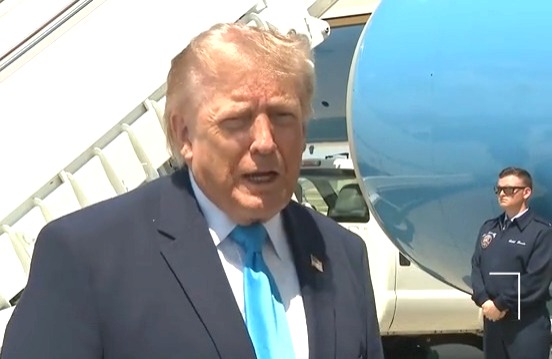
Washington DC; May 2026: The United States Justice Department on Wednesday – 20th May 2026, has unsealed an indictment charging former Cuban President Raúl Castro with murder, a move that coincides with the country’s independence day and a threat from President Trump to invade the island.
Acting Attorney General Todd Blanche traveled to join prosecutors in South Florida to announce the indictment “in conjunction with a ceremony to honour the victims of the Brothers to the Rescue”.
04 men were killed in 1996 when their planes, searching for people potentially seeking to leave the island and reach Florida’s shores, were shot down by the Cuban military, which Castro led at the time.
“For the first time in nearly 70 years, senior leadership of the Cuban regime has been charged in this country, in the United States of America, for acts of violence resulting in the deaths of American citizens”, Blanche said while further asserting that “Nations and their leaders cannot be permitted to target Americans, kill them, and not face accountability”. Blanche alluded to the threat of invasion, telling reporters it was not a show indictment.
“There was a warrant issued for his arrest, so we expect that he will show up here by his own will or by another way”, Blanche said. Although Blanche didn’t directly answer whether the US would invade Cuba, but he said the indictment was not “going to go away”.
Raul Castro, who is now aged 94, stepped down as President in 2018, but he is considered by the US to still be the effective leader of the country. Meanwhile, Cuban President Miguel Díaz-Canel has repudiated the indictment citing it to be a pretext to invade Cuba. “This is a political maneuver, devoid of any legal foundation, aimed solely at padding the fabricated dossier they use to justify the folly of a military aggression against #Cuba”, he wrote on the social platform X. “The US lies and distorts the events surrounding the downing of the planes”, he added, accusing Brothers to the Rescue of acting as a terrorist group.
The indictment, which also names five others, also charges Castro with conspiracy to kill US nationals and destruction of aircraft. Blanche said the indictment was originally returned by a grand jury in April.
Brothers to the Rescue, known as Hermanos al Rescate, flew aircraft over the 90 miles separating Cuba and Florida during a period in which Cuban migration was governed by the “wet foot, dry foot” policy, which allowed Cubans to immigrate to the US so long as they made it onto dry land. The indictment alleges the Brothers to the Rescue flights were in international waters when they were shot down, were heading away from Cuba, and did not receive warning of the attack from a Havana control tower they were in communication with.
Cuba has defended shooting down the planes, saying there had been “prior public and diplomatic notification” that it had published notification in a newspaper that “warned that any aircraft violating national airspace without authorization would be intercepted and, if necessary, neutralised”.
“It is highly cynical that this accusation is made by the same government that has murdered nearly 200 people and destroyed 57 vessels in international waters of the Caribbean and the Pacific, far from the territory of the United States, with the disproportionate use of military force, for alleged links to drug trafficking operations that were never proven”, the Cuban Embassy in Washington said in a statement.
In indicting Castro, the US is laying a similar groundwork that led to the capture of former Venezuelan President Nicolás Maduro, who was also indicted in a US court before armed forces seized him from his compound. It’s unclear what action may await Castro and Cuba, but CIA Director John Ratcliffe met with officials on the island last week to convey that the window for negotiations will not be open indefinitely.
Representative Gregory Meeks (Democrat-New York) said yesterday that the indictment appeared to be a ‘pretext’. “Raúl Castro should be held accountable for the murder of Americans over international waters. But this indictment looks less like a pursuit of justice and more like a pretext for escalation, potentially even an illegal invasion of Cuba”, he said in a statement. “There is no military solution, and no amount of sanctions will bring about a better future for the Cuban people”, he said, adding that the US should also “end its senseless oil blockade, which is exacerbating the suffering of the Cuban people, plunging hospitals, homes, and private businesses into darkness”.
The indictment was unsealed on the day Cuba marks its independence and the formal establishment of the Republic of Cuba.
As reported by Maverick News 30 on 20th may 2026, the US Secretary of State Marco Rubio, who is a Cuban American, released a rare message to the Cuban people to mark the occasion, defending a US blockage of fuel to the island while blaming that shortage and consistent power outages on the current communist regime. “The reason you are forced to survive 22 hours a day without electricity is not due to an oil ‘blockade’ by the US As you know better than anyone, you have been suffering from blackouts for years”, Rubio said in the video address. “The real reason you don’t have electricity, fuel or food is because those who control your country have plundered billions of dollars, but nothing has been used to help the people”, he said, later noting the US has offered a $100 million aid package to the island.
The announcement of the indictment gathered multiple rounds of cheers from a large audience assembled in Miami. It was also praised by Congress’s 04 Cuban American Republican lawmakers.
“Raúl Castro was the one who gave the order to go ahead and kill in a premeditated, cold-blooded fashion these individuals, and since then, many of us and our community has been asking for justice, and sadly, time and time again, the United States, for now decades, has just looked the other way”, Representative Mario Diaz-Balart (Republican-Florida) said. “We have a different president now; we have a president who’s not willing to look the other way when the national security interests of the United States are threatened”.
Representative Maria Elvira Salazar (R-Florida) also encouraged Trump to invade Cuba. “I think that’s exactly what should happen. And that’s exactly what is good for the United States, we cannot have these thieves running that island any longer”, Salazar said in a press conference ahead of Castro’s indictment.
“What President Trump, I believe, is doing is just sending a very clear message to Raúl: Look at Maduro. Look at Maduro. If you do not want to wind up where he’s at, then go. Because that’s the beauty of the United States, that we’re giving these thugs the opportunity of leaving, so we can make things easier for the people. It happened in Venezuela. I do believe that is going to happen in Cuba, and that’s exactly what the president needs to do”, Salazar further asserted, adding that Castro better heed the message or the administration will do the ‘same thing’ to him that they did to Maduro.
The current economically disastrous situation in Cuba – where power cuts are a daily occurrence and the necessities of life are running out, is plainly not sustainable. Presumably, Cubans would welcome almost anything that brought respite from those circumstances. That hardly means they would welcome a U.S. invasion. Plenty of Cubans still living on the island harbour a deeply felt national pride about resisting American attempts at domination. For now, experts tend to think a full-scale invasion is less likely than some kind of negotiated process, whether covert or overt, that results in a more U.S.-friendly leader being installed.
But the danger which is looming is that such a figurehead would lack legitimacy. Alternatively, they could be welcomed so long as they were able to bring immediate material relief and improvement. Barring catastrophe or an open-ended conflict, the impact on American politics could be modest. There are dangers for Trump also in pushing for change in Cuba. But given the island’s small size and enfeebled state, the risks seem much smaller than in Iran.
The upside may be limited too, at least in electoral terms, however. Cuban Americans, usually vociferously anti-Castro, are clustered in Florida. Florida has become a more solidly Republican state anyway in recent years, so there may not be a huge political dividend.
Team Maverick.




Australia Calls India a Top-Tier Security Partner, Unveils Landmark Defence and Energy Agreements
Canberra, July 2026 : Australia on Thursday described India as one of its most important s…
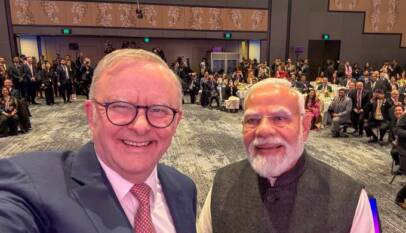
Australia Calls India a Top-Tier Security Partner, Unveils Landmark Defence and Energy Agreements
Canberra, July 2026 : Australia on Thursday described India as one of its most …