Uttar Pradesh GST Review: CM Yogi Pushes Revenue Growth with Trust-Based Tax Administration Model

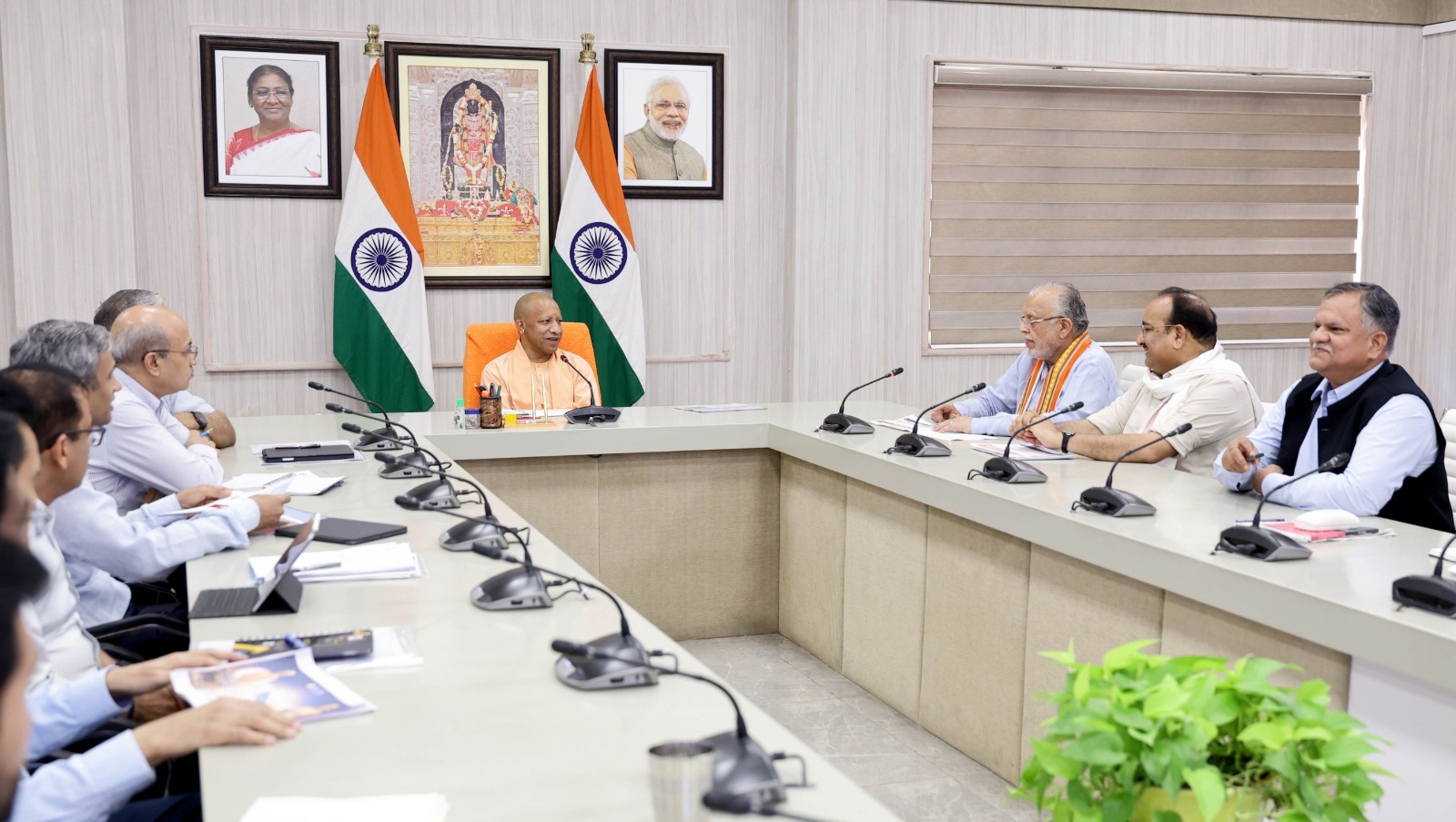
Lucknow, May 2026 : Chief Minister Yogi Adityanath reviewed the State Tax Department and directed that special emphasis be placed on revenue growth along with a trust-based governance model. He said that while increasing tax collection remains important, honest traders must be provided convenience, respect, and quick resolution of issues.
The Chief Minister said that the State Tax Department plays a crucial role in achieving Uttar Pradesh’s goal of becoming a one-trillion-dollar economy. He stressed that the department must establish a governance system that is both revenue-oriented and trust-driven.
During a detailed review meeting with senior officials from the headquarters and field formations, the Chief Minister held direct interaction with zone-wise officers and assessed their performance individually. He instructed that the tax system must be made simpler, more digital, and fully accountable.
He further directed that delays in GST registration, return filing, appeal disposal, and refund processing must be eliminated. The Chief Minister also emphasized continuous engagement with traders, awareness programmes for small businesses, and taxpayer assistance initiatives at district and block levels.
He said that technology and data analytics must be effectively used to curb tax evasion while encouraging legitimate business activities.
According to data presented in the meeting, Uttar Pradesh collected ₹1,15,977 crore under GST and VAT in financial year 2025–26, achieving about 98.8 per cent of the revised estimate. The state ranked second in GST collection nationally, after Maharashtra and ahead of Karnataka.
The government also recovered ₹2,658 crore in GST arrears, which is 228 per cent higher than the previous year, while ₹800 crore was recovered under VAT arrears, marking a 29 per cent increase. Enforcement units contributed ₹2,071 crore in recovery, up 13 per cent from last year.
For financial year 2026–27, the department has been assigned a revenue target of ₹1,98,071 crore, including ₹1,49,956 crore from GST and ₹48,115 crore from VAT. In April 2026 alone, the state collected ₹10,896 crore, reflecting a 9.6 per cent year-on-year growth.
Zone-wise performance review showed strong growth in several regions. Gautam Buddh Nagar recorded ₹1,506 crore in collections with an 18 per cent increase. Saharanpur zone registered 35.1 per cent growth, while Varanasi-I saw 33.2 per cent growth. Moradabad zone also showed notable improvement. The Chief Minister directed underperforming zones to prepare focused action plans and ensure target achievement.
He also instructed senior officials to conduct regular field visits and engage directly with traders.
The Chief Minister ordered strict action against fake firms and tax evasion. Officials informed that 477 FIRs have been registered and 168 arrests made in bogus firm cases. An SIT was formed on November 7, 2025. Additionally, ₹180 crore in input tax credit was blocked, and ₹2,250 crore demand was raised through adjudication proceedings.
During appeal review, it was informed that 63,797 appeals were disposed of in 2025–26, while 20,697 cases remain pending. The Chief Minister directed time-bound disposal of all pending appeals.
Officials also informed that Uttar Pradesh has become the leading state in India with 21.82 lakh active GST taxpayers. GST registration processing takes an average of 8 days in the state compared to the national average of 14 days. Over 93 per cent monthly return filing compliance has been achieved, higher than the national average.
Refund processing time in Uttar Pradesh stands at 27 days, significantly faster than the national average of 48 days. The Chief Minister directed further improvement in refund efficiency to ensure traders’ working capital is not affected.
He also called for expanded trader outreach programmes, regular district-level meetings, and stronger coordination with central agencies, including CGST and DGGI. He stressed that data-driven monitoring and AI-based analysis should be used to improve efficiency and reduce corruption in the tax system.


Netanyahu Meets Trump at White House for Eighth Bilateral Talks Amid Regional Tensions
Jerusalem/Washington, July 2026 : Israeli Prime Minister Benjamin Netanyahu arrived at the…

Netanyahu Meets Trump at White House for Eighth Bilateral Talks Amid Regional Tensions
Jerusalem/Washington, July 2026 : Israeli Prime Minister Benjamin Netanyahu arrived at the White House …