China Says Trump–Xi Talks Mark Progress on Trade and Cooperation, Despite Ongoing Tensions

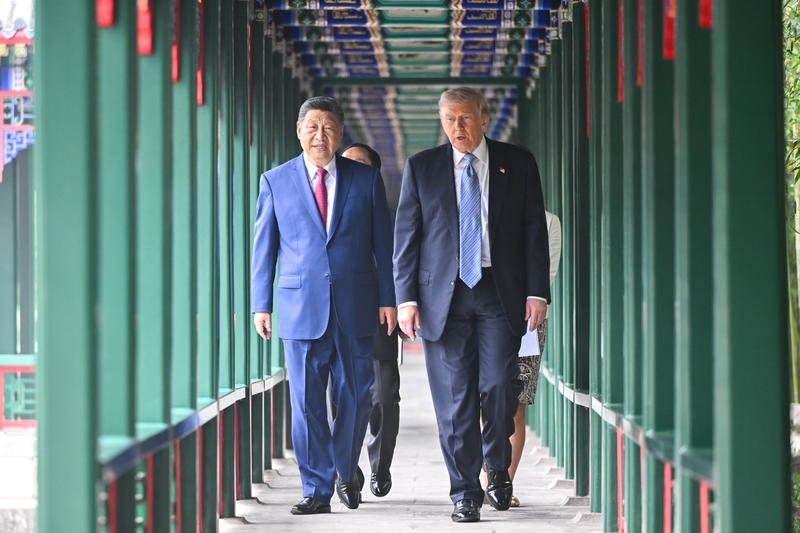
Washington, May 2026 : China has stated that President Donald Trump’s recent visit to Beijing earlier this month led to significant progress on tariffs, trade mechanisms, and educational exchanges, even as major geopolitical tensions continue between the two powers over Taiwan and technology restrictions.
Describing the summit between US President Donald Trump and Chinese President Xi Jinping as “historic and successful,” China’s Deputy Ambassador to the United States, Qui Wenxing, on Wednesday (local time) said the talks represented an important step forward in shaping a stable framework for future China–US relations.
According to Qui, the summit marked “a significant step towards the establishment of the right path of getting along between China and the US in the new era.” He said the discussions were guided by three core principles—“mutual respect, strategic stability, and win-win results”—which both leaders agreed should form the foundation of bilateral engagement going forward.
“China and the US are two great nations,” Qui told reporters, adding that President Xi and President Trump “respect each other and have maintained close communications.” He further remarked that Beijing believed “achieving the great rejuvenation of the Chinese nation and making America greater again can go hand in hand,” signalling a rare tone of mutual developmental aspiration despite ongoing rivalry.
Qui said both sides had agreed to pursue “a constructive China–US relationship of strategic stability,” which he noted would guide bilateral ties “over the next three years and beyond.” He stressed that cooperation should remain the central pillar of the relationship. “Of course, there is competition in the field of economic and trade areas, but we cannot define this relationship with competition,” he said, urging against reducing ties to rivalry alone.
Rejecting the idea that China–US relations should be viewed through a “zero-sum game” lens, Qui emphasised the importance of managing differences constructively. “We do want to do everything we can to avoid any conflict and confrontation between us, because conflict and confrontation will produce consequences no one can bear,” he warned, underscoring the risks of escalation between the world’s two largest economies.
Responding to criticism that the summit lacked substantive outcomes, the Chinese diplomat insisted otherwise. “Actually, this summit has produced many tangible and concrete results,” he said, listing several agreements reached during the discussions.
Among the key economic understandings, Qui pointed to discussions on reciprocal tariff reductions affecting goods valued at “30 billion US dollars or even more on each side.” He also said both countries had agreed to establish new intergovernmental councils focused on trade and investment, aimed at addressing long-standing disputes over market access and regulatory barriers.
In addition, the two sides committed to examining supply chain vulnerabilities, particularly in rare earth minerals and other critical materials that are essential to global manufacturing and technology sectors. These talks are seen as crucial given ongoing concerns over supply chain security in both countries.
Qui also revealed that China had agreed to purchase 200 Boeing aircraft, with the possibility of additional orders from Chinese companies if economic conditions remain favourable. This, he said, would further strengthen commercial ties between the two economies.
On educational cooperation, he highlighted an initiative by President Xi Jinping to invite 50,000 American students to study or travel in China over the next five years, describing it as an effort to deepen people-to-people exchanges and improve mutual understanding between younger generations.
The deputy ambassador also confirmed that both nations had agreed to support each other in hosting major international gatherings, including the Asia-Pacific Economic Cooperation (APEC) summit and the G20 meetings, signalling continued diplomatic engagement on global platforms.
Qui further noted that President Xi had accepted President Trump’s invitation to visit the United States in the autumn, although exact dates have not yet been finalised.
The latest Trump–Xi summit took place against a backdrop of persistent tensions between Washington and Beijing, particularly over tariffs, advanced technology restrictions, Taiwan, and broader strategic competition in the Indo-Pacific region. However, despite these differences, both sides have recently shown renewed interest in maintaining high-level communication and preventing further deterioration in bilateral relations.
(The content of this article is sourced from a news agency and has not been edited by the Mavericknews30 team.)






Trump Says US, Israel Agree to Hold Off Iran Strikes Pending Rapid Deal
Washington, Aug 2026 : US President Donald Trump said Saturday that the United States and …
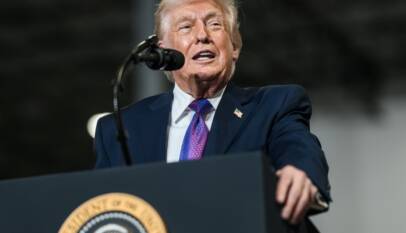
Trump Says US, Israel Agree to Hold Off Iran Strikes Pending Rapid Deal
Washington, Aug 2026 : US President Donald Trump said Saturday that the United States …