Ambedkar Hospital Scientists Develop Kit to Gauge Early Covid-19 Severity

With the aim of developing and strengthening the health research infrastructure in the country, a team of scientists from the Multi-Disciplinary Research Unit (MRU) established at Dr. Bhimrao Ambedkar Memorial Hospital, Raipur has developed a biomarker kit that will predict the severity of the COVID-19 pandemic infection in the initial stage itself. The results of this research, which started from the initial stage of COVID-19, have recently been published in the science magazine Scientific Reports (https://www.nature.com/articles/s41598-024-70161-8) which is published by the prestigious Nature Publishing Group. It is the 5th most referred research journal in the world in the field of research.

At the beginning of the pandemic, while many leading scientists of the country were engaged in developing new COVID-19 diagnostic test kits, the corresponding author (Principal Investigator) of the research publication, Dr. Jagannath Pal (MBBS, PhD, Postdoc from Harvard Cancer Institute (Boston USA)), Senior Scientist, MRU, started thinking in the direction of the above basic issue of management of the COVID-19 pandemic, which can also be used to deal with any epidemic situation in the future.
According to Dr. Jagannath Pal, the lead scientist and team leader who developed the COVID-19 Prognostic Biomarker Kit (prediction of disease severity at an early stage), in the initial phase of the Corona epidemic, resources and anti-virus drugs were used in abundance, which led to a serious drug crisis as well as a crisis of life-saving drugs like Remdesivir. In the initial stage, it was difficult to find out which corona patients needed advance medical facilities or not? Therefore, it was necessary to divide the severity of infection of patients into different categories based on the predicted results so that these resources could be used in severe corona patients, but at that time there was no such test/examination available which could detect the severity of corona patients in the initial stage itself.
Success achieved after three years of tireless hard work
The MRU research team led by Dr. Pal started working in this direction using the limited resources available and finally succeeded in developing a biomarker kit, using which the severity of corona can be predicted in the initial stage itself. In this research work, scientists developed a severity score using a q PCR (Quantitative PCR) based test, which has a sensitivity of 91 percent and specificity of 94 percent. Dr. Yogita Rajput, another MRU scientist in this research team, the first author of the paper, played an important role in bringing the challenging project to reality by coordinating with other multidisciplinary contributors from various departments.
Considering the potential commercial value of Dr. Pal’s invention, Pt. JNM Medical College has applied for an Indian patent as well as an international patent. According to Dr. Pal, recently the US Patent Search Agency has provided encouraging reports indicating the potential commercial significance of the invention in the US. This means that we can get an opportunity to export medical technology abroad contributing to India’s economic growth. MRU’s research will also sustain the Make in India campaign of our country’s Prime Minister. Contrary to the common belief that such technology requires large infrastructure, large funds and manpower to invent. The success story is also an inspiring example for many researchers working in resource limited centers. The achievement of Pt. JNM Medical College will set an encouraging example that a state-run medical college is developing medical technology to meet the need of the hour and is also contributing to its commercialization.



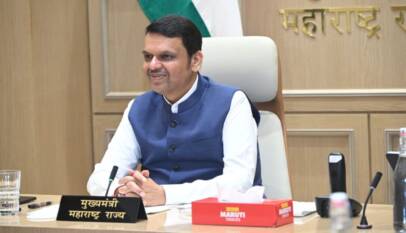
No compromise on security during the Kanwar Yatra, take strict action against those spreading rumours: CM Yogi
Chief Minister reviews preparations with officials of Meerut and Saharanpur divisions Issu…
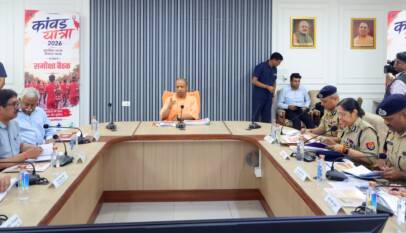
No compromise on security during the Kanwar Yatra, take strict action against those spreading rumours: CM Yogi
Chief Minister reviews preparations with officials of Meerut and Saharanpur divisions Issues clear instructions …