Telangana Aims to Become $3-Trillion Economy by 2047, Says Revanth Reddy Unveiling ‘Telangana Rising’ Vision

Hyderabad, June 2026 : Telangana Chief Minister A. Revanth Reddy on Tuesday unveiled an ambitious long-term development roadmap for the state, declaring that his vision is to transform Telangana into a global gateway and build it into a $3-trillion economy by 2047.
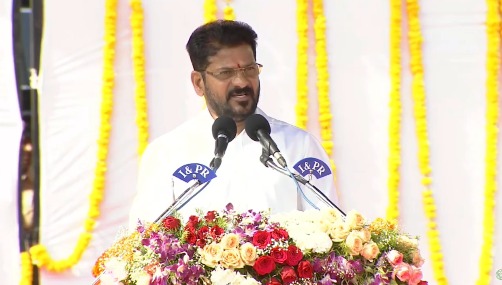
Addressing the Telangana Formation Day celebrations at the Parade Grounds in Hyderabad, the Chief Minister said the state government’s comprehensive development blueprint, titled “Telangana Rising – 2047”, outlines a strategic path for economic growth, infrastructure expansion, industrial development, agricultural transformation and social welfare over the next two decades.
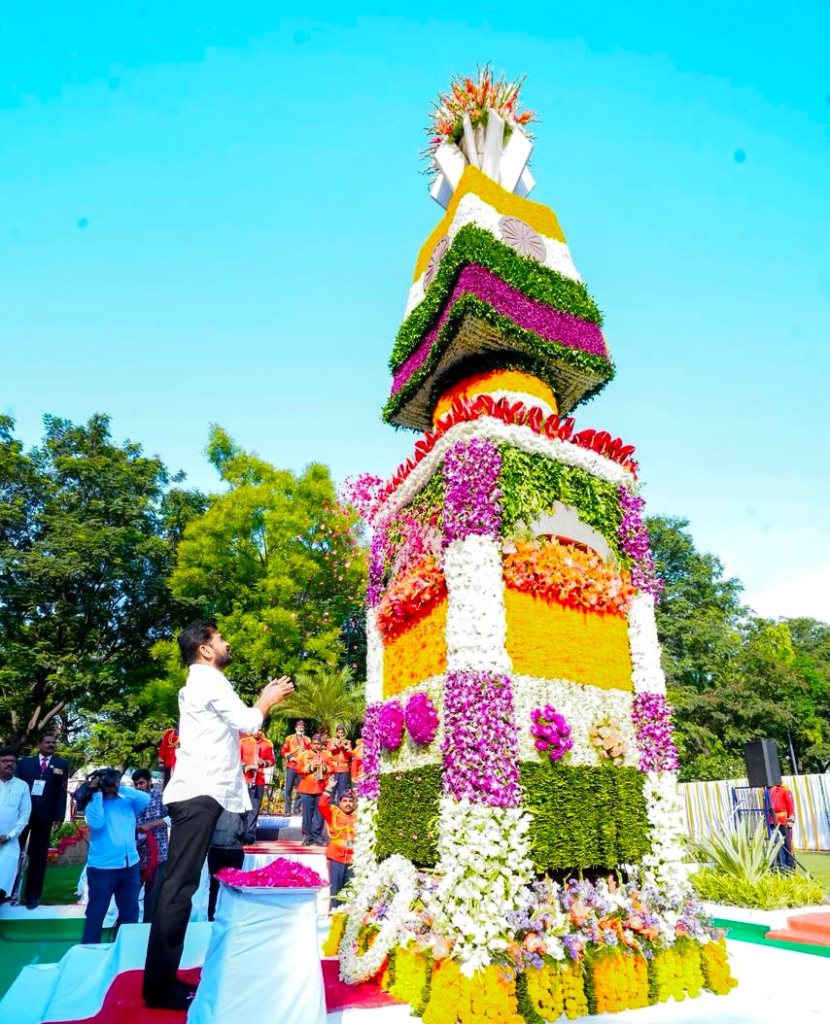
Revanth Reddy stated that Telangana’s aspiration extends beyond becoming a gateway for India. “Our dream is to position Telangana as a gateway to the world,” he said, adding that the vision document serves as a roadmap to achieve that goal.
According to the Chief Minister, the state has set a target of becoming a $1-trillion economy by 2034 and expanding further into a $3-trillion economy by 2047. He claimed that Telangana’s integrated development strategy is unique in India, asserting that no other state currently has a single master plan encompassing development for its entire geographical area.
The Telangana Rising vision divides the state into three major development zones—CURE, PURE and RARE—each with a distinct economic focus aimed at ensuring balanced and sustainable growth.
The CURE (Core Urban Region Economy) zone covers areas within Hyderabad’s Outer Ring Road. The government intends to transform this region into a world-class services and innovation hub while maintaining environmental sustainability. Revanth Reddy said the administration is committed to making the area eco-friendly and pollution-free.
As part of this effort, the government has introduced the Hyderabad Integrated Land and Transport (HILT) Policy, encouraging polluting industries to relocate beyond the Outer Ring Road. Simultaneously, the state is promoting electric mobility by offering exemptions on registration fees, road taxes and lifetime taxes for electric vehicles.
The second zone, known as PURE (Peri-Urban Region Economy), encompasses the region between Hyderabad’s Outer Ring Road and the proposed Regional Ring Road. The Chief Minister said this area would emerge as a major infrastructure and manufacturing centre.
A key component of this plan is the development of Bharat Future City, a greenfield smart city spread across nearly 30,000 acres. The government also plans to enhance regional and national connectivity by developing Shamshabad into a major bullet train hub, thereby strengthening Telangana’s position as a logistics and transportation centre.
The third zone, RARE (Rural Agriculture Region Economy), stretches from the Regional Ring Road to the state’s borders. Revanth Reddy described this region as the heart of Telangana’s economic and cultural identity. Agriculture, agro-industries, agricultural research, irrigation development, crop diversification and allied sectors will form the foundation of growth in this zone.
The Chief Minister stressed that while economic growth remains a priority, the government is equally committed to welfare and social justice. He claimed that Telangana has emerged as a model state in implementing welfare programmes for farmers, women, youth and vulnerable sections of society.
“For the last two and a half years, we have been working relentlessly to fulfil the aspirations of farmers, youth and women while ensuring social justice for Scheduled Castes, Scheduled Tribes, Backward Classes, minorities and economically weaker sections,” he said.
Revanth Reddy reiterated that poverty eradication remains the government’s foremost objective. Since assuming office on December 7, 2023, the administration has focused on combining welfare initiatives with long-term economic planning to create inclusive growth opportunities.
Agriculture occupies a central place in the Telangana Rising vision. The Chief Minister said the state aims to become a national leader in agriculture, agro-processing industries and allied sectors. He highlighted the remarkable growth achieved in recent years, particularly in food grain production.
According to official estimates for 2025-26, Telangana recorded an all-time high food grain output of 236.87 lakh tonnes. Government incentives have significantly boosted the production of paddy, maize and cotton, while sectors such as livestock and fisheries have also witnessed substantial expansion.
Encouraging farmers to embrace crop diversification, the Chief Minister said Telangana should evolve into a state known for varied and abundant agricultural production rather than dependence on a limited number of crops.
Revanth Reddy revealed that the state government has spent Rs 1,56,496 crore on agriculture and farmer welfare during the past two and a half years. This includes investments in irrigation, subsidies, procurement operations and support programmes aimed at improving farm incomes.
A major highlight of the government’s agricultural policy has been direct procurement of produce from farmers at the Minimum Support Price (MSP). The Chief Minister said this approach protects farmers from exploitation by middlemen and ensures better returns for their harvests.
“Despite the financial burden, we are purchasing every grain produced by our farmers,” he said.
Since December 2023, the state has spent Rs 82,840 crore on crop procurement. During the current Yasangi (Rabi) season alone, procurement operations have been carried out through 8,575 procurement centres across Telangana.
The government has so far procured 63.65 lakh metric tonnes of paddy and transferred Rs 11,903 crore directly into farmers’ bank accounts. Additionally, nearly 10,000 metric tonnes of wet paddy damaged by unseasonal rains were purchased to prevent losses for affected farmers.
Highlighting Telangana’s dominance in grain procurement, Revanth Reddy said no other state currently matches Telangana’s performance in paddy procurement.
“Telangana accounts for nearly 60 per cent of the total paddy procured across the country during the Yasangi season,” he said, describing the achievement as a matter of pride for the state.
The Chief Minister concluded by reaffirming the government’s commitment to transforming Telangana into a globally competitive economy while ensuring that growth reaches every section of society, making the state a model of sustainable development, agricultural prosperity and social inclusion by 2047.
Netanyahu Meets Trump at White House for Eighth Bilateral Talks Amid Regional Tensions
Jerusalem/Washington, July 2026 : Israeli Prime Minister Benjamin Netanyahu arrived at the…

Netanyahu Meets Trump at White House for Eighth Bilateral Talks Amid Regional Tensions
Jerusalem/Washington, July 2026 : Israeli Prime Minister Benjamin Netanyahu arrived at the White House …