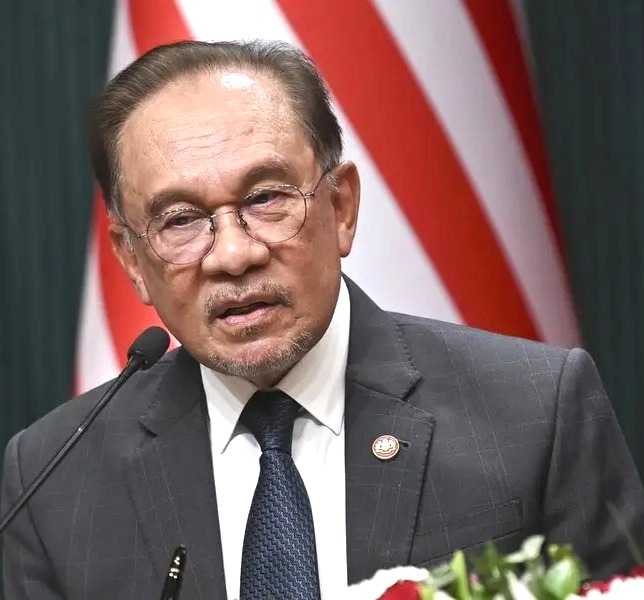
Malaysian Prime Minister Anwar Is Battling Defections And Coalition Friction.

Kuala Lumpur; June 2026: Malaysian Prime Minister Anwar Ibrahim is facing a severe resentment from within his onetime hardcore loyalist’s, further exaggerating with his well-respected former economy minister has quit his People’s Justice Party (PKR) while cracks are appearing with a major coalition partner. The friction has led Anwar to publicly float the idea of snap elections before the current term ends in February 2028.
SNAPPING ELECTIONS –
The next general election in Malaysia is scheduled for February 2028, but Anwar may seek the consent of the country’s king to dissolve parliament earlier. Government lawmakers told Reuters in March an election could be held as soon as July.
Malaysia is a federal system and most state polls are usually held alongside the federal election every five years. But political instability since 2020 has led to some state governments collapsing before the end of their terms, breaking the election cycle. Three states are due to hold polls within the next year – Johor and Malacca on the Malaysian peninsular, and Sarawak on Borneo island. The Malaysian Election Commission said in February this year (2026) that an early general election would allow the state polls to be held concurrently, reducing costs, media reported.
Prime Minister Anwar Ibrahim took office in November 2022, forming a ‘unity government’ consisting of his Pakatan Harapan bloc, former rival Barisan Nasional (BN), and a handful of other parties after a general election ended in an unprecedented hung parliament.
The administration has been praised for restoring stability, after a period of political infighting since 2020 that saw three prime ministers in as many years. The ruling coalition, however, has been tested by internal divisions, with some allies concerned over corruption allegations and a rollback in democratic freedoms.
Anwar has also faced pressure from BN’s once-dominant United Malays National Organisation (UMNO) over a royal pardon for former prime minister and UMNO leader Najib Razak, who has been in prison since 2022 for his role in the multibillion-dollar 1MDB scandal. Johor BN said this month it would contest the upcoming state election independently without Pakatan’s support, in a sign of the growing tensions.
Malaysia has enjoyed steady economic growth and a jump in investment during Anwar’s tenure, but public discontent has grown over rising living costs. The government provides support and subsidies for fuel and other basic needs. But its energy subsidy bill has ballooned to around 7 billion ringgit ($1.77 billion) a month as a result of the U.S.-Israeli war on Iran, straining its finances.
Anwar may be pushed to seek a fresh mandate ahead of any move to trim subsidies or raise fuel prices, which would be deeply unpopular, analysts have said.
An early election could also benefit Anwar’s coalition, with the country’s opposition in disarray.
The opposition is currently led by PAS, the country’s Islamist party. PAS took over leadership of the bloc this month after its key partner Bersatu, headed by former prime minister Muhyiddin Yassin, fractured due to internal rifts that saw more than a dozen party leaders sacked.
Anwar may also be challenged by two of his former cabinet ministers, Rafizi Ramli and Nik Nazmi Nik Ahmad, who left the ruling coalition earlier this month to lead a smaller party. While they say thousands have joined, including defectors from Anwar’s bloc, it remains unclear if they will have sufficient support to be a major electoral force
Meanwhile yesterday (Wednesday – 03rd June 2026), PM Anwar has said, “If this is the way we are slandered and fractious in the government, maybe we should choose to hold elections for the whole country?”. His comments came in the wake of the biggest splintering in Anwar’s own party, when Rafizi Ramli, 49, who once served as Anwar’s economy minister and PKR’s deputy president, announced he was quitting the party and resigning his parliamentary seat. Rafizi was joined by another party stalwart, Nik Nazmi Nik Ahmad, the former minister of natural resources and environmental sustainability.
Rafizi described his move as a “kamikaze mission” to save voters from being forced to choose “the best among the bad”. Rafizi, who is a chartered accountant and engineer graduating from the United Kingdom, said he was taking over a little-known party named Parti Bersama Malaysia (Bersama) which was established in 2016 in Penang and was handed to him without “asking for a single cent”, according to Rafizi.
He described his move as a “kamikaze mission” to save voters, in particular the younger citizens, who are being forced to choose “the best among the bad”. He claimed Bersama’s membership has since surpassed 20,000.
Rafizi has gravitas among reform-minded Malaysians. Bersama could take votes away from PKR’s traditional supporters in urban areas where significant numbers are disappointed with Anwar’s government’s unfulfilled promises on reforms.
Last week, a veteran MP Hassan Abdul Karim painted a grim picture of the future for the PKR, describing the party as “wounded, injured, severely battered, and losing a lot of blood”.
Rafizi is also seen as a “fighter”. He has faced threats and intimidation for his activism on several high-profile corruption cases, including leaking details of an audit report on the Malaysia Development Berhad (1MDB) scandal which earned him an 18-month jail term in 2016, later set aside by the Court of Appeal in favour of a ‘two years good behaviour bond’. In August 2025, his 12 years old son was attacked and stabbed with a syringe containing an unknown substance by two men at a shopping centre, while his wife was also threatened with menacing phone messages. Rafizi blamed opponents to his anti-corruption efforts.
But for all the headaches that Rafizi’s Bersama party could pose for Anwar, the PM’s biggest challenge comes from the opposition Islamist Parti Islam Se-Malaysia (PAS).
At the last election in 2022, PAS won the most seats: 43 in the 222 seat’s parliament. Anwar’s PKR secured 31 seats and he became prime minister only after forming a coalition with multiple parties – the Democratic Action Party (DAP), Barisan Nasional (BN), Gabungan Rakyat Sabah (GRS), Gabungan Parti Sarawak (GPS) and Amanah.
PAS, whose goal is to replace Malaysia’s democratic system with shariah law, is unified and free from internal strife. The party’s stronghold, which traditionally lies in the east coast states of Kelantan and Terengganu, has now expanded to Kedah and Perlis states.
In a sign of PAS’s rising influence, foreign dignitaries and Western diplomats have been making courtesy calls to the party’s officials. Singapore’s former Prime Minister Lee Hsien Loong last month paid a working visit to the PAS-controlled Terengganu state and met with its chief minister Ahmad Samsuri Mokhtar, in what Loong described as “deepening our relationship”. Samsuri is a PAS vice president whose name has been floated as a possible prime ministerial candidate from the party.
Malaysia’s changing demography also strengthens PAS as Malay voters become more conservative. Merdeka Centre polling in recent years has shown increasing numbers of Muslim youths agree the Quran should replace the country’s constitution – in 2022, the figure was 82% of 1,200 Muslim youths surveyed, up from 72% in 2010.
All this makes the outcome of the next general election difficult to predict – regardless of when parliament might be dissolved. It does appear likely that PAS with its Islamist agenda will play a much bigger role in government, perhaps as part of a ruling coalition. That’s an outcome which foreign investors – having poured billions of dollars into Malaysia in recent years to build up the semiconductor industry and data centres – must contemplate.
Team Maverick.


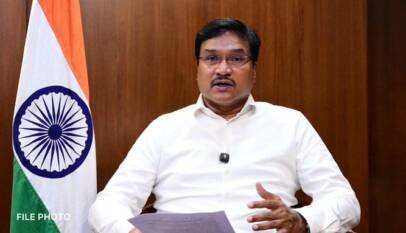

Shivakumar Says Congress United, Assures Women Will Get Cabinet Berth
Bengaluru, Aug 2026 : Karnataka Chief Minister D.K. Shivakumar on Monday sought to dismiss…
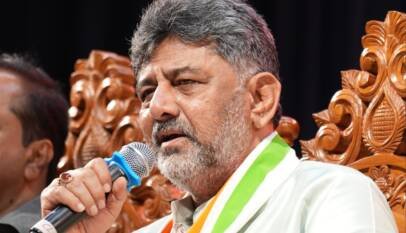
Shivakumar Says Congress United, Assures Women Will Get Cabinet Berth
Bengaluru, Aug 2026 : Karnataka Chief Minister D.K. Shivakumar on Monday sought to dismiss …