Canadian Finance Minister Has Vetted His Budget Presentation, While PBO Predicts Higher Fiscal Deficits.

Ottawa; June 2026: Canada’s Minister of Finance François-Philippe Champagne says he stands by the projections in his spring economic update, after the Parliamentary Budget Officer (PBO) have raised doubts about the government’s ability to mitigate apprehended fiscal deficits, while raising doubts about the effectiveness of data presented in the budget. Parliamentary Budget Officer Annette Ryan yesterday (Thursday – 04th June 2026) has released her office’s first economic and fiscal update since she assumed the role in April this year (2026).
PBO Ryan has predicted that the annual deficits will be an average $4.6 billion over the next five years higher than Champagne’s projections in its spring economic update. The budget office expects the deficit for this fiscal year will edge down to $71.8 billion, which is still about $6.5 billion higher than the spring projection. Ryan argued that annual deficits will be larger mainly because of lower income tax revenue and higher program expenses. Lower public debt charges are expected to offset those pressures somewhat.
One of the Liberal government’s fiscal anchors, a measure of the country’s overall economic health, is maintaining a declining deficit-to-GDP ratio over the forecast horizon. The PBO’s outlook does see the federal government’s deficit-to-GDP ratio falling from 2.2% in the last fiscal year to 1.5% by 2030-31.
But after “stress testing” that outlook based on historical shocks; the report estimates the odds of Ottawa showing a decline in the deficit-to-GDP ratio every year at less than 01%.
The PBO intends to release projections tracking the federal government’s other fiscal anchor, balancing the operating side of the budget in three years, in a separate report. The office projects that the debt-to-GDP ratio, a closely tracked metric for fiscal watchers and an anchor under the previous Liberal government, will rise over the five-year horizon. The office estimates the odds of this figure declining over that period at roughly 40%.
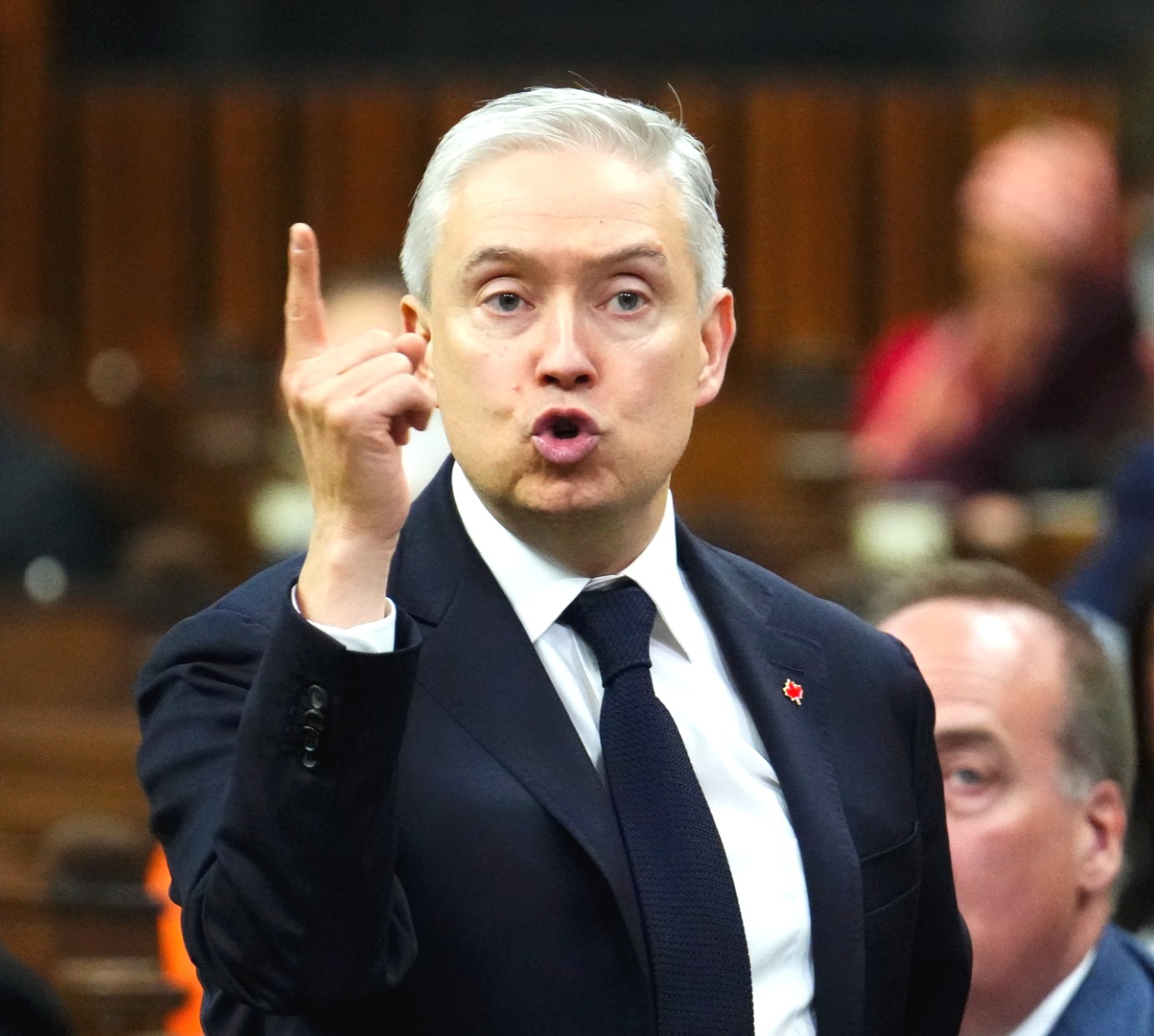
Finance Minister François-Philippe Champagne was set to appear at the parliamentary finance committee on yesterday (04th June), 15 minutes after the PBO report was released. He did not stop to answer questions on his way into or out of the meeting.
Conservative MP Jasraj Hallan called the PBO’s report scathing during the committee hearing. He argued it “totally debunked” the government’s claims of fiscal sustainability.
“I stand by our projections”, Champagne said in response. “What Canadians have seen is that we have a declining deficit and I think Canadians understand that’s important to restore fiscal discipline”.
Meanwhile, the PBO has revised the growth predictions to be down-trodden. Deficit projections in the spring economic update were smaller than those tabled in Budget 2025 last fall. The government’s fiscal position improved largely due to stronger-than-expected economic performance at the end of last year.
FM Champagne also pointed to fresh estimates this week from the Organization for Economic Co-operation and Development (OECD), which call for Canada’s economy to grow at the second-fastest pace in the G7 this year and next.
The PBO’s updated outlook for the economy, however, is weaker than the office’s last forecast in September 2025. The office now sees real gross domestic product rising 1.1% this year and 1.6% next year, slightly lower than the fall projections. The PBO’s estimates for growth this year are slightly lower than the OECD’s outlook but in line with forecasts from private sector economists used in the government’s spring update. The budget office’s outlook assumes all tariffs between Canada and the United States currently in place will remain.
The state of the economy has been a hot topic on Parliament Hill this week since Statistics Canada reported a second consecutive contraction in the economy to start the year. But many economists are pushing back against using the “recession” label to describe the marginal declines in GDP.
The Conservatives are laying the blame for what they’ve called a “full-blown recession” at the feet of the Liberal government. Prime Minister Mark Carney has acknowledged “weakness” in the economy but argues federal policies are setting Canada up for long-term growth.
Champagne was asked several times at the committee meeting whether he thought Canada was in a recession or not. He did not answer directly. Instead, he pointed to the OECD projections and rising business investment in machinery and equipment to argue the “Canadian economy is resilient”. Hallan accused him of “completely ignoring” the question.
Earlier, in December 2025, International Monetary Fund (IMF) while reviewing the Canadian economy said the federal government’s budget presented on 04th November rightly pivots toward higher public investment as US tariffs and shifting trade ties hamper the economy. But it also said a clear debt-to-GDP anchor should remain central to Canada’s fiscal framework.
The head of the International Monetary Fund (IMF) says Canada is in one of the better fiscal positions among the G7 nations, even though the Liberal government is set to run a higher deficit this year.
IMF Managing Director Kristalina Georgieva was asked about the fiscal health of the world’s advanced economies during a press briefing at the IMF’s annual meeting in Washington on 06th November last year. “Some have a more significant fiscal problem. Others less, we have countries in the G7 that are in a better position. Germany and Canada stand up in that regard”, Georgieva said in response.
Georgieva went on to suggest that Canada should restructure the fiscal architecture if it has to spur growth as the global economy faces some headwinds. “The areas that Canada identified: housing, infrastructure, energy, they are thinking of some strategic projects. These are areas that we see the need of doing more, so Canada can lift up productivity”, she said.
The IMF released a report then; that projected global growth will slow from 3.3% in 2024 to 3.2% in 2025 and 3.1% in 2026. “Prolonged uncertainty, more protectionism and labour supply shocks could reduce growth. Fiscal vulnerabilities, potential financial market corrections and erosion of institutions could threaten stability”, the IMF report stated.
Canada has been hit hard by many of U.S. President Donald Trump’s tariffs and the IMF projected its growth this year would slow to 1.2%.
Team Maverick.







Shivakumar Says Congress United, Assures Women Will Get Cabinet Berth
Bengaluru, Aug 2026 : Karnataka Chief Minister D.K. Shivakumar on Monday sought to dismiss…
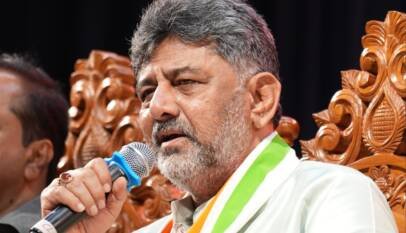
Shivakumar Says Congress United, Assures Women Will Get Cabinet Berth
Bengaluru, Aug 2026 : Karnataka Chief Minister D.K. Shivakumar on Monday sought to dismiss …