Prime Minister’s meeting with Slovak Business Leaders

Prime Minister Shri Narendra Modi along with the Prime Minister of Slovakia, H.E. Mr Robert Fico, interacted with major business and industry leaders from Slovakia across various domains including railways, defence, automotives, energy, IT, healthcare, among others.
Prime Minister appreciated the expanding business-to-business engagement between India and Slovakia. He highlighted the major reforms and policy initiatives introduced by India in recent years to promote ease of doing business and foster a transparent, stable, and investor-friendly economic environment. He invited Slovak companies to take advantage of the growing opportunities in India, particularly in the areas of infrastructure, defence, renewable energy, digital innovation, semiconductors, AI, and healthcare.
Industry leaders welcomed India’s reforms towards Viksit Bharat and expressed confidence in India’s economic trajectory. They conveyed their interest in strengthening their footprint in India through enhanced investments, technology partnerships and joint ventures with Indian enterprises. They welcomed the conclusion of the India-EU FTA, noting that its implementation will open new business opportunities for them. The below mentioned CEOs/ Industry leaders attended the event.
• Mr. Alexej Baljajev, Chairman, Tatravagonka
• Mr. Peter Malec, Vice-Chairman, Tatravagonka
• Mr. Robert Spisak, Chairman, AZC Group
• Mr. Richard Marko, CEO, ESET
• Mr. Parvinder Walia, President of the Asia-Pacific Region, ESET
• Mr. Jaroslav Kuracina, CEO, Grand Power Ltd
• Mr. Peter Lednicky, CEO, Penta Hospitals International
• Mr. Stefan Rosina, CEO, Matador
• Mr. Rajesh Sabne, Managing Director & CEO, Matador Technologies India Pvt. Ltd.
• Mr. Matej Korec, General Director, VUJE a.s.,
• Mr. Peter Duchovic, CEO, VIPO
• Mr. Andrej Bencel, Head of Digital Competence, VIPO
• Mr. Jozef Omelka, MD, MicroStep-MIS
• Mr. Richard Varga, Chairman and CEO, VRM
• Mr Eduard Cristea, Marketing Manager, VRM
• Mr. Miloslav Curilla, Member of the Board of Directors, Eco Investments
• Mr. Tibor Gregor, Executive Director of Klub 500
Bhagwant Mann Govt’s Mukh Mantri Sehat Yojana Provides Cashless Respiratory Care to 14,032 Patients, CoversTreatment Worth ₹37.30 Crore in 6 Months
Adults & Senior Citizens Account for Over 80% of Chronic Lung Disease and Thoracic Sur…
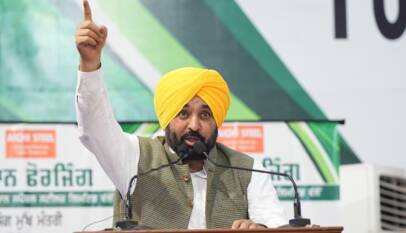
Bhagwant Mann Govt’s Mukh Mantri Sehat Yojana Provides Cashless Respiratory Care to 14,032 Patients, CoversTreatment Worth ₹37.30 Crore in 6 Months
Adults & Senior Citizens Account for Over 80% of Chronic Lung Disease and Thoracic …