US Marines Board Wen Yao Tanker As The United States Steps Up Maritime Pressure On Iran.

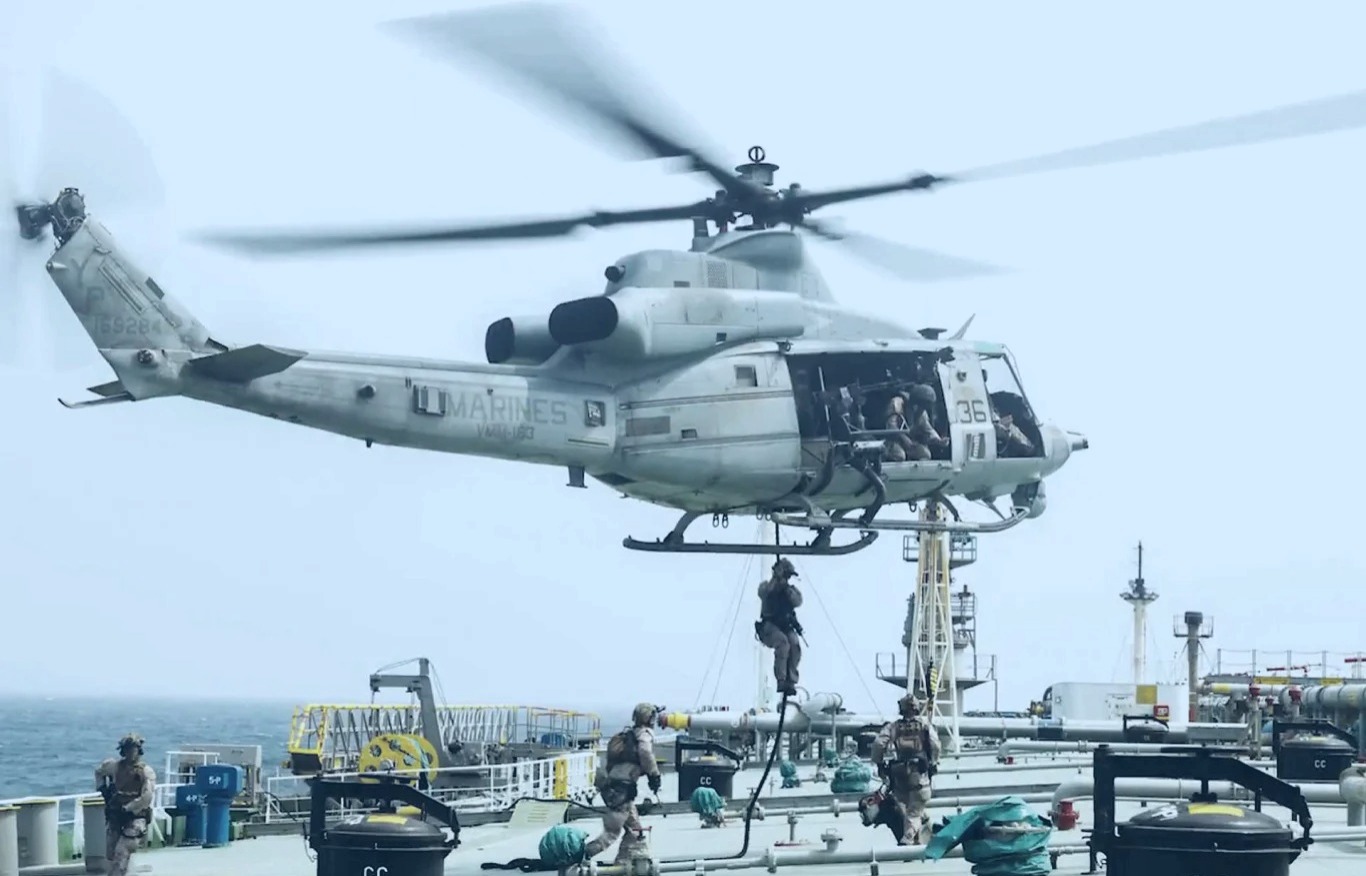
The United States DC; July 2026: Announced by US Central Command (CENTCOM) today (Friday – 17th July 2026), US Marines from the 11th Marine Expeditionary Unit (11th MEU) boarded the commercial tanker M/T Wen Yao in the Gulf of Oman yesterday (Thursday – 16th July 2026; IST) as part of a verification operation supporting the US maritime blockade against Iran, highlighting the United States’s expanding ability to police shipping around the Strait of Hormuz. The mission exhibits a more assertive US effort to restrict Iranian maritime activity while safeguarding legitimate commercial navigation through one of the world’s most strategically important chokepoints.
The operation showcases the integration of Marine boarding teams with US naval and intelligence assets to strengthen maritime interdiction and sustain pressure on Iran’s regional logistics network. As tensions persist across the Middle East, this layered enforcement approach reinforces deterrence, enhances maritime security, and preserves freedom of navigation along a critical global energy corridor.
According to CENTCOM, American forces have now redirected 03 commercial vessels attempting to breach the blockade, disabled one vessel that failed to comply with US instructions, and boarded the M/T Wen Yao to verify full compliance with the ongoing US naval blockade against Iran. CENTCOM added that the Strait of Hormuz and surrounding waters remain open to international navigation, except for vessels attempting to violate what it described as America’s ‘steel wall blockade’. The announcement signals that The United States is pursuing a selective maritime enforcement campaign focused on vessels suspected of violating blockade measures rather than restricting legitimate international commerce.
The operation demonstrates how US forces are integrating Marine expeditionary units with naval assets, intelligence, surveillance, and reconnaissance capabilities, and maritime interdiction capabilities to sustain pressure on Iran’s maritime network. This layered approach strengthens regional deterrence, expands maritime domain awareness, and underscores the United States’ ability to enforce maritime restrictions while preserving freedom of navigation across one of the world’s most critical energy corridors.
The boarding of the M/T Wen Yao forms part of a broader US campaign to establish persistent operational control over the maritime approaches to southern Iran. Rather than attempting to halt all shipping movements, US forces appear to be employing intelligence-led maritime enforcement operations that combine surveillance, naval patrols, and Marine boarding teams to identify and intercept vessels suspected of supporting sanctioned Iranian trade or violating blockade measures.
The operation also reflects the broader evolution of the US military campaign in the region over recent days. Following multiple waves of precision strikes against Iranian military facilities, including air defence systems, coastal surveillance radars, missile launch infrastructure, drone facilities, command-and-control nodes, and naval installations, CENTCOM has significantly strengthened its operational posture around the Strait of Hormuz. By combining air superiority, naval dominance, and Marine expeditionary capabilities, The United States is demonstrating its ability to control access to one of the world’s most strategically significant maritime corridors while degrading Iran’s ability to challenge that control.
Recent US operations have reportedly targeted military installations around Bandar Abbas, Jask, Bushehr, Chabahar, Konarak, Abu Musa, and Greater Tunb Island, all locations supporting Iran’s anti-access and area-denial architecture. These strikes have focused on degrading coastal anti-ship missile batteries, military radar systems, drone launch facilities, naval infrastructure, and command centres capable of threatening commercial shipping or US and allied naval forces operating in the Gulf.
By reducing Iran’s coastal strike capabilities while simultaneously increasing naval patrols and compliance boardings, the United States is establishing what military planners describe as localized sea control rather than complete domination of the maritime battlespace. In practical terms, this means US forces possess sufficient surveillance, intelligence, naval firepower, and expeditionary capabilities to determine which vessels may transit the Strait of Hormuz while allowing legitimate commercial navigation to continue.
Verification boarding operations are designed to confirm vessel identity, cargo documentation, ownership, destination, and compliance with applicable maritime restrictions. Depending on operational requirements, US Marine Corps boarding teams may deploy from warships or helicopters to inspect documentation and verify compliance while minimizing disruption to lawful commercial traffic. CENTCOM has not disclosed the identity of the supporting US warship, the cargo carried by the M/T Wen Yao, its flag state, or the vessel’s disposition following the inspection, information that remains operationally sensitive.
The participation of Marines from the 11th Marine Expeditionary Unit further illustrates the expanding role of Marine expeditionary forces in maritime security operations. As highly deployable combined-arms formations operating from amphibious ready groups, Marine Expeditionary Units routinely conduct maritime interdiction, crisis response, embassy reinforcement, non-combatant evacuation operations, and expeditionary security missions. Their involvement in blockade enforcement demonstrates the growing integration of US Marine Corps capabilities with US Navy maritime operations under evolving expeditionary concepts.
The Strait of Hormuz remains the world’s most important maritime energy chokepoint, carrying roughly one-fifth of globally traded petroleum and significant volumes of liquefied natural gas. Any disruption to navigation through the narrow waterway immediately affects global energy markets, shipping insurance premiums, freight costs, and international supply chains spanning the Middle East, Europe, Asia, and North America. Unlike previous periods of regional tension that relied primarily on deterrence through naval presence, the current US approach combines precision military operations ashore with continuous maritime enforcement at sea. Rather than relying solely on the presence of warships, CENTCOM is actively shaping maritime traffic through inspections, vessel diversions, selective interdictions, and verification boardings, while maintaining freedom of navigation for vessels that comply with US directives.
The boarding of the M/T Wen Yao further represents a significant evolution in US operational strategy around the Strait of Hormuz. The United States has moved beyond traditional deterrence and is now physically enforcing a maritime blockade by integrating precision strikes, intelligence dominance, naval superiority, and direct control over commercial shipping movements. This demonstrates an increasingly sophisticated multi-domain campaign that combines air, maritime, intelligence, and expeditionary capabilities to exert sustained military and economic pressure on Iran.
The successive US strikes carried out during the past several days have likely reduced Iran’s ability to threaten maritime traffic using coastal missile batteries, surveillance radars, drone infrastructure, and command-and-control networks. Although these operations do not eliminate Iran’s capacity to employ asymmetric capabilities such as naval mines, fast attack craft, submarines, mobile missile launchers, armed drones, or proxy forces, they significantly complicate Tehran’s ability to conduct coordinated attacks against commercial shipping or coalition naval forces operating near the Strait of Hormuz.
The broader strategic implications extend well beyond the Middle East. The Strait of Hormuz is the principal export route for Gulf crude oil and liquefied natural gas destined for global markets. Even limited military incidents involving commercial shipping can rapidly increase insurance premiums, delay maritime traffic, elevate freight rates, and push global energy prices higher, creating inflationary pressures that affect manufacturing, transportation, agriculture, and industrial production across Europe, Asia, and North America.
For the United States, sustaining a maritime blockade requires a prolonged commitment of naval task groups, surveillance aircraft, intelligence assets, air defence systems, logistics support, and Marine expeditionary forces. Such a commitment inevitably consumes military resources that could otherwise reinforce deterrence missions in Europe or the Indo-Pacific, creating opportunities for strategic competitors to test US commitments in other regions.
For NATO members, the implications extend beyond rising energy costs. Several Allied nations maintain naval forces, military installations, logistics hubs, and commercial shipping interests throughout the Gulf region. Should tensions continue to escalate, European allies could become increasingly involved in maritime security operations, intelligence sharing, air and missile defence, naval escort missions, mine countermeasure operations, or the protection of commercial shipping, even outside NATO’s formal command structure.
Iran also retains numerous options for indirect retaliation. Beyond conventional military responses, Tehran could employ cyberattacks against ports, energy infrastructure, logistics networks, financial institutions, shipping companies, or defence industries in countries supporting US operations. Commercial vessels operated by European or allied companies could likewise face increased harassment or disruption as Iran seeks to impose costs without triggering a full-scale conventional conflict.
Ultimately, the verification boarding of the M/T Wen Yao signals that US maritime enforcement has entered a more active operational phase. The combination of precision strikes against Iranian military infrastructure, persistent naval patrols, intelligence-led vessel tracking, and US Marine Corps boarding operations indicates that CENTCOM is implementing a sustained campaign to enforce the blockade while preserving freedom of navigation for lawful commercial traffic. Whether this strategy succeeds will depend not only on maintaining military superiority across the maritime domain but also on The United States’s ability to manage escalation, sustain coalition support, and reassure the international shipping community that one of the world’s most vital maritime trade routes can remain open despite an increasingly contested security environment.
Team Maverick.





No compromise on security during the Kanwar Yatra, take strict action against those spreading rumours: CM Yogi
Chief Minister reviews preparations with officials of Meerut and Saharanpur divisions Issu…
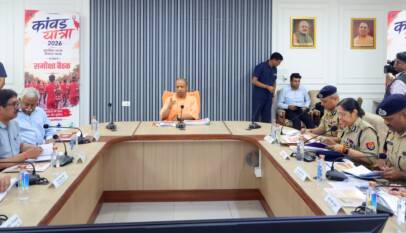
No compromise on security during the Kanwar Yatra, take strict action against those spreading rumours: CM Yogi
Chief Minister reviews preparations with officials of Meerut and Saharanpur divisions Issues clear instructions …