Yogi govt plans Rs 2,000 crore push for natural farming over two years

Lucknow : The alarming rise of heavy metals in agricultural soil has emerged as a major crisis for the farming sector. A global report reveals that around 15% of the world’s cultivable land is contaminated with toxic heavy metals, affecting 1.4 billion people. Harmful elements like arsenic, cadmium, cobalt, chromium, copper, nickel, and lead have reached alarming proportions in many regions.
According to biologists from the University of York, these metals enter the food chain through soil, water, and air—posing long-term health risks to humans, animals, and aquatic life.
In view of the looming threat, the central and Uttar Pradesh governments—led by Prime Minister Narendra Modi and Chief Minister Yogi Adityanath—are promoting organic and natural farming. These practices are not only chemical-free but also sustainable, climate-resilient, and environmentally friendly.
The Yogi government plans to bring over 2.5 lakh farmers into the fold of natural farming across 282 blocks and 2,144 gram panchayats. The initiative will be implemented through 50-hectare clusters, with an estimated investment of Rs 2,500 crore over the next two years.
Natural farming is people-friendly, land-friendly, and water-friendly.
After successful implementation in Bundelkhand and along the Ganga’s coastal areas, natural farming is now being expanded to both banks of its tributaries.
To raise awareness and provide grassroots support, ‘Krishi Sakhis’ will be appointed at a monthly honorarium of Rs 5,000. Experts from Krishi Vigyan Kendras (KVKs) will train these women farmers in their respective districts. Additionally, two Bio-Input Research Centers (BRCs) will be established in every district to support this initiative.
A unique initiative being run in Bundelkhand’s seven districts—Jhansi, Lalitpur, Jalaun, Hamirpur, Mahoba, Banda, and Chitrakoot—focuses on cow-based natural farming. Farmers are being trained to produce organic inputs, such as Jeevamrit, Beejamrit, and Ghanjeevamrit, using cow dung and urine. These bio-formulations are being used as natural fertilizers and pesticides in the fields.
So far, 470 clusters have been formed, benefiting 21,934 farmers. A 50-hectare cluster is being developed in every gram panchayat, with financial assistance provided to farmers cultivating up to two hectares. In total, 2,535 sessions of Farmers’ Field Schools have been conducted under this mission. The government has allocated Rs 13.16 crore for its first and second phases.
Notably, Chief Minister Yogi Adityanath’s commitment to cow protection is well established. During his first term, he enforced strict bans on cow smuggling and illegal slaughterhouses, while also spearheading the construction of numerous shelters for stray and abandoned cattle.
To integrate cow shelters into the natural farming ecosystem, more than 7,700 gaushalas have been established, housing approximately 12.5 lakh destitute cattle. Additionally, under the Chief Minister’s Sahyog Yojana, 1.62 lakh cows have been distributed to about 1 lakh beneficiaries, each receiving Rs 1,500 per month for their care.
To make these shelters self-reliant, vermicompost units will be installed in collaboration with the Agriculture Department. Training programs will be conducted to teach proper techniques for processing cow dung and urine, producing high-quality fodder, and enhancing its nutritional value for long-term storage.
The Uttar Pradesh government consistently encourages cattle rearers to raise Indigenous cows, with a focus on conservation, promotion, and boosting milk production from 25 native breeds. In line with this vision, the government is set to launch the “Nandani Krishak Samridhi Yojana,” under which cattle rearers will receive a 50% subsidy on bank loans.
Complementing this effort, the “Amrit Dhara Yojana” has also been implemented. Under this scheme, livestock owners will be eligible for subsidized loans of up to Rs 10 lakh through banks on easy terms for maintaining two to ten cows. Notably, for loans up to Rs 3 lakh, no guarantor will be required, making the process more accessible and farmer-friendly.
In the recently presented state budget, the government allocated Rs 2,000 crore for the protection and welfare of stray cattle, in addition to the Rs 1,001 crore provision made in the supplementary budget earlier. Furthermore, the cost of constructing large cow shelters has been increased to Rs 1.60 crore, and the government has approved the establishment of 543 new Gaushala (cow shelter) centers. Under MGNREGA, farmers are also supported through the construction of low-cost cattle sheds and cow dung biogas units.
The government aims to make all Gaushalas self-reliant by leveraging cow-based by-products, such as dung and urine, which serve as vital inputs for eco-friendly and sustainable natural farming. This aligns with the growing public awareness around health and nutrition in the post-COVID era, where demand for organic, locally produced food has surged globally. The rise in exports of organic products is expected to benefit farmers and contribute to long-term agricultural prosperity.
Importantly, the Yogi government views natural farming as a holistic solution that delivers sustainable and lasting improvements for soil health, food quality, and environmental balance.
In keeping with this commitment, the government is taking comprehensive steps to protect stray cattle and integrate them into the natural farming ecosystem.
Recently, during discussions held as part of the preparations for the Mahakumbh, the Ministry of Animal Husbandry and Dairy Development conducted an in-depth review of these initiatives and formulated strategies to enhance their effectiveness and outreach.


Museums will be named after India’s National Heroes, not invaders: Chief Minister
Grand museum named after Chhatrapati Shivaji Maharaj being constructed at a rapid pace: CM…
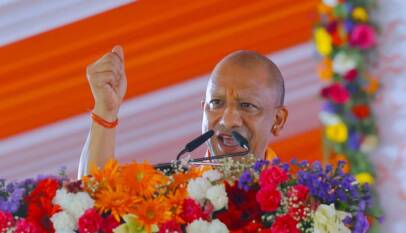
Museums will be named after India’s National Heroes, not invaders: Chief Minister
Grand museum named after Chhatrapati Shivaji Maharaj being constructed at a rapid pace: CM …