Rural India combats extreme heat with age old wisdom.

As India braces itself for the upcoming scorching summers, rural communities across heatwave-prone states are turning to traditional and low-cost solutions to shield themselves from rising temperatures.
From building check dams to planting native trees and adjusting daily routines, villagers are crafting ground-up heat resilience where formal cooling infrastructure is scarce.
According to the Indian Meteorological Department (IMD), the number of heatwave days is likely to increase by up to 7-8 days in northern and western India, including Uttar Pradesh, Bihar, Gujarat and Rajasthan. Madhya Pradesh’s Barwani district which is among the hottest districts in the country saw temperatures soar above 50 degrees Celsius last year. In the Bijadandi block of Madhya Pradesh’s Mandla district, it was a time when water was a rare luxury in her small village. There was severe water crisis in the village. Those who woke up first got water, the rest didn’t.
While the residents of Bhagsur village in Barwani’s Rajpur block, described that even walls were like on fire till 9-10 pm. However, many villagers are confronting the upcoming crisis with innovative and low-cost adaptations rooted in traditional knowledge. The self-help group are working towards constructing check dams and reviving six village ponds, along with storing rainwater to recharge the groundwater and their pumps. It was observed that with a mix of brick and mud homes, families are turning to traditional architecture to beat the heat. They coat their mud houses with cow dung and build small thatched rooms from ‘Arhar stalks’ to allow better ventilation. Even, buffalo’s skin burns from the heat and it stops giving milk. It’s not just the animals, but also people, especially women, suffer too unable to work, cook, or step out during peak heat hours. The families use neem leaves and cotton cloths to keep livestock cool. With no shelter and irregular water supply, the villagers rely on natural remedies, by drinking chaanch (buttermilk), eat light meals and try to stay under tree shade as the heat becomes
unbearable.
In Uttar Pradesh’s Bundelkhand region, known for its parched summers and agrarian distress, farmers are increasingly turning to deep-rooted native trees like Ber, Neem and Aam for shade and resilience.
But, farmers from Lalitpur in Madhya Pradesh, have complained that, buying saplings is expensive, and because livestock numbers have fallen, they don’t even get enough gobar (manure) anymore. It’s a cycle, heat is killing their crops; worries those reflect a deeper malaise. The fields are getting harder, compelling the farmers to use more fertiliser and pesticides, which makes things worse. There are no subsidies for buying climate-resilient plants.
In Maharashtra’s Bobalwadi village, women spread mango and palash leaves over tin roofs to keep homes cool. They also plant trees like Sita phal and Aam not just for business, but for shade.
According to Neeraja Kudrimoti, Associate Director at Transform Rural India, such community-led adaptations are vital. “Rural India, where much of the population is engaged in outdoor manual work, lacks access to cooling infrastructure and reliable electricity. Heat waves are not only causing illness but also leading to economic disruptions“, she said. Kudrimoti vouched for localised Heat Action Plans, improved water security, and social protection schemes prioritising rural populations.
“Government advisories now restrict outdoor work from 12 noon to 4 pm during yellow and orange heatwave alerts“, said Vishwas Chitale, Senior Programme Lead at the Council on Energy, Environment and Water (CEEW). “But we must go further. Rural areas need cooling shelters, clean drinking water, and thermal comfort zones to protect their most vulnerable“, he added As cities install mist fans and green corridors, rural India is relying on their traditional wisdom and the strength of collective action.
Resilience isn’t always about high-tech solutions. Sometimes, it’s a clay wall, a neem leaf, or a shared pond that holds the key to survival.
Team Maverick





HAL Set to Increase TEJAS MK-1A Production to 30 Jets Annually as GE Commits Higher Engine Deliveries
New Delhi, July 2026 : Hindustan Aeronautics Limited (HAL) is preparing to significantly r…
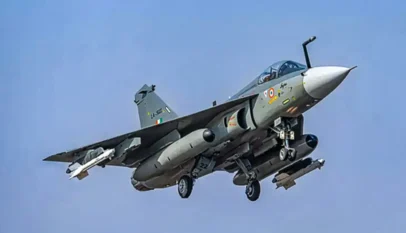
HAL Set to Increase TEJAS MK-1A Production to 30 Jets Annually as GE Commits Higher Engine Deliveries
New Delhi, July 2026 : Hindustan Aeronautics Limited (HAL) is preparing to significantly ramp …