Trump Unleashes Devastating Strikes on Iran’s Nuclear Facilities, Warns of More if Peace Fails

In a bold and unprecedented move, the US targets Iran’s nuclear infrastructure with “precision and power,” escalating the regional conflict and pushing the Middle East to the brink of broader war.
In a dramatic escalation marking the first direct US military intervention in Iran in decades, President Donald Trump announced on June 22 that American forces had carried out precision airstrikes on three of Iran’s most fortified nuclear facilities—Fordow, Natanz, and Esfahan. Using a combination of stealth bombers and submarine-launched cruise missiles, the strikes were aimed at crippling Iran’s uranium enrichment capacity and neutralizing what Washington called a mounting nuclear threat.
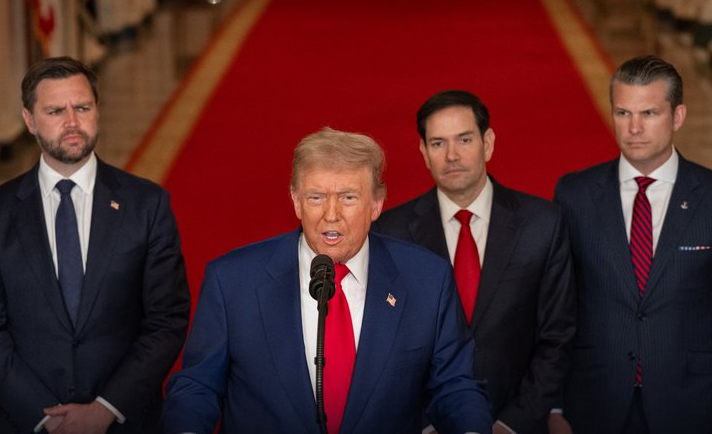
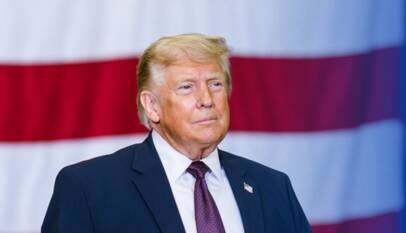
Speaking from the White House just hours after the attack, Trump praised the operation’s success and credited the military personnel involved. “This was an operation the likes of which the world has not seen in many decades,” Trump declared. “There is no military in the world that could have done what we did tonight—not even close.”
According to US defense officials, the assault involved six B-2 Spirit stealth bombers, which dropped a dozen Massive Ordnance Penetrator (MOP) bombs on the Fordow site, located 300 feet underground. Meanwhile, US Navy submarines launched 30 Tomahawk Land Attack Missiles (TLAMs) at Natanz and Esfahan, both of which are key uranium enrichment sites. Trump later stated that all three facilities had been “completely and totally obliterated.”
A High-Stakes Message
The strikes followed Trump’s recent announcement of a two-week window for diplomacy with Tehran—an offer that now appears closed. “Tonight was the most difficult of them all by far and perhaps the most lethal,” he warned. “But if peace does not come quickly, we will go after other targets with precision, speed, and skill. Most of them can be taken out in a matter of minutes.”
He added, “There are many targets left. This cannot continue. There will either be peace or tragedy for Iran—far greater than what we have witnessed over the last eight days.”
Trump said that Defense Secretary Pete Hegseth and Air Force General Dan Kane, Chairman of the Joint Chiefs of Staff, would brief the media at the Pentagon the following day to provide operational details.
In a symbolic close to his address, Trump said, “We love you, God, and we love our great military. Protect them. God bless the Middle East, God bless you, and God bless America.”
A Joint Operation with Israel
Trump also highlighted that the strikes were a coordinated effort with Israel, emphasizing the depth of cooperation between the two countries. “I want to thank Prime Minister Netanyahu. We worked as a team, like perhaps no team has ever worked before, and we’ve gone a long way to erasing this horrible threat to Israel,” he said.
The conflict traces its recent origin to June 13, when Israel launched a surprise assault on Iranian military and nuclear assets. Israeli authorities said the move was necessary to stop Tehran’s alleged pursuit of nuclear weapons—an accusation Iran denies. Following the attack, Iran launched a series of retaliatory missile strikes on Israel, drawing the region into a dangerous escalation spiral.
Political and Congressional Fallout
Trump’s actions received mixed reactions from US lawmakers. Prominent Republican leaders like Lindsey Graham, Ted Cruz, and Senate Majority Leader John Thune praised the strikes, calling them “bold and necessary.” Democratic Senator John Fetterman and House Speaker Mike Johnson also voiced support, highlighting the importance of preventing Iran from becoming a nuclear power.
However, the move sparked backlash from several Democrats and constitutional watchdogs. House Minority Leader Hakeem Jeffries and Senate Majority Leader Chuck Schumer criticized the administration for bypassing congressional authorization. Representative Thomas Massie went further, calling the strikes “unconstitutional” and demanding accountability for unilateral military action.
Global Reactions and Legal Debates
On the international stage, the response was swift and polarized. UN Secretary-General António Guterres warned of a “dangerous escalation” and called for immediate de-escalation. Nations like China, Egypt, and Saudi Arabia echoed similar sentiments, urging restraint from all parties.
Australia’s Green Party condemned the strikes as illegal, while international human rights groups questioned the legality of targeting civilian nuclear infrastructure without UN approval. Nonetheless, Iran’s state media confirmed the strikes on Fordow and reported significant structural damage, though they denied any radioactive leakage.
Iran’s Atomic Energy Organization released a statement vowing to continue its nuclear activities and defend the country’s sovereignty. Iranian officials have yet to confirm casualties or the full extent of the damage.
The Road Ahead: Diplomacy or Detonation
The timing of the attack, occurring amidst a fragile diplomatic window, underscores the volatility of the situation. US officials had signaled readiness for talks, but with the latest offensive, Trump has pivoted to a military-first approach. Preceding the strike, intelligence sources tracked increased US military movements in the Pacific, which now appear to have been preparations for the operation.
Experts warn that the conflict could spiral further. Analysts like Ray Takeyh of the Council on Foreign Relations and Jonathan Panikoff from the Atlantic Council predict possible Iranian retaliation against US assets in Iraq, Syria, or the Persian Gulf. Such moves could expand the conflict and destabilize global energy markets.
Trump’s warning remains clear: unless Iran steps back from confrontation and returns to diplomacy, more strikes are imminent. “Hopefully, we will no longer need their [the military’s] services in this capacity. I hope that will be the case,” Trump said. But in the same breath, he hinted that the United States is prepared for a prolonged campaign if necessary.
Conclusion: A Perilous Crossroads
As US and Iranian forces now find themselves in direct confrontation—with Israel a central player—the Middle East stands at a perilous crossroads. The precision strikes on Iran’s nuclear facilities may have shifted the balance, but they have also ignited fresh uncertainty.
The coming days will test the resilience of diplomatic backchannels and the appetite of regional powers to prevent further catastrophe. Whether this moment leads to renewed negotiations or deeper conflict remains an open and pressing question.





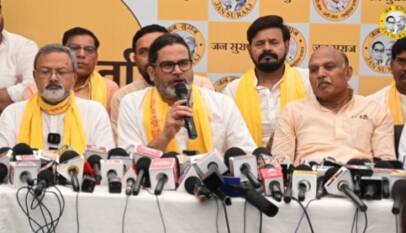
Prashant Kishor to Contest Bankipur Bypoll, Jan Suraaj Eyes Breakthrough in BJP Stronghold
Patna, July 2026 : Election strategist-turned-politician Prashant Kishor will contest the …
Prashant Kishor to Contest Bankipur Bypoll, Jan Suraaj Eyes Breakthrough in BJP Stronghold
Patna, July 2026 : Election strategist-turned-politician Prashant Kishor will contest the upcoming by-election from …