US Cities Tighten Security After Strikes on Iran’s Nuclear Sites

Heightened police presence in New York and Washington amid fears of retaliation following Trump’s announcement of military action against Iran
New York : The United States is ramping up security in major cities after President Donald Trump confirmed that American forces carried out airstrikes on three key Iranian nuclear facilities. In response to growing fears of retaliation or domestic unrest, authorities in New York and Washington, D.C. have stepped up precautionary deployments across religious, cultural, and diplomatic sites.
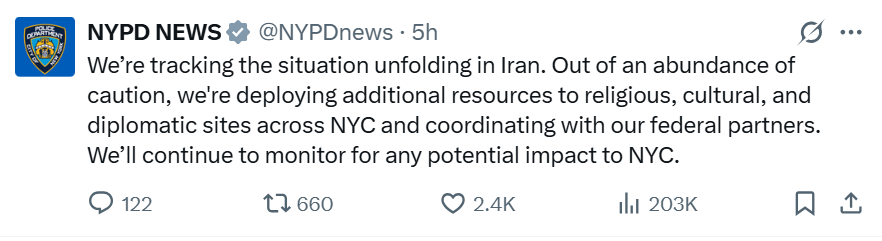
The New York Police Department (NYPD) announced increased vigilance and visible security reinforcements throughout the city. “We’re tracking the situation unfolding in Iran,” the department said in a post on X (formerly Twitter). “Out of an abundance of caution, we’re deploying additional resources to religious, cultural, and diplomatic sites across NYC and coordinating with our federal partners. We’ll continue to monitor for any potential impact to NYC.”
The heightened alert comes amid growing concern that the escalating confrontation between the U.S. and Iran could trigger retaliatory actions or inspire lone-wolf attacks domestically. Security agencies across the country are preparing for all scenarios, although no direct threats have been reported so far.
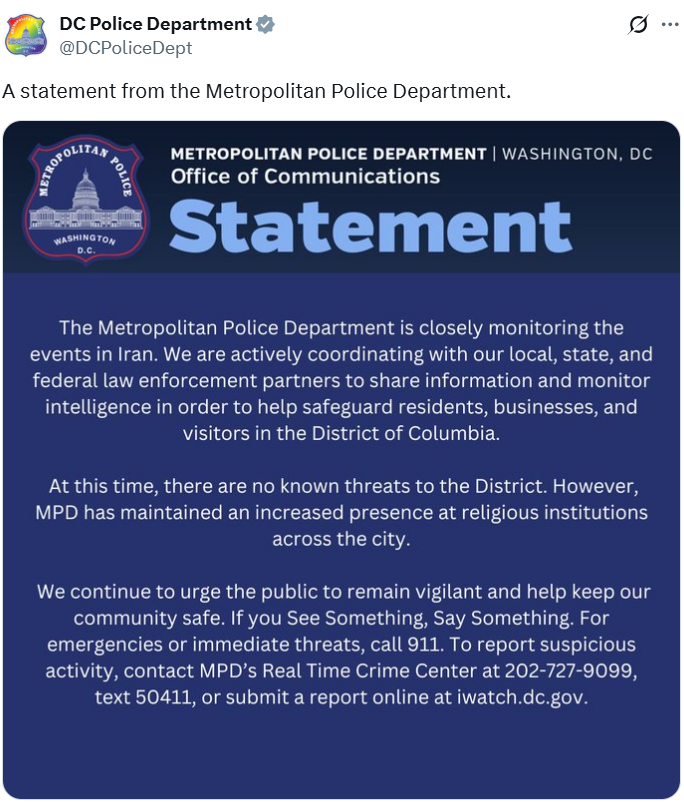
In Washington, D.C., the Metropolitan Police Department (MPD) issued a similar advisory, confirming coordination with multiple law enforcement and intelligence agencies. “The Metropolitan Police Department is closely monitoring the events in Iran. We are actively coordinating with our local, state, and federal law enforcement partners to share information and monitor intelligence in order to help safeguard residents, businesses, and visitors in the District of Columbia,” the statement said.
While the MPD clarified that “there are no known threats to the District at this time,” it confirmed that additional officers have been stationed, particularly around religious sites and community centers. “We continue to urge the public to remain vigilant and help keep our community safe,” the department added.
The precautionary measures follow President Trump’s high-profile announcement that U.S. forces had bombed three of Iran’s most fortified nuclear sites—Fordow, Natanz, and Esfahan—using stealth bombers and submarine-launched cruise missiles. Trump framed the attacks as a necessary step to stop what he called “the nuclear threat posed by the world’s number one state sponsor of terror.”
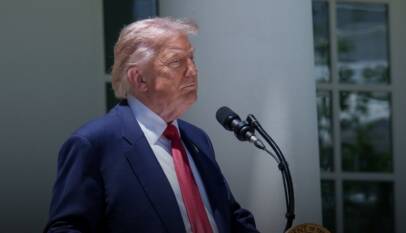
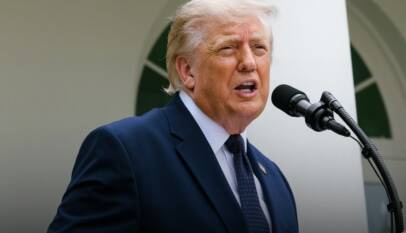
Speaking at a press briefing shortly after the strikes on Saturday (US time), Trump hailed the mission as a historic success. “I want to congratulate the great American patriots who flew those magnificent machines tonight and all of the United States military on an operation the likes of which the world has not seen in many, many decades. Hopefully, we no longer need their services in this capacity. I hope so,” Trump said.
He warned Tehran that further action would follow unless peace was restored quickly. “There will either be peace or tragedy for Iran, far greater than what we have witnessed over the last eight days. Remember, there are many targets left,” he said. “Most of them can be taken out in a matter of minutes.”
According to U.S. defense officials, the Fordow site, buried deep under a mountain, was targeted with “bunker buster” bombs delivered by B-2 Spirit stealth bombers. Cruise missiles were used to strike the Natanz and Esfahan facilities. These sites are believed to be central to Iran’s uranium enrichment program.
Despite weeks of failed diplomatic attempts to revive the 2015 nuclear agreement—abandoned by the U.S. in 2018—Trump’s administration has now aligned closely with Israel’s military objectives. “We worked as a team, like perhaps no team has ever worked before,” Trump said, referring to Israeli Prime Minister Benjamin Netanyahu and the Israeli military.
The strikes mark a sharp escalation in tensions that began on June 13 when Israel launched a surprise attack on Iranian military infrastructure. Iran responded with a barrage of missiles and drones targeting Israeli cities and military sites. The conflict has since drawn in the U.S., raising fears of a broader war in the Middle East and its fallout across the globe.
As tensions rise abroad, American cities are bracing for potential domestic consequences. Intelligence agencies continue to assess threats, while local police forces remain on alert. For now, the focus remains on vigilance, preparedness, and coordination—while diplomatic options, if any remain, continue to fade.


Deschamps Admits France Fell Short as Spain End World Cup Dream with 2-0 Semifinal Win
Arlington (Texas), July 2026 : France head coach Didier Deschamps admitted his side was ou…

Deschamps Admits France Fell Short as Spain End World Cup Dream with 2-0 Semifinal Win
Arlington (Texas), July 2026 : France head coach Didier Deschamps admitted his side was …