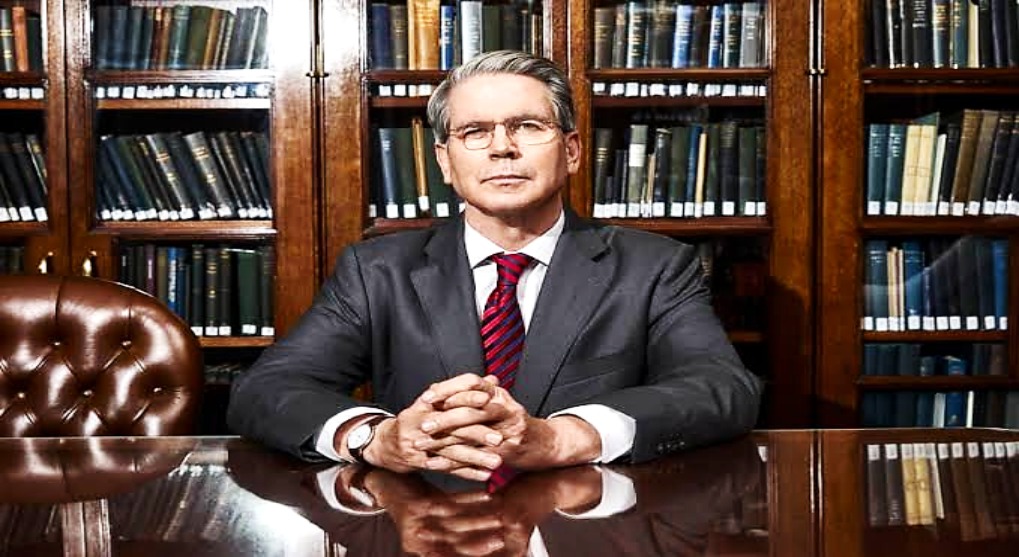
While Donald Trump confirms ‘letter or a deal’ by July 9. Bessent says tariffs will ‘boomerang’ to April levels if no deals by August 1.

US Treasury Secretary Scott Bessent said tariff letters will be sent to about 100 countries over the next several days, as the Trump administration’s 90-day tariff pause comes to an end Wednesday. He has further cautioned, “If you don’t move things along, then on August 1 you will boomerang back to your April 2 tariff level”.
President Donald Trump has suggested the letters would include duty rates at the current 10% baseline, or as extensive as 70%. Bessent said Sunday the United States would not impose 70% tariff rates on major trading partners. “We’re going to be sending letters out on Monday having to do with the trade deals. Could be 12, maybe 15 … and we’ve made deals, also”, Trump told Reporters when asked about tariff rates late Sunday afternoon at Morristown Municipal Airport in New Jersey. Trump added that letters will continue to go out on Tuesday and Wednesday. “We’ll have most countries done by July 9 — either a letter or a deal”, he said.
“The president is right in the midst of discussing all sorts of deals with all sorts of countries”, Commerce Secretary Howard Lutnick told reporters on Sunday alongside Trump. He also confirmed that tariff rates would go into effect on August 1.
On the contrary, Scott Bessent on Sunday declined to confirm which countries were close to a deal. He said that about 100 letters will be sent to small countries “where we don’t have very much trade, many of which are ‘already at the baseline 10%’” Trump on Friday touted letters as the “better” option for countries that fail to negotiate deals before the July 9 deadline.
On April 9, Trump announced a complete three-month pause on all the “reciprocal” tariffs after insisting historically high tariffs were here to stay. Later that month, he told Time magazine that he had already struck 200 trade deals but declined to say with whom. So far, Trump has only announced deals with three countries: the United Kingdom, which maintained a 10% tariff rate; China, which temporarily paused sky-high duties on most goods from 145% to 30%; and a minimum 20% tariff on goods from Vietnam.
In response to the three deals being described as “frameworks”, Bessent said the upcoming letters “will set their tariff rates. So, we will have 100 done in the next few days. Many of these countries never even contacted us. We have the leverage in this situation”, as the country facing a trading deficit.
Bessent pushed back against August 1 as a new deadline. He also described the administration’s plan as applying “maximum pressure”.
“It’s not a new deadline. We are saying, “This is when it’s happening. If you want to speed things up, have at it. If you want to back to the old rate, that’s your choice,’” Bessent said about America’s trading partners, and used the European Union as an example of countries coming to the table after Trump threatened 50% tariffs on EU imports.
Economists have warned that Trump’s trade war, especially the wide-ranging tariffs on Chinese imports, will increase costs for consumers. Some companies, including Walmart, have said they will raise prices for customers despite pushback from Trump.
“We have seen no inflation so far”, Bessent said on Sunday, calling such projections “misinformation” and “tariff derangement syndrome.” Bessent and other Trump officials have repeatedly argued in recent months that countries like China would bear the cost of tariffs.
US wholesale inflation rose slightly in May, driven in part by costlier goods, though tariff-related effects were largely muted. The Producer Price Index, a closely watched measurement of wholesale inflation, showed that prices paid to producers rose 0.1% in May, lifting the annual rate to 2.6%, according to Bureau of Labor Statistics data released in June.
Former Treasury Secretary Larry Summers, who has blasted Bessent for undermining the economic impact of tariffs, saying that tariffs “will probably collect some revenue” but would come at the expense of higher inflation and less competitiveness for American producers.
Stephen Miran, chairman of the White House Council of Economic Advisers, said there was no “lasting evidence” that tariffs imposed on China during Trump’s first term hurt the economy and the administration has only “repeated the same performance” this year. “Tariff revenue is pouring in. There’s no sign of any economically significant inflation whatsoever and job creation remains healthy”, Miran said.
Team Maverick




Hockey Junior Men’s Nationals: Rajasthan, Telangana, Puducherry Shine in Coimbatore
Coimbatore, July 2026 : Hockey Rajasthan, Telangana Hockey and Le Puducherry Hockey regist…

Hockey Junior Men’s Nationals: Rajasthan, Telangana, Puducherry Shine in Coimbatore
Coimbatore, July 2026 : Hockey Rajasthan, Telangana Hockey and Le Puducherry Hockey registered impressive …