Yogi govt rejuvenates Noon river under ‘One District – One River’ campaign

Lucknow/Kanpur : In a significant achievement for the Yogi Adityanath-led Uttar Pradesh government, the Noon river in Kanpur, has been brought back to life. Once a parched and forgotten stretch buried beneath encroachments and layers of silt, which was erased from both maps and memory, the river is now flowing again as a living stream, a transformation driven by the vision and determination of Chief Minister Yogi Adityanath. This remarkable change was made possible through the “One District – One River” initiative, a campaign born from the CM’s resolve to revive the vanishing rivers of the state.
The revival of the Noon River stands as a powerful testament to what strong political will, responsive governance, and active community participation can achieve. Once a lifeline for the fields of Bilhaur, Shivrajpur, and Chobepur—where its waters nurtured crops and its banks echoed with the laughter of children—the river had faded into silence. Years of neglect, encroachments, and heavy silt turned it into a forgotten stretch of dry land. But under the leadership of Chief Minister Yogi Adityanath, the Noon River was selected as a model project under the “One District – One River” initiative. The result: a once-dying river now flows again, restored as a vital artery of life and hope.
Led by District Magistrate Jitendra Pratap Singh and Chief Development Officer Diksha Jain, the campaign was designed as a people’s movement rather than just a government project. A combination of revenue records, drone surveys, satellite images, and villagers’ oral histories helped trace the old 48-kilometre-long route of the river. Once the path was established, desilting, cleaning, and embankment construction began under the MGNREGA scheme.
Instead of using machines, the work was carried out manually by over 6,000 workers from 58 Gram Panchayats, covering nearly 23 km of the river. This approach not only preserved the ecological sensitivity of the project, but also generated employment, creating over 23,000 man-days and utilizing a modest budget of Rs 57 lakh.
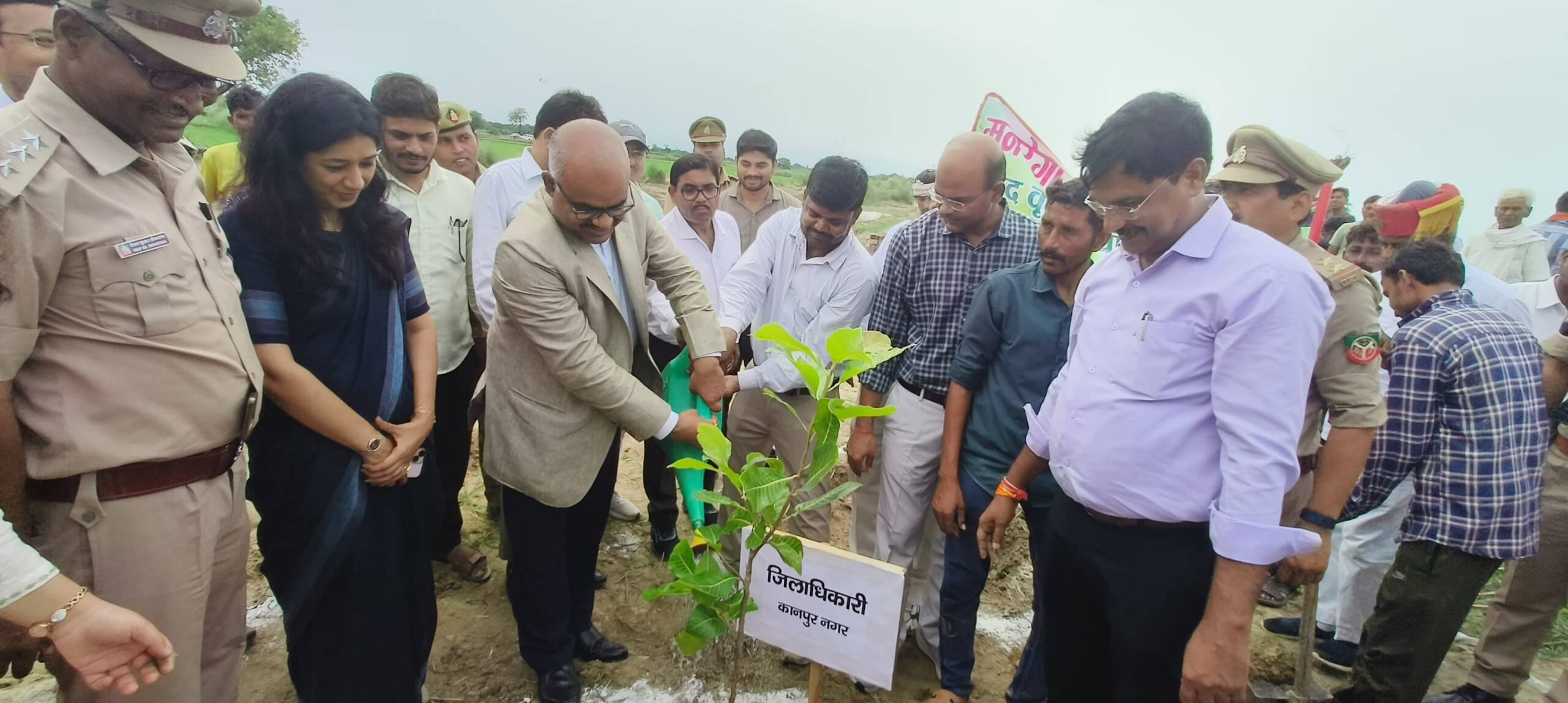
To ensure the river’s revival wasn’t just functional, but also ecological and cultural, the government launched an afforestation drive. In the first week of July, more than 40,000 saplings, including neem, peepal, pakkad, and drumstick trees were planted along both banks under the ‘Ek Ped Maa Ke Naam’ campaign. These native trees are expected to play a vital role in regulating the local climate, conserving soil, and reviving biodiversity, turning the riverbanks into thriving green corridors..
Public representatives, local villagers, and even private companies played a role. Factories discharging pollutants into the river were shut down following strict action. What began as an administrative initiative soon turned into a people-powered movement.
Today, the banks of the Noon River near Kanhaiya Tal resonate once more with the sounds of flowing water, children’s laughter, and villagers strolling in the calm of morning and evening. The river has become more than a restored water body—it stands as a symbol of environmental renewal, community pride, and collective resilience. What was once lost to neglect has returned as a vibrant, living reminder of what vision and united effort can accomplish.
Kanpur Nagar’s Chief Development Officer, Diksha Jain, said that in line with the Chief Minister’s vision, the Noon river was mapped using aerial drone surveys and satellite imagery. She said, “The survey revealed that the river was heavily encroached in several areas, choked with water hyacinth, and filled with silt. In February, a formal river revival campaign was launched in the presence of public representatives. Most of the work, such as desilting and cleaning, was carried out under MGNREGA, ensuring both environmental restoration and employment generation. “
She added, “Industrial effluents from nearby factories were stopped by issuing strict notices, and private companies as well as local industries came forward to support the initiative. The results have been truly encouraging—a river once written off has now regained a substantial flow. Recently, during the mega plantation drive, more than 40,000 saplings were planted along its banks. The visible transformation has sparked a sense of pride and renewed enthusiasm within the local community.”






Viren Rasquinha Questions India Hockey Team’s New Saffron Jersey
New Delhi, July 2026 : Former India hockey captain Viren Rasquinha has criticised Hockey I…

Viren Rasquinha Questions India Hockey Team’s New Saffron Jersey
New Delhi, July 2026 : Former India hockey captain Viren Rasquinha has criticised Hockey …