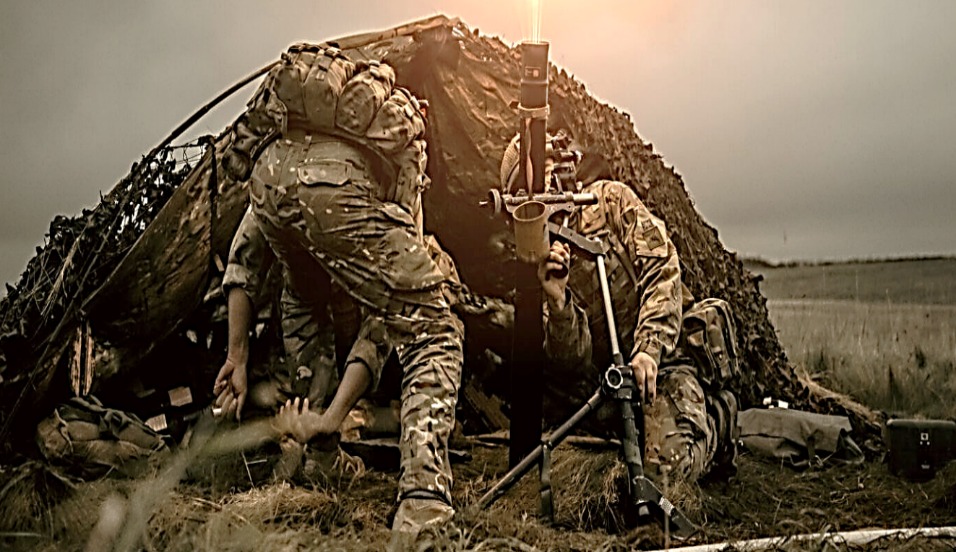
United Kingdom Ministry of Defence have flagged the Risk of Brain Damage of their Soldiers from Weapon Use.

The UK Ministry of Defence has revealed that thousands of British soldiers are potentially suffering from brain damage due to their own weapon systems. Regular contact with armaments exposes soldiers to “substantial blasts” that could cause mild traumatic brain injuries and concussions, Lieutenant Colonnel James Mitchell, a neurologist with the Royal Army Medical Service, told Reporters.
The condition may be widespread among both active-duty personnel and veterans with a history of intense blast exposure, he said. Blast waves can reach the brain, causing tiny injuries to blood vessels and neurons. With repeated exposure, the brain may lose its ability to recover, leading to long-term neurological issues. Brain injury symptoms often mirror those of post-traumatic stress disorder, making them difficult to distinguish. Common signs include severe headaches, blurred vision, sensitivity to light and sound, memory loss, and changes in personality.
Colonnel Mitchell noted that a clear pattern between blast exposure and brain damage first emerged during the Iraq and Afghanistan wars. He added that those at greatest risk are troops operating heavy weapons, including anti-tank systems, mortars, 50-caliber rifles, machine guns, and explosive ordnance.
While, Researchers across the UK are researching novel approaches to better recognize and mitigate blast-related mild traumatic brain injuries, or mTBI, with funding from the British Defence agency.
Proffessor Lisa Hill, a neuroscientist at the University of Birmingham, said chemicals released in the brain after a traumatic injury, known as biomarkers, could help doctors detect and understand the extent and location of the damage. “If somebody gets injured, it changes the structure and function of the brain, but it also releases chemicals that you wouldn’t normally see. So, if we can measure things in blood or in their saliva, that can tell us how potentially bad their injury has been and what symptoms they might go on to get”.
Meanwhile, Proffessor Karen Mullinger, a neuroimaging expert at the University of Nottingham, is using advanced brain scans to identify signs of brain injury in soldiers and veterans, aiming to improve understanding of its occurrence and support more definitive diagnoses. Her team also plans to study troops in real-time blast scenarios.
“We can scan these soldiers before they go and do a training exercise and then immediately after, then we get a baseline which is specific to them. If the ’wire paths’ have been damaged by blasts or whatever else it might be, then the function is going to change”, Mullinger explained.
Team Maverick







Ukraine Inches Closer To European Union Membership.
Kyiv/Brussels; June 2026: Prime Minister of Ukraine, Yulia Svyrydenko, has posted on her ‘…

Ukraine Inches Closer To European Union Membership.
Kyiv/Brussels; June 2026: Prime Minister of Ukraine, Yulia Svyrydenko, has posted on her ‘X’ …