Kerala Fisherfolk cries foul after Shipwreck Fallout.

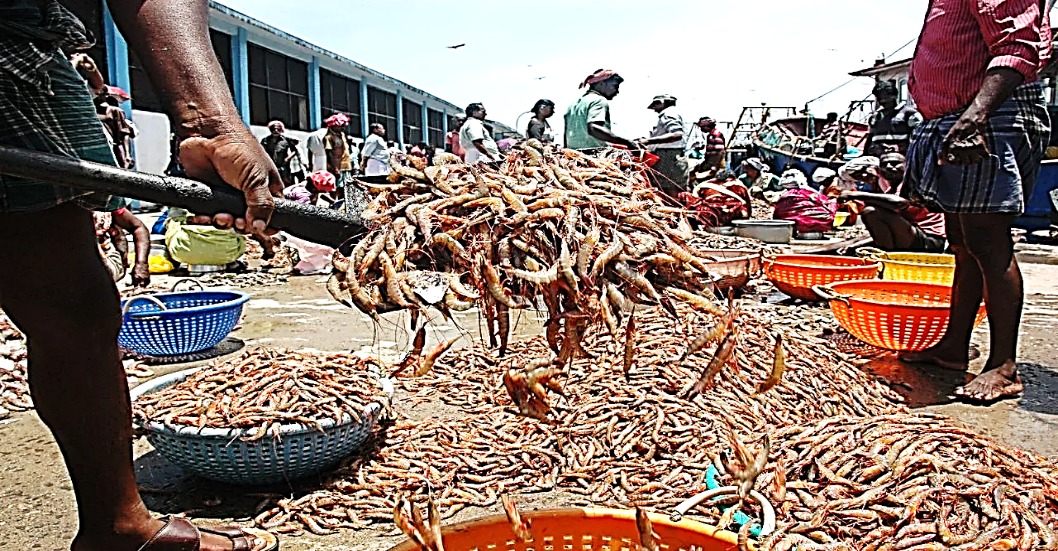
Two recent maritime accidents have led to a sharp decline in the catch of staple fish varieties. Additionally, the drifting containers from the shipwrecks have caused extensive damage to fishing nets and fibre boats, inflicting losses worth lakhs of rupees, for which the fisherfolks are worried.
While the Union and state governments maintain that the recent shipwrecks off the Kerala coast have had no adverse impact on fishing activities, voices from the shoreline tell a different story. For the sea-dependent coastal communities, the sinking of MSC ELSA 3 on 24–25 May and the fire accident on MV Wan Hai 503 on 09th. June have brought not just wreckage, but ruin. Fishermen have alleged that a sharp decline in the catch of staple fish varieties, have been observed, like Indian mackerel (locally called ayala), sardine (mathi), and anchovy (kozhuva / netholi) following the incidents, contradicting the findings of institutions like ICAR-Central Institute of Fisheries Technology (CIFT), ICAR-Central Marine Fisheries Research Institute (CMFRI), and Kerala University of Fisheries and Ocean Studies (KUFOS).
Beyond the dwindling catch, they said, the drifting containers from the shipwrecks have caused extensive damage to fishing nets and fibre boats, inflicting losses worth lakhs of rupees.
On 27 June, in what is being seen as the first visible protest by Kerala’s fisherfolk over the fallout of these maritime accidents, the affected communities took to the seas, demanding compensation for lost livelihoods and damaged equipment.
Now, organisations like Greenpeace India, Citizen Response Group, and the Coastal Students Cultural Forum have stepped in, joining hands with the fishermen to amplify their voices to reclaim their right to the sea.
Curious case of sardine –
Of the two recent maritime incidents off Kerala’s coast, the wreck of MSC ELSA 3 has dealt the biggest blow to the state’s traditional fishing community, said Jackson Pollayil, secretary of the Kerala Swathanthra Matsya Thozhilali Federation.
“The shipwreck occurred around 39 nautical miles south of Kochi, in a zone that is crucial for deep-sea fishing”, Jackson told Reporters, “And the state government imposed a blanket ban on fishing activities within a 20-nautical-mile radius of the wreckage. This has severely impacted the livelihood of fisherfolk”.
Even beyond the exclusion zone, the damage hasn’t stopped. “Floating debris, including containers and other wreckage, continues to damage fishing nets and boats. Over 40 fishing boats have sustained significant damage. Several nets have been torn”, Jackson said, adding that each damaged boat affects 20 to 40 fishers, impacting an entire chain of dependent families. He alleged that neither the state government nor MSC has taken meaningful steps toward compensation or accountability. “Everyone seems to be turning a blind eye. There’s no serious discussion on corporate responsibility or relief. The fisherfolk are being abandoned”, he alleged.
Jackson also voiced concerns over a drastic fall in the catch of small pelagic species, including mackerel, sardine, and anchovy — fish that form the backbone of Kerala’s seafood economy. “We’ve seen a shocking drop in sardine catch. Authorities are ruling out oil spills or chemical contamination. But we strongly suspect that the wreck and its aftermath are influencing marine life”, he observed.
Sardines are especially sensitive to changes in sea temperature, noise pollution, and even disturbances in their environment. Studies have shown that they often migrate away from disturbed zones, affecting catch volumes. “If this migration trend continues, we’re looking at a bigger, long-term crisis — not just for us but for Kerala’s entire marine ecosystem”, he warned.
The temporary fishing ban, combined with fears of contamination, has caused a collapse in the seafood market. With no substantial government intervention so far, fisherfolk are now staring at a bleak and uncertain future. “This disaster has robbed us of our livelihood, food security, and dignity. MSC must be held accountable. The government needs to step up compensation and ensure corporate responsibility”, said Jackson.
Even as the trawling ban is set to be lifted on 31 July, many in the fishing community fear that consumer hesitation over possible contamination will continue to affect fish sales. “People are still unsure whether the fish from these waters are safe to eat”, Jackson said.
It’s against this backdrop of concerns that on Sunday, 27th. July, over 80 people, including members of the fishing community from Muthala Pozhi – Perumathura, in Thiruvananthapuram, came together with 20 boats for a powerful and symbolic visual protest, featuring a floating banner with the message “MSC Shipwreck, Who Pays?”
Releasing the whitepaper –
On Monday, 28th. July, Greenpeace India and the Citizen Response Group released a white paper documenting the devastating environmental and social fallout from a maritime disaster spanning 25 May to 25 June….
Team Maverick



Drones Revolutionising Modern Warfare, Reshaping Global Defence Strategies
New Delhi, July 2026 : Drones have emerged as one of the most transformative technologies …

Drones Revolutionising Modern Warfare, Reshaping Global Defence Strategies
New Delhi, July 2026 : Drones have emerged as one of the most transformative …