Gorakshapeeth’s Century-Long Role in Ram Mandir Movement: Gorakhpur’s Key Figures Shaped Historic Milestones

District Judge KM Pandey, who ordered the opening of locks in February 1986, was from Gorakhpur. At that time, Chief Minister Veer Bahadur Singh was also from Gorakhpur.
Geeta Press of Gorakhpur accelerated the movement by spreading the exalted character of Lord Ram to every household.
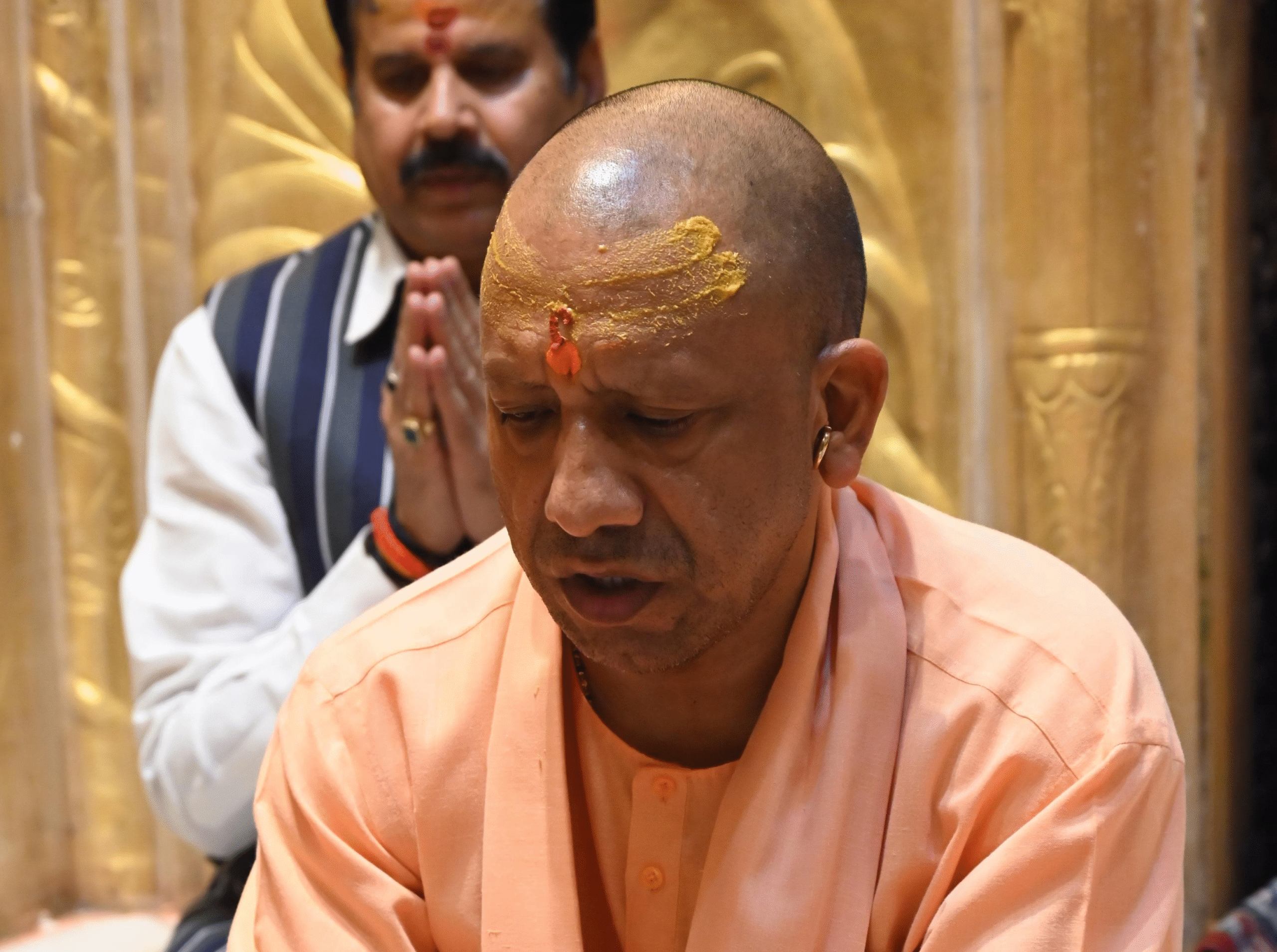
Lucknow: It is a historical fact that the Gorakshapeeth of Gorakhpur (whose current Peethadhishwar is Chief Minister Yogi Adityanath) has played a central role in the Ram Mandir Movement for over a century. There is an uncanny connection between Gorakhpur and Ayodhya’s Ram Mandir. During the movement, several decisive personalities who took crucial decisions were also from Gorakhpur. For instance, District Judge KM Pandey, who ordered the opening of the temple locks in February 1986, and then-Chief Minister Veer Bahadur Singh, both hailed from Gorakhpur. Geeta Press of Gorakhpur, through its publications, propagated Lord Ram’s character across India and the world.
When the locks opened in 1986:
On February 1, 1986, the District Judge of Faizabad, Krishna Mohan Pandey, who hailed from Gorakhpur, ordered the opening of the locks of the long-closed Ram Mandir. His court delivered the judgment after just two days of hearings. Prior to this, the appeal to open the locks had been dismissed by the local magistrate Harishankar Dubey’s court on January 28. KM Pandey’s order was implemented within 40 minutes.
Coincidentally, the Chief Minister of Uttar Pradesh at that time, Late Veer Bahadur Singh, was also from Gorakhpur. He had a private meeting with Rajiv Gandhi in Lucknow regarding the issue, where attempts were made to convince Mahant Avaidyanath to agree to Rajiv Gandhi’s formula for temple construction, which Avaidyanath categorically rejected.
Hanuman Prasad Poddar of Geeta Press had a significant role:
Hanuman Prasad Poddar (Bhaiji) of Geeta Press, who made Ramayan copies available at minimal prices, played a crucial behind-the-scenes role in the movement. When the manifestation of Ram Lalla happened on December 23-24, 1949, the arrangements were handled by him. A staunch devotee of Hanumanji, Poddar had excellent relations with Mahant Digvijay Nath of Gorakshapeeth. He was also active in the Hindu Mahasabha. Through Geeta Press’s magazine ‘Kalyan’, Poddar accelerated the movement by publishing special editions focused on Ayodhya and Lord Ram. Geeta Press is also preparing a special edition for dignitaries attending the Pran Pratishtha ceremony.
Gorakshapeeth’s Three Generations Tied to Ayodhya:
Gorakshapeeth’s connection with Ayodhya and the Ram Mandir spans three generations (about 100 years). Successive Peethadhishwars of the Peeth played a central role in every phase of the movement. The current Peethadhishwar is Chief Minister Yogi Adityanath. His Guru, Mahant Avaidyanath, and his Grand-Guru, Mahant Digvijay Nath, envisioned a grand Ram Mandir at the birthplace of Lord Ram. This dream is being realized with Prime Minister Narendra Modi’s Bhumi Pujan on August 5, 2020, and the Pran Pratishtha of Ram Lalla on January 22, 2024. Naturally, Yogi Adityanath was present on both occasions as the Chief Minister. On June 5, 2025, during the installation of Ram Darbar, Yogi played a pivotal role.
Mahant Digvijay Nath Gave the Movement an Organized Shape:
Though sporadic struggles for reinstating Lord Ram at his birthplace began immediately after its demolition, it was Mahant Digvijay Nath of Gorakshapeeth who gave the movement a structured and strategic form post-Independence. Becoming Peethadhishwar in 1935, he started uniting various sadhus and saints of Ayodhya while also bridging caste divides among Hindus. Nine days before the manifestation of Ram Lalla on December 22-23, 1949, an Akhand Ramayan recital was initiated under his leadership. After Ram Lalla’s appearance, the matter went to court, resulting in a lock on the disputed site. However, for the first time, priests were allowed to perform daily puja there.
Mahant Digvijay Nath remained a relentless advocate for the temple’s restoration until his Mahasamadhi in 1969, fearlessly voicing the cause of Hinduism, Hindutva, and the Ram Mandir from Parliament to the streets, even when speaking about Hindu identity was seen as anti-national.
Mahant Avaidyanath Became the Accepted Leader of the Movement:
After Mahant Digvijay Nath’s Mahasamadhi, his disciple and successor Mahant Avaidyanath elevated the movement to new heights. By the 1980s, the seeds sown by Digvijay Nath had sprouted, but sectarian divisions among various sects remained a hurdle. Mahant Avaidyanath became the unanimous choice to lead the united Sant Samaj. On July 21, 1984, the Shri Ram Janmabhoomi Mukti Yagna Samiti was formed in Ayodhya’s Valmiki Bhavan with Mahant Avaidyanath as its president, triggering a nationwide mass movement that reshaped India’s socio-political landscape.
Under his leadership, the movement witnessed significant milestones, including the Dharma Yatra starting from Sarayu banks on October 7, 1984, culminating in a historic conference at Lucknow’s Begum Hazrat Mahal Park on October 14, 1984. The assembly of lakhs of people shook the government, leading to interactions with Chief Minister Narayan Dutt Tiwari.
On September 22, 1989, a grand Hindu conference was organized at Delhi’s Boat Club, presided over by Mahant Avaidyanath, where the Shilanyas date of November 9, 1989, was announced. Despite attempts by the Home Minister Buta Singh and the UP government to postpone the program, Mahant Avaidyanath remained resolute.
This initiated the Shri Ram Shila Poojan campaign, mobilizing villages across India to send consecrated stones to Ayodhya. Despite repeated government interventions, Mahant Avaidyanath led the Shilanyas ceremony with utmost dedication, marking the beginning of a new era. The Car Seva phase began after the Shilanyas, with Hindus dedicating themselves wholeheartedly under his leadership. Despite brutal police action during Car Seva on October 30 and November 2, 1990, the movement continued unrelentingly.
Opportunity Given to Governments for Peaceful Resolution:
Between 1984 and the decisive phase of the movement, Mahant Avaidyanath engaged with successive governments, including Rajiv Gandhi, VP Singh, Chandrashekhar, and PV Narasimha Rao, seeking a peaceful resolution. However, empty assurances from governments could not deter his resolve.
Mahant Avaidyanath’s Re-Entry into Politics for the Temple Cause:
Having been elected MLA five times from Maniram (1962-1977) and MP in the 1969 by-election after Mahant Digvijay Nath’s demise, Mahant Avaidyanath had retreated from politics post the Meenakshipuram conversions in 1980, focusing instead on social harmony. However, following the declaration of Shilanyas date in 1989, Buta Singh’s challenge to raise the issue in Parliament prompted Mahant Avaidyanath to re-enter politics. He remained the most vocal advocate for the Ram Temple from Parliament to the streets.
Yogi Adityanath Fulfilling the Dreams and Struggles of His Gurus:
Spending over two decades as Mahant Avaidyanath’s disciple, Yogi Adityanath inherited his Guru’s vision and dedication. As an MP, he carried forward the temple cause with fervor, never distancing himself from Ram and Ayodhya, even as Chief Minister. Since 2017, Yogi has visited Ayodhya over a hundred times, each visit contributing to Ayodhya’s transformation into the world’s most beautiful spiritual city.
Reviving Ayodhya’s Treta Yuga Glory:
Yogi’s vision is to restore Ayodhya’s grandeur as it was in the Treta Yuga, where ‘Avadhpuri Aati Ruchir Banai, Devan Suman Brishti Jhari Lai’. The annual Deepotsav glimpses this vision, and post-revamp, this magnificence will become permanent, turning Lord Ram’s birthplace into a global pilgrimage and cultural epicenter.
The souls of Mahant Digvijay Nath and Mahant Avaidyanath must surely be at peace, witnessing the fruition of their lifelong dream under Yogi Adityanath’s leadership.
Gorakshapeeth’s century-long dedication continues to echo in every stone laid at the Ram Mandir in Ayodhya.


Union Forest Minister Bhupender Yadav Visits Sariska Tiger Reserve; Prays at Venkatesh Balaji Temple for Prosperity of Nation and State
Jaipur, April 2026 : Union Forest Minister Bhupender Yadav visited the Sariska Tiger Reser…
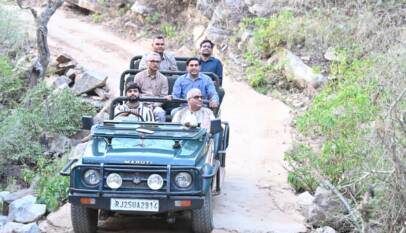
Union Forest Minister Bhupender Yadav Visits Sariska Tiger Reserve; Prays at Venkatesh Balaji Temple for Prosperity of Nation and State
Jaipur, April 2026 : Union Forest Minister Bhupender Yadav visited the Sariska Tiger Reserve …