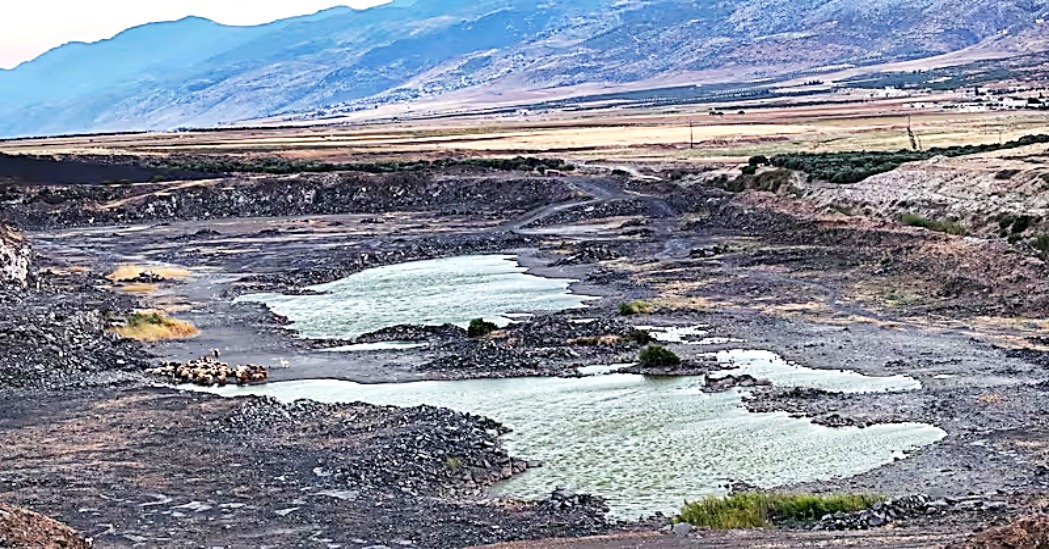
Hydrological system under long-term duress causing droughts in Syria.

Syria’s drought crisis is deepening in 2025, marked not only by low rain but by a systemic unravelling of the country’s water cycle, experts have found. A new report released by the Mercy Corps Syria Crisis Analysis Team said that in many regions of the country, “water shortages are becoming longer, more severe and increasingly challenging to manage. This is not just another dry season”, Assem Sa’adeddin, the team’s deputy director, told the media.
“Syria’s hydrological foundations are collapsing – rainfall is down nearly 28% nationwide, with more than 30% declines in places like Deraa, Idlib and Aleppo. Baseflow – the groundwater that feeds rivers and streams – has dropped by 80% across the country and by over 90% in some areas, showing how overstretched reserves are. Surface water is vanishing too, with major reservoirs like Sabkhat Al Jubbul losing up to 90% of their volume”.
The report said that in Qamishli, north-eastern Syria, some neighbourhood’s have been without piped water for more than three months. In Nawa in the south, more than 100,000 residents depend on costly yet unregulated well water.
Syria’s two largest rivers, the Euphrates and the Orontes, are recording inflows significantly below historical norms, jeopardising drinking water systems and hydroelectric plants and freshwater networks. “These are not the symptoms of a bad year”, the Mercy Corps report said. “They are indicators of a hydrological system under long-term duress, one where structural degradation, not seasonal fluctuation, defines the new baseline”.
Nearly eight months after the ousting of long-time ruler Bashar Al Assad, Syria is still reeling from more than a decade of civil war that ravaged the country’s economy, infrastructure and public services.
With induced climate change increasing the likelihood and intensity of droughts and wildfires worldwide, Syria has been battered by heatwaves but is receiving low rain. “What Syria faces is not just a seasonal dry spell but a multisectoral crisis rooted in sustained environmental and hydrological degradation”, the report said.
The outcomes of a disrupted hydrological cycle could be long-lasting and hamper efforts to support communities and households, key service provision, public health and emergency response, and market systems. “The consequences are now visible across ecological systems, livelihoods, and local markets”, the report added.
These include a drop in wheat production by as much as 70% in some regions and indicators of vegetation health also declining by up to 70%, especially in the Homs, Idlib and Latakia provinces, it said. Soil moisture levels too have declined by more than 80% in parts of Aleppo and Hasakah, and water levels in the Euphrates have dropped nearly 06 metres, disrupting irrigation and hydroelectric power.
“From wheat fields to household taps, the drought is rippling through every layer of life”, Mr. Sa’adeddin said. “And the most alarming part? This is not a passing crisis – it’s a protracted, structural breakdown”.
In July, the worst wildfires in years burnt through Syria, one that lasted 10 days in the coastal Latakia province. The blazes, which swept through heavily wooded areas of several mountain ranges, were fanned by strong winds, scorching summer heat and unexploded ordnance left behind from the 13 years civil war. More than 15,000 hectares of forest were burnt, civil defence officials estimated.
Team Maverick





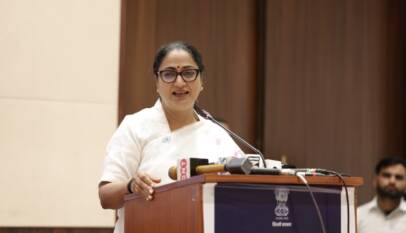
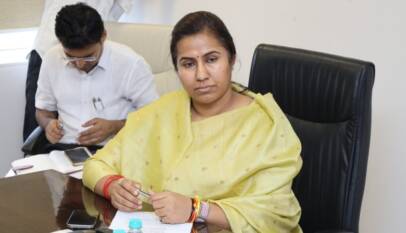
Team Special Olympics Bharat Accorded Grand Send-Off Ahead of Special Olympics Unified Football World Cup 2026
Faridabad July 2026 : Team Special Olympics Bharat was accorded a warm send-off at Manav R…

Team Special Olympics Bharat Accorded Grand Send-Off Ahead of Special Olympics Unified Football World Cup 2026
Faridabad July 2026 : Team Special Olympics Bharat was accorded a warm send-off at …