Is Russia gaining supremacy over Ukraine.

Ukraine has received three Patriot batteries from the United States, as well as two from Germany, one from Romania, and another one consisting of components supplied by Germany and the Netherlands. The Ukrainian armed forces have also received a variety of different interceptors to use with those systems. American authorities announced last month that they were working with European allies to get additional Patriot batteries to Ukraine’s military. Patriot currently represents the only robust defense Ukraine has against incoming ballistic missiles. However, “the Ukrainian Air Force (UAF) struggled in using Patriot air defense systems to protect against Russian ballistic missiles due to recent Russian tactical improvements, including enhancements that enable their missiles to change trajectory and perform maneuvers rather than flying in a traditional ballistic trajectory”, according to a SIG report released this week.
Russian ballistic missile strikes, as well as drone attacks, had spiked in recent months, between April 1 and June 30. On June 28th. attack included seven ballistic missiles, of which the UAF shot down only one. A massed attack on July 9, the largest air attack since the start of the war included 13 missiles, of which the UAF shot down or suppressed 07. In these context, Ukrainian Air Force spokesperson Yurii Ihnat did mention Russia’s domestically developed Iskander-M and North Korean-supplied KN-23s in passing when talking publicly about this issue back in May. The Iskander-M and KN-23 are both short-range ballistic missiles. These are also understood to be, by far, the ballistic missiles that Russia most commonly employs in strikes on Ukraine.
“The flight of a ballistic missile along such a quasi-ballistic trajectory, when the missile doesn’t just fly in a straight line like it’s falling, but actually performs maneuvers in flight makes it more difficult for the Patriot system, which calculates the interception point using software, to predict exactly where the missile will be”, Yuri Ihnat continued. According to Ihnat, “the modified missiles are now equipped with radar-decoy systems and use quasi-ballistic flight paths that make them more difficult to track and intercept using Patriot systems”. It’s worth noting here that Russia’s heavy use of Iskander-Missile in the opening phases of its all-out invasion of Ukraine in 2022 exposed the existence of a built-in decoy capability that was not previously known, at least publicly. However, there has been evidence since then that this is not necessarily a feature on all Iskander-Missiles. As such, Ihnat’s mention of new decoys could reflect a Russian move to start loading them on Iskander-Missile on a more widespread basis.
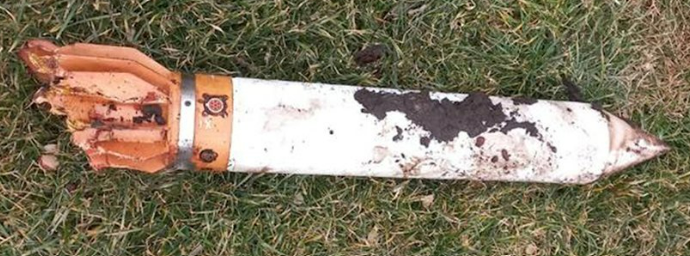
Iskander-Ms can be fired along depressed quasi-ballistic trajectories, and there have long been reports that they are capable of a significant degree of maneuvering during flight, specifically to present additional challenges to defenders. How the Russians may have ‘enhanced’ this capability, or expanded their use of it, and why they did not do so before, is unclear. Russia has claimed in the past that the air-launched Kinzhal, which is derived from the Iskander-M, also has a particularly high degree of maneuverability, and those developments may have fed back into the ground-launched missile.
What kind of built-in countermeasure capabilities might be found on the KN-23, which at least looks very similar to the Iskander-M externally, is unknown. It is reportedly capable of performing a “pull-up” maneuver in its terminal phase of flight, again to complicate attempts to intercept it.
Lieutenant General Kyrylo Budanov, head of Ukraine’s Defense Intelligence Directorate (GUR), had said in June that Russia had worked with the North Koreans to improve the KN-23’s effectiveness, particularly in terms of accuracy. “These improvements could extend beyond the KN-23s. While Budanov did not specify what was changed, this is likely to boost the capabilities of its many other ballistic missiles, extending the dangers beyond the peninsula”.
“I think our partners are already working to improve the system’s capabilities”, Ukrainian Air Force spokesperson Ihnat had also said in May. The recently released Special Inspector General report makes no mention one way or the other of any response to the new developments regarding Russia’s ballistic missile arsenal. It is important to note that any protracted conflict offers the potential for valuable lessons to be learned, but also the risk of the enemy doing the same. Similarly, persistent combat use of systems like Patriot presents repeated opportunities for adversaries to glean useful intelligence about their capabilities, and then put it to work in developing new and improved weapons and countermeasures. Regardless, all of this is especially worrisome given Ukraine’s reliance on Patriot to defend against ballistic missile attacks, as mentioned earlier. Ukraine also has limited options for bolstering its anti-ballistic missile capabilities and capacity beyond just working to acquire more Patriot systems and interceptors. When Russia invaded in 2022, the Ukrainian military did have a limited number of Soviet-era S-300V1 surface-to-air missile systems, which have a degree of terminal anti-ballistic missile capability, but whether any of them are still in service or not is unclear. Any stocks of available interceptors would have steadily dwindled in the past three years, as well.
While, Patriot remains a critical component of Ukraine’s air and missile defense architecture, but the United States has now confirmed that the system has been challenged by improvements Russia has made to its ballistic missile arsenal.
Team Maverick








Shivakumar Says Congress United, Assures Women Will Get Cabinet Berth
Bengaluru, Aug 2026 : Karnataka Chief Minister D.K. Shivakumar on Monday sought to dismiss…

Shivakumar Says Congress United, Assures Women Will Get Cabinet Berth
Bengaluru, Aug 2026 : Karnataka Chief Minister D.K. Shivakumar on Monday sought to dismiss …