Pakistan-Saudi Defence Pact Signals Broader Regional Security Cooperation: Khawaja Asif

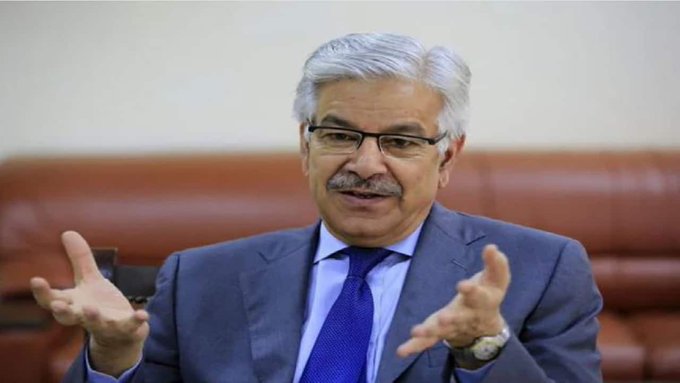
Sept 2025 : Pakistan’s Defence Minister Khawaja Asif has said that the recently signed defence agreement with Saudi Arabia could pave the way for broader regional participation, allowing other Gulf and Arab nations to benefit from the framework.
Speaking to Arab media, Asif underlined that the deal with the Kingdom of Saudi Arabia (KSA), inked on September 17, was transparent, without hidden clauses, and reflected “mutual trust and shared security interests.” He stressed that “the doors are not closed” for other Arab countries to join, indicating potential expansion of the pact across the region.
The agreement establishes a framework for collective security, under which an attack on one partner would be considered an attack on both. It also includes joint training, military exercises, and technical assistance, further highlighting its strategic military dimensions.
Asif clarified that the pact should not be viewed as targeting any third country but as a strategic partnership aimed at stability. He emphasized that Middle Eastern states should not rely solely on external powers for security but instead look to sovereign nations capable of protecting them.
The Pakistan Foreign Office echoed his remarks, with spokesperson Shafqat Ali Khan describing the accord as a natural continuation of decades of defence collaboration, covering joint training, multilateral exercises, and industry cooperation. He confirmed that the pact would not alter Pakistan’s nuclear doctrine.
Signed during Prime Minister Shehbaz Sharif’s recent visit to Riyadh, the deal was facilitated with active involvement from Chief of Army Staff Field Marshal Asim Munir. The accord reaffirms Pakistan’s longstanding commitment to defending Saudi Arabia, particularly the protection of the Two Holy Mosques—an obligation seen as both symbolic and strategically vital for Islamabad.
Asif also voiced optimism that global security would remain stable and free from the threat of nuclear war. Under the new agreement, any military aggression against one signatory would automatically be treated as an attack on both, obligating mutual defence.



Solar Defence Showcases Indigenous ‘Bhargavastra’ Counter-Swarm Drone System to Indian Army
New Delhi, July 2026 : Solar Defence and Aerospace Ltd. (SDAL) on Friday showcased its ind…
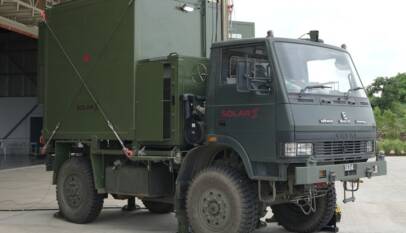
Solar Defence Showcases Indigenous ‘Bhargavastra’ Counter-Swarm Drone System to Indian Army
New Delhi, July 2026 : Solar Defence and Aerospace Ltd. (SDAL) on Friday showcased …