RTX unveils new APG-82(V)X radar enhanced with gallium nitride.

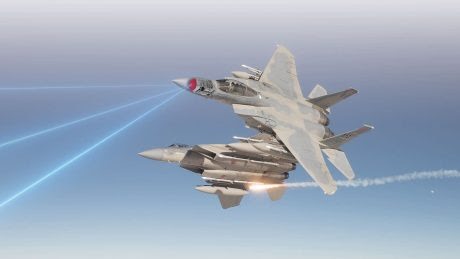
Sept 2025 : Raytheon, an RTX company, has unveiled the latest iteration of its combat-proven APG-82 radar, the APG-82(V)X. The new radar variant incorporates cutting-edge gallium nitride (GaN) technology to enhance the radar’s effectiveness, delivering increased range, advanced air-to-air, air-to-ground and electronic warfare capabilities.

APG-82(V)X enables faster target detection, tracking and engagement with multi-function fire control and electronic warfare capabilities. As an advanced active electronically scanned array radar, it uses thousands of transmit and receive modules, which enable the radar to rapidly switch between transmitting and receiving signals, providing greater reliability and more precise targeting against aerial threats like cruise missiles, drones and modern fighter aircraft.
“The enhanced capability of this next-generation radar enables aircrew to detect and engage threats at longer ranges than ever before, providing a crucial first-look, first-shoot advantage“, said Dan Theisen, president of Advanced Products and Solutions at Raytheon. “As the threat environment evolves, this new radar will ensure faster decision making and superior situational awareness in contested environments”.
The APG-82(V)X radar incorporates GaN technology, which provides greater range without needing additional power. It’s scalable and built with open architecture standards, with next generation technology and improved processor speed, providing significantly increased capability to current and future generation aircraft. GaN technology is said to provide greater power efficiency and thermal tolerance than gallium arsenide (GaAs), which is considered as the standard baseline material for T/R modules. The improved properties of GaN translate into longer detection ranges, wider frequency agility, and improved resilience against jamming.
Development of the radar is underway in El Segundo, California, says the company, with production planned on mature lines in Forest, Mississippi. RTX notes the system is scalable and designed to open-architecture standards, ensuring adaptability for both current and future-generation platforms.
The new radar builds on the APG-82(V)1, which was developed to replace the mechanically scanned APG-70 radar on the F-15E Strike Eagle. Introduced as part of a Radar Modernisation Program (RMP), the APG-82 (V)1 combined technology from two of Raytheon’s most successful AESAs: the APG-63(V)3, used in upgraded F-15C/D Eagles, and the APG-79, fielded on the F/A-18E/F Super Hornet.
The APG-82(V)1 brought the Strike Eagle into the AESA era, delivering simultaneous air-to-air and air-to-ground functionality that allowed pilots to detect, identify, and track multiple airborne and surface targets at extended ranges compared to older mechanically scanned radars. Key to its effectiveness was the radar’s ability to maintain persistent surveillance of several targets while sharing information in real time with other platforms.
The AESA’s solid-state transmit/receive modules significantly improved reliability and reduced maintenance demands, addressing one of the persistent challenges of mechanically steered systems. The upgrade gave the F-15E enhanced lethality and survivability in contested environments, providing crews with the ability to engage threats quickly while also supporting strike missions with high-resolution ground mapping.
The APG-82(V)1 can be considered to have established the baseline architecture that the new APG-82(V)X now takes further with GaN technology, faster processors, and greater scalability. RTX calls the APG-82(V)X a significant force multiplier, saying it can seamlessly integrate with other sensors and platforms, or ground-based systems, creating a comprehensive picture of the battlefield, increasing aircrew and friendly force awareness and give troops the data they need to make informed decisions.
Raytheon, an RTX Company, is a leading provider of defence solutions to help the U.S. government, our allies and partners defend their national sovereignty and ensure their security. For more than 100 years, Raytheon has developed new technologies and enhanced existing capabilities in integrated air and missile defence, smart weapons, missiles, advanced sensors and radars, interceptors, space-based systems, hypersonic and missile defence across land, air, sea and space.
RTX is the world’s largest aerospace and defence company. With more than 185,000 global employees, is pushing the limits of technology and science to redefine how they connect and protect the world. Through industry-leading businesses, Collins Aerospace, Pratt & Whitney, and Raytheon, they are advancing aviation, engineering integrated defence systems for operational success, and developing next-generation technology solutions and manufacturing to help global customers address their most critical challenges. The company, with 2024 sales of more than $80 billion, is headquartered in Arlington, Virginia.
Team Maverick








Jesus Backs Cristiano Ronaldo, Takes Charge as Portugal Coach Until 2030
Lisbon, July 2026 : Newly appointed Portugal head coach Jorge Jesus has thrown his full su…

Jesus Backs Cristiano Ronaldo, Takes Charge as Portugal Coach Until 2030
Lisbon, July 2026 : Newly appointed Portugal head coach Jorge Jesus has thrown his …