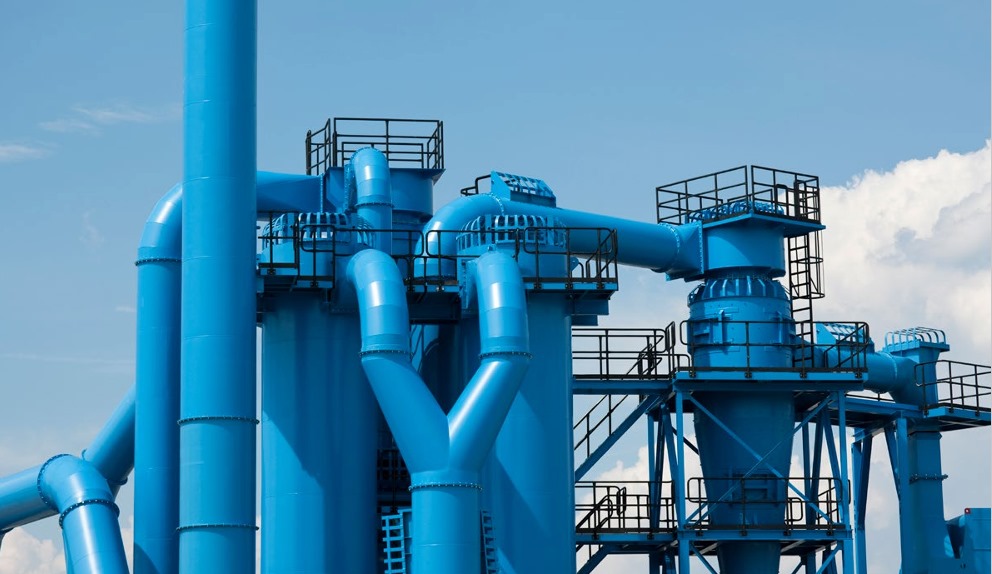
World Economic Forum – The role of Carbon Capture and Utilisation.

Carbon capture and utilisation (CCU) has the potential to become a valuable lever in wider efforts to transition towards sustainable and circular economies. By converting captured CO2 and other carbon emissions into carbon-based products, CCU can generate value from waste streams and potentially contribute emissions benefits. However, CCU pathways face significant barriers in the form of high costs, limited infrastructure and underdeveloped market frameworks.
With the exception of a few leading initiatives, CCU pathways currently receive limited policy support. In contrast, technologies that capture and permanently store carbon, such as Carbon Capture and Storage (CCS), are attracting more policy and private sector investment. This can be explained in part by the relative simplicity of modelling CCS compared to CCU. Current climate models are unable to address the granularity of CCU, given the diversity of sectoral and geographical contexts, as well as the specific technologies, energy and feedstocks used. By converting captured CO2 and other carbon emissions into carbon-based products, CCU can generate value from waste streams and potentially contribute emissions benefits.
From an emissions perspective, CCU provides an opportunity to reduce emissions from industrial value chains, as well as emissions avoidance and carbon removal in some cases. CCU can also promote broader adoption of carbon capture technologies. Carbon capture in isolation is not inherently productive and, without policy support, generally represents an added cost to conventional production. However, in combination with utilisation, there is an opportunity to offset these additional costs by introducing an additional revenue stream, potentially stackable with government subsidies. CCU is an emerging field and currently there are differing interpretations of emissions reduction benefits depending on life-cycle assumptions and baselines used. As technology pathways and applications mature, the evidence base of greenhouse gas reduction will need to grow accordingly, as confidence in these outcomes will ultimately determine whether CCU is scaled up. The potential emissions benefits from CCU vary depending on the end-use of the utilisation product, storage duration and carbon source.
If fossil emissions are utilised for short duration products such as chemicals or fuels, the direct impact on net atmospheric emissions is modest, although it displaces an equivalent quantity of new fossil emissions that would have otherwise been created. In theory, this results in avoided emissions, compared to a scenario in which the fossil carbon was not reused; however, the extent of this will be
dependent on the efficiencies of carbon capture and process of conversion to the final product. For capture and utilisation that results in permanent storage of fossil carbon, the result is a reduction of emissions compared to business-as-usual, equivalent to CCS. Given their abundance, the use of fossil point source emissions could support the scaling-up of CCU technologies, providing economic as well as potential emissions benefits.
However, claims of emissions benefits must be demonstrated with cradle-to-grave life-cycle analysis (LCA) and CCU must not be applied to extend the life of otherwise avoidable fossil emissions. For utilisation to be net-neutral or carbon negative, biogenic and atmospheric emissions sources must be used as no additional carbon is added into circulation. Both the cost and availability of captured carbon
emissions will influence the scalability of CCU applications. Currently, atmospheric emissions are the most expensive and least abundant, with direct air capture (DAC) deployment in its infancy. More abundant emissions sources therefore have the potential to be near to mid-term enablers of scale. This includes both point source emissions from industrial sectors with unavoidable emissions, such as lime production, waste, and paper and pulp, in addition to biogenic sources from ethanol, waste, biogas and bioenergy facilities.
Forecasting utilisation volumes is challenging, given the diversity of CCU contexts and the extent to
which CO2 destined for sequestration could be reprioritized for feedstocks. Projections vary across
studies, due to differing assumptions and scenarios. In its 2019 study, the International Energy Agency (IEA) projected between 250 and 878 million tons per annum (Mtpa) of CO2 utilisation by 2060.
In its subsequent 2020 Special Report on Carbon Capture Utilisation and Storage, IEA projected that 189 Mtpa by 2030, 369 Mtpa by 2050 and 877 Mtpa by 2070 of captured CO2 would have to be utilised in line with its Sustainable Development Scenario. This represents roughly 9% of all captured CO2 within the scenario. In 2024, the Oil and Gas Climate Initiative (OGCI) forecast that between 430 and 840 Mtpa of CO2 could be utilised by 2040. However, in contrast to these forecasts, the project pipeline of investments in CCU remains very low, due to systemic market barriers currently facing the sector, with only around 21 Mtpa in development to 2040.
Team Maverick








Amit Shah Launches Mass Plantation Drive, Unveils Development Projects in Gandhinagar
Union Home Minister and Minister of Cooperation Shri Amit Shah today launched a ‘mass plan…

Amit Shah Launches Mass Plantation Drive, Unveils Development Projects in Gandhinagar
Union Home Minister and Minister of Cooperation Shri Amit Shah today launched a ‘mass …