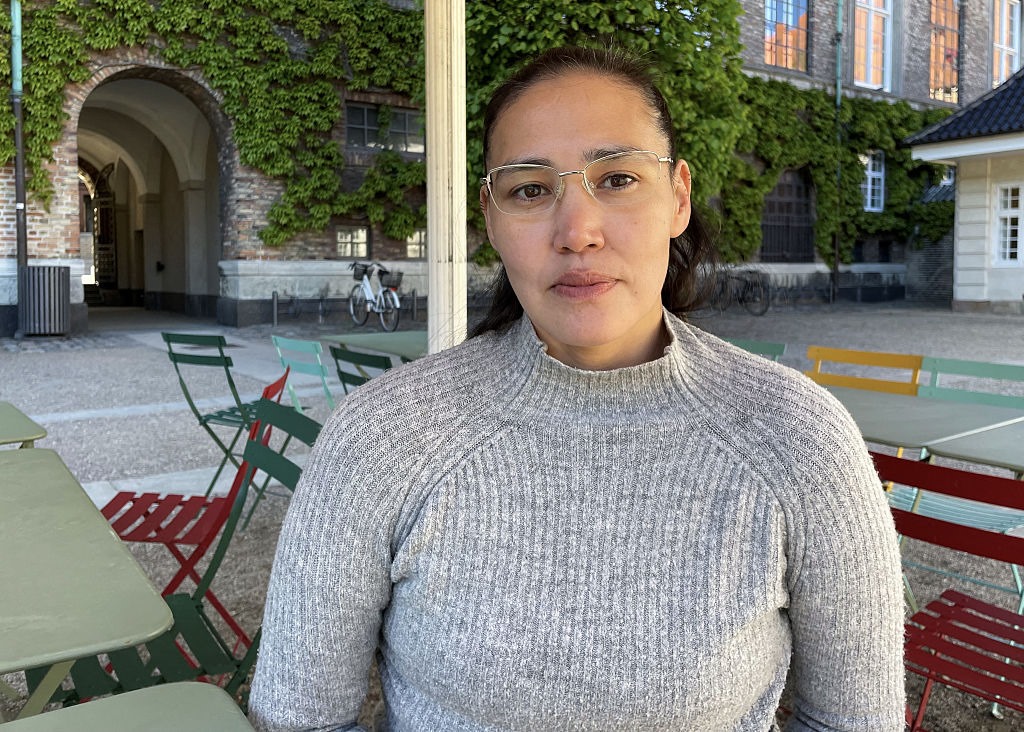
The Machiavellian FKU in Denmark – Human Rights Grossly Violated.

Oct 2025 : While, the unit of Pain is measured in “Dolls” – it is the Mothers who experienced the most, ranging from 9.5 Dolls to 9.9 Dolls during the Labour Pain – while giving birth to their child. It is noteworthy that human beings can’t sustain a pain more than 10.0 Dolls.
In Denmark, the government make Mothers undergo a Parenting Test with mathematical assignments; passing which entitles them to keep their own baby, indeed a Machiavellian system. For Catholics, the tests raise deeper questions about parental rights and the relationship between the state and the family.

Recent unveiling of a legal paraphernalia of an 18 year’s old woman from Greenland’s to regain custody of her baby, after the child was taken away by government authorities just an hour after the baby was delivered, has cast a light on the long-standing use of state-mandated parenting tests to determine whether the parent is fit to raise their child. If a mother fails to accomplish the test, comprising math problems and geography questions, the government can forcibly take the child away.
That’s what happened to Ivana Bronlund; Protests in Denmark and Greenland this summer called for Bronlund to be reunited with her daughter, born on 11th August, 2025. Supporters did not take issue with the use of parental-competence tests per se. Instead, they argued that the parental-competence tests were biased against Greenlanders because they were not sufficiently sensitive to Greenlandic culture. And for the Catholics, the tests raise deeper questions about parental rights and the relationship between the state and the family.
The Controversial Test –
The parental-competence test, or FKU, is carried out by a psychologist and consists of psychological evaluation interviews with the parents and children, observations of their interactions, and even math problems. The test includes questions like “What is glass made of?” and “What is the name of the big staircase in Rome?” It is designed to determine personality, cognitive abilities, intelligence and psychological health, among other things. It takes about 15 to 20 hours to complete and is conducted over the course of several months. It is not required for all parents. Local governments in Denmark’s municipalities (similar in size to U.S. counties) only require the investigation when they judge that there are significant welfare concerns in a household.
This past January, the Danish government who are eager to improve relations with Greenland following Donald Trump’s calls for closer ties or annexation with the U.S. responded to concerns about the test by discontinuing its use for Greenlanders. The decision took effect several months later.
While Bronlund’s daughter was born in August, after the rule change, officials determined that she was sufficiently Danish to be subjected to the test because she had lived in mainland Denmark since she was a baby. A major reason the government deemed Bronlund unfit to parent was that her father had abused her as a child. The one hour she was allotted with her daughter “was the best hour of my life”, she told Media Reporters on September 15th.
Greenlandic parents are now assessed by a new special unit called VISO that has expertise in Greenlandic culture and language. The normal test requirement, however, is still in force for others in Denmark.
Sophie, a woman from Denmark whose three children were taken from her in 2021, told the Danish news site DR, “I can’t even describe how I felt afterwards. I didn’t want to be anywhere. It was so hard to be in my body”.
Danish Minister for Social Affairs and Housing Sophie Haestorp Andersen acknowledged that “a severe mistake has been made” in subjecting Bronlund to the test, despite the removal of the requirement for Greenlanders. However, On September 22nd, a national appeals board ruled that Bronlund is to be reunited with her daughter.
In 2022, a total of 2,712 children in Denmark were placed in foster care against their parents’ will. This number reflects the total number of children removed, not just those in cases in which a parent took and failed the test. According to the Danish Institute for Human Rights, the issue of family separation is much more likely to affect Greenlandic families; 7% of children in Greenland live outside the home, compared to 1% across Denmark as a whole. Some argue that prejudice makes government officials more likely to suspect Greenlanders of being incompetent in parenting.
The degree to which prejudice plays a role is unclear, but Greenland suffers from deep societal ills. It has one of the world’s highest alcoholism rates and, if counted as a separate country, has the world’s highest suicide rate, more than twice as high as Guyana, the second on the list. According to the 2018 “Greenland Population Survey” by Greenland’s National Board of Health, 20% of children born after 1995 had been exposed to sexual abuse.
The resolution of Bronlund’s case came just before Prime Minister Mette Frederiksen traveled to Greenland to deliver an apology on behalf of the Danish government for an even more egregious case of state intrusion on the life of the family.
A newly released 347-page report details that, beginning in the 1960s, Denmark carried out a forced sterilisation campaign on Inuit women in Greenland. The women and girls, some as young as 12 years old were implanted with contraceptive devices without consent or knowledge of the procedure’s effects. Half of fertile women in Greenland in the 1960s and 1970s had IUD implantations. The sterilisations were carried out in the name of preventing overpopulation in Greenland, whose population had been increasing along with living standards. The island’s population, now roughly 57,000, has been stagnant since the early ’90s.
A Violation of Parents’ God-Given Rights:
“This is an outrageous example of state intrusion into the family”, said Stephen Krason of the Bronlund case. Krason, professor emeritus of political science at Franciscan University and president of the Society of Catholic Social Scientists, has written on issues of family rights and is the editor of the 2023 book Parental Rights in Peril. “How can you really turn something like parental capability into a matter of something you can determine from some kind of a test? It’s one of the flimsiest things I’ve ever encountered, frankly”.
In the 1891 encyclical Rerum Novarum, a seminal work of Catholic social teaching, Pope Leo XIII lends strong support to the parents’ right to authority over their children, free from state interference.
“Paternal authority can be neither abolished nor absorbed by the State. The contention is that the civil government should at its option intrude into and exercise intimate control over the family and the household is a great and pernicious error”. Leo grants that the state may intervene in the affairs of the family, but only in cases in which family members pose a grave risk to each other.
Guillermo Morales Sancho has worked on issues of parents’ and children’s rights since 2017 and serves as an attorney for Alliance Defending Freedom International, an organization based in Vienna that advocates for Christians and Christian values in legal cases around the world. ADF International has brought numerous parental-rights cases before the European Court of Human Rights, including the landmark 2019 Strand Lobben v. Norway case in which the court ruled against the state’s attempt to approve an adoption of a child who had been forcibly removed from the mother’s care.
Morales Sancho argues that the issue with the Danish tests is that they invert the burden of proof, assuming that the parents are incompetent until proven otherwise by a state psychologist. “It is the exact polar opposite. Parents enjoy the rebuttable presumption of properly taking care of their children, and only when neglect or abuse is proven is public power’s subsidiary intervention justified, using the least restrictive means, with the aim of making itself unnecessary”.
State Replacing God and Family –
Scandinavians are no strangers to far-reaching state intervention in their personal lives. Denmark, Sweden and Norway are famous for their generous welfare programs, high taxes and widespread trust in government.
Iben Thranholm, a Danish journalist and convert to Catholicism, explained that this is also the reason they are some of the world’s least religious countries. “The state is our father, mother and nanny. Many Danes tend to think, ‘I don’t need God because the state can provide for me’”.
When government cares for every need, from health care to education to housing, the need to rely on God and family members is less palpable. She pointed out that 40% of households in Denmark are occupied by only one individual. If a woman wants to start a family, she doesn’t even need a man: Denmark will pay the costs for artificial insemination. The result of this detachment from God and family, she said, is a spiritual pandemic of loneliness, anxiety and depression. “And the state cannot do anything about that. The state cannot make you feel loved or create a family for you”, Thranholm reasserted.
In the modern secular Denmark created by the welfare state and the cultural changes of the 1960s, hospitals have become the new churches. “When people realise that the system cannot anymore rescue them because their sickness is so serious that they’re probably going to die, or there’s nothing more that can be done, then people start to think about God”.
Parental Rights in America –
Serious issues with parental rights are not limited to Denmark. As Morales Sancho explained, “Countries like Sweden, Norway, Portugal, Spain, the Netherlands, Croatia and many others have repeatedly been found to violate parental rights”. He pointed out that a major rising issue in Europe is collaboration between government institutions and trans activists to carry out forced removals when parents do not support gender transition for their trans-identifying children.
America has major problems too, said Krason. The 1974 Mondale Act, which established Child Protective Services, gave the government far too much ability to interfere in the life of the family, he argued. “The child protective system has been abusive, utterly abusive, of [the] legitimate integrity of the family and rights of parents. Anything can be put into the category of child neglect. The definition is not precise at all”.
He advocates for a long-overdue reform of Child Protective Services that would remove the authority of social workers trained in ideological and family-skeptical university programs and replace them with clear definitions of abuse in the criminal legal code. He adds that genuine abuse and neglect are quite rare in intact families and that problems are more likely to arise from parents cohabiting with partners not related to the child.
It is still unclear when exactly Bronlund and her daughter will be together again. When it does happen, it will be both a joyful day for Bronlund and a small symbolic victory for the family in Denmark. In an Instagram post following the reversal of the decision, she wrote, “My heart is whole again”.
Team Maverick



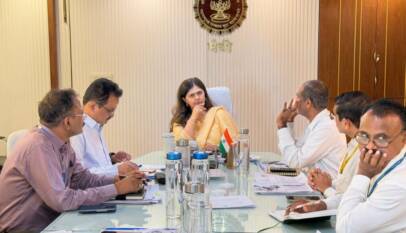
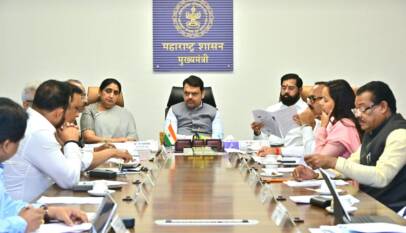
CM Bhajanlal Sharma Reviews Ramjal Setu Link Project, Calls for Fast-Track Execution
Jaipur, April 2026 : Rajasthan Chief Minister Bhajanlal Sharma chaired a high-level meetin…
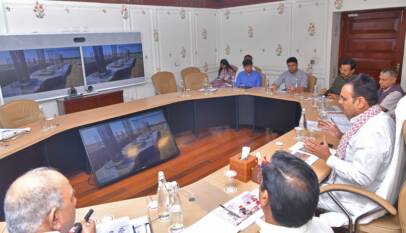
CM Bhajanlal Sharma Reviews Ramjal Setu Link Project, Calls for Fast-Track Execution
Jaipur, April 2026 : Rajasthan Chief Minister Bhajanlal Sharma chaired a high-level meeting to …