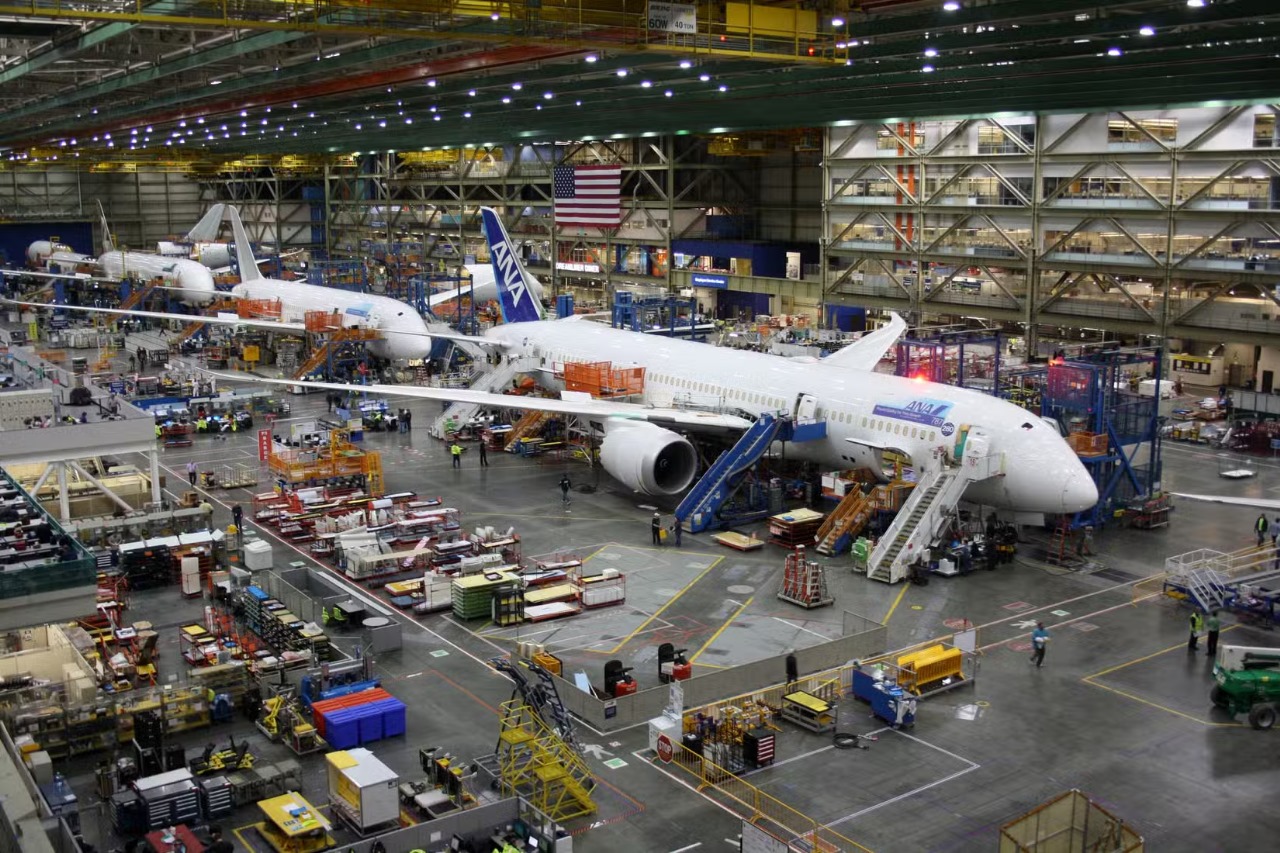
Airbus and Boeing have asserted that No New Commercial Airplanes In Near Future.

Oct 2025 : During an industry conference in Prague, both Airbus and Boeing have downplayed the potential of a possible near-term launch of new next-generation narrowbody models.
Darren Hulst, Boeing’s head of marketing, was quick to point out that a Boeing 737 successor model is many years away. The manufacturer highlighted that its principal objectives at this time include certifying two more Boeing 737 MAX family variants, the Boeing 777X passenger family, and the Boeing 777XF next-generation freighter. These moves will help stabilise a company that has been saddled with around $50 billion in debt. Boeing 777X certification may slip as far back as 2027, although some industry analysts think that even this timeline could be ambitious. A meeting between Boeing’s CEO and engine maker Rolls-Royce continues to reflect Boeing’s long-term interest in exploring more next-generation technology. However, it appears that this is not related to any real aircraft type announcement. Airbus Asset Management Director François Collet said that any new model must deliver at least a 25% improvement in efficiency.
The process of delaying clean-sheet narrowbodies currently freezes the competitive landscape of the commercial aviation industry. Both Boeing and Airbus are planning on selling Airbus A320 neo and Boeing 737 MAX derivatives well into the 2030s. This will continue to extend the models’ backlog scarcity and support higher pricing and leasing rates.
Airlines are currently planning incremental efficiency gains, introducing small derivative models as opposed to offering a gigantic one-step improvement in efficiency that a clean-sheet widebody could provide. However, this slows decarbonisation timelines and keeps fuel at a larger overall cost share. Lessors are set to benefit as residual values for in-service and near-term deliveries remained strong, and overall placements remained fairly easy. Engine makers continued to prioritise reliability and maintenance economics over risky new architectures, lifting aftermarket revenue generation potential significantly.
Aircraft capacity growth is mostly constrained by large supply chains and certification queues, which support improved yields. From a strategic perspective, the Airbus A321 family preserves the type’s range and gauge edge. Boeing, on the other hand, can buy time to stabilize its Boeing 737 MAX and Boeing 777X narrative. Across the board, aircraft values are expected to increase, and incremental technological advancements will drive innovation.
At the end of the day, the commercial aircraft market is still a few years away from rapid widespread change. The technology to support next-generation clean-sheet models remains at least a decade away, and manufacturers are not particularly interested in pursuing these projects right now. Ultimately, commercial aircraft demand drives how airlines choose to allocate capital towards investments in these kinds of development programs. Aircraft development is undeniably a high-risk, high-reward process, and manufacturers that fail to effectively manage their assets and liabilities will struggle. Nonetheless, there will eventually come a time when both Boeing and Airbus elect to invest in this kind of development. What is unclear to us at this specific moment in time is exactly when that will be.
Team Maverick







From a Charity Photo to the World Cup Final: Messi and Yamal Set for Extraordinary Reunion
New York, July 2026 : Football has produced countless remarkable stories over the years, b…

From a Charity Photo to the World Cup Final: Messi and Yamal Set for Extraordinary Reunion
New York, July 2026 : Football has produced countless remarkable stories over the years, …