An attack on the Judiciary system globally.

Oct 2025 : On 06th October, a lawyer while contesting a suit inside the Apex Court – Supreme Court of India had hurled shoes at the Chief Justice of India. It is surprising that even after a day has passed off, legal action against the Judicial Hater is yet to be reported. As everyone, including senior journalist, experts of the constitutional system are engaged in exploring the reason, another such incident which is more horrifying has been reported from the United States of America.
A South Carolina Circuit Court Judge Diane Goodstein who had outraged the Donald Trump administration, had received an onslaught of violent threats before an explosion tore through her $1.1 million Edisto Beach home, going up in flames on Saturday home on 04th October. The fire, now under investigation by authorities, left three people severely injured including Goodstein’s son and her husband, former Democratic state lawmaker Arnold Goodstein.
Before the explosion Goodstein, 69, had come under fire from the Trump administration because she demonstrated audacity in issuing a temporary restraining order blocking the Department of Justice from accessing voter registration data held by the South Carolina Election Commission.
Immediately, on September 05, Assistant Attorney General Harmeet Dhillon, a Trump appointee, posted on X that the DOJ “would not stand” for Goodstein’s ruling. “This DOJ’s Civil Rights will not stand for a state court judge’s hasty nullification of our federal voting laws. I will allow nothing to stand in the way of our mandate to maintain clean voter rolls”. What followed was a barrage of threatening replies, some calling for Goodstein’s disbarment, others suggesting imprisonment, or even worse.
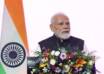
The incident in India was immediately condemned by the Honourable Prime Minister, Mr. Narendra Modi, who has assured that no stones would be left unturned in prevailing the highest dignity of the abode of the Indian Legal System.
In recent decades, the world has witnessed various examples of elected governments verbally attacking the judiciary, accusing judges of bias, or claiming that court decisions are politically motivated. Despite the prevalence of such court-curbing practices, we know very little about when exactly governments decide to verbally attack the judiciary.
Focusing on the effect of political corruption, the objective of this study is to understand:
1) whether and, if so, how corruption affects governments’ attacks on the judiciary.
2) whether and, if so, how its effect changes across different political contexts.
We argue that in countries with fully or partially independent media, verbal attacks on the judiciary would increase with the level of corruption. However, in regimes where the media is not independent, political corruption would not have a significant effect on attacks on the judiciary.
With the rise of populism and its anti-elitist rhetoric, democratically elected governments have increasingly sought to curtail the power and independence of the judiciary through various strategies. Beyond legal and institutional attempts to weaken the judiciary, verbal attacks against judges and courts have become more common.
Numerous instances show that such government attacks violate the rule of law, trigger institutional crises, undermine judicial independence, and influence judicial behavior. However, despite the prevalence of these interbranch conflicts, relatively few studies have examined the conditions under which rulers are more likely to erode judicial independence.
Social experts claim that governments curtail judicial independence when executive power is highly centralised. The reasoning is that under a strong presidency, opposition forces have greater incentives to challenge the executive, which, in turn, increases the president’s motivation to control the judiciary as a defensive measure. Referring to this as the “offensive strike logic”, it has been long argued that rulers seek to curtail judicial power when they perceive an independent judiciary as a potential threat.
A common pattern emerges when examining instances of verbal attacks against the judiciary. Politicians frequently launch these attacks immediately after they become embroiled in corruption scandals. For instance, when Israeli Prime Minister Benjamin Netanyahu faced charges ranging from bribery to fraud, he described the case as a politically motivated “witch hunt” that resembled an “attempted coup d’état” aimed at overturning the will of the electorate.
Similarly, in South Africa, during Jacob Zuma’s presidency (2009–2018), multiple corruption-related charges, including fraud and money laundering, though were initially dropped but reinstated in 2016. In a 2021 statement, Zuma stressed his strong agreement with “the public sentiment that is starting to see the emergence of a judicial dictatorship in South Africa”.
Again, when Peruvian President Pedro Castillo faced charges of running a criminal organisation, he dismissed the accusations as a new form of coup d’état and accused the Attorney General of acting politically. These cases illustrate a clear trend: corruption charges often serve as a key trigger for verbal attacks on the judiciary by the ruling government.
Court-curbing is a broad term encompassing various attempts by ruling governments to curtail the power and independence of the judiciary. These efforts can be classified into formal and informal strategies. Formal court-curbing includes constitutional amendments and legislative measures designed to undermine judicial independence, such as restructuring higher courts or altering the appointment, removal, tenure, and salaries of judges. In contrast, informal court-curbing involves practices such as removing judges from office, verbally attacking them, or non-compliance with their decisions.
To understand how, why, and through which mechanisms corruption influences the decisions of the ruling governments to attack the judiciary, it is essential to examine the potential benefits an incumbent government might gain from such attacks. For a government embroiled in corruption, the threat of public backlash, electoral defeat, and legal repercussions can be significant sources of concern. This fear is heightened by the personalisation of politics, where the executive is under constant scrutiny, and corruption charges against them carry substantial consequences. By blaming the judiciary and framing corruption allegations as politically motivated, the incumbent government may seek to diminish the perceived significance of political corruption in the eyes of the public.
The second possible benefit that those in power could derive from attacking the judiciary is the erosion of judicial credibility in the eyes of the public. Diminished public trust in the judiciary weakens its power and independence, making it more vulnerable to external intervention. Existing research suggests that when public confidence in the judiciary is low, citizens may perceive any political intervention in the judiciary as justified. Without strong public backing, judges may feel vulnerable to governmental pressure, potentially leading them to refrain from issuing rulings that challenge the executive.
Third, existing research suggests that when judges anticipate pushback or an override of their rulings, they may strategically adjust their decisions, opting for compromise rulings that align with the preferences of other political branches.
Finally, undermining the credibility of the judiciary in the eyes of the public may provide electoral advantages for the ruling party. Research suggests that lower trust in political institutions correlates with higher support for populist parties. To dismantle checks and balances, populists often seek to discredit the so-called “corrupt elite”, positioning themselves as true representatives of “the pure people”. In doing so, they frame democratic institutions, including the judiciary as self-serving and detached from the interests of ordinary citizens. The erosion of public trust in political institutions further reinforces the perception that political elites no longer act in the public’s best interest, fueling the support for populist parties. By using anti-elitist rhetoric and attacking the judiciary, populist governments can undermine the credibility of the judiciary among the public, potentially increasing their vote share in upcoming elections.
Judges play a crucial role in upholding democracy and the rule of law. Threats against them — whether physical, online, or reputational — undermine judicial independence and erode public trust in the justice system. When judges fear for their safety, it can impact their ability to make fair, impartial decisions. Likewise, misinformation, disinformation, and political attacks on judges contribute to a growing crisis of public confidence in the judiciary. This weakens the legal system’s legitimacy and makes it harder for courts to function effectively.
Suvro Sanyal – Team Maverick







Australia Calls India a Top-Tier Security Partner, Unveils Landmark Defence and Energy Agreements
Canberra, July 2026 : Australia on Thursday described India as one of its most important s…

Australia Calls India a Top-Tier Security Partner, Unveils Landmark Defence and Energy Agreements
Canberra, July 2026 : Australia on Thursday described India as one of its most …