EAM Jaishankar: ‘All Is Not Well with the UN’; Calls Out Security Council Member for Shielding Terror Group

The External Affairs Minister says UN decision-making no longer reflects global priorities, citing its failure to act against terrorism and safeguard developing nations’ interests.
New Delhi, Oct 24: External Affairs Minister S. Jaishankar has said that “all is not well” within the United Nations (UN), arguing that its decision-making has become increasingly disconnected from global realities and priorities. He criticised the UN Security Council for its inaction on terrorism, citing the example of a member nation that protected a terror group responsible for the recent Pahalgam attack in Jammu and Kashmir.
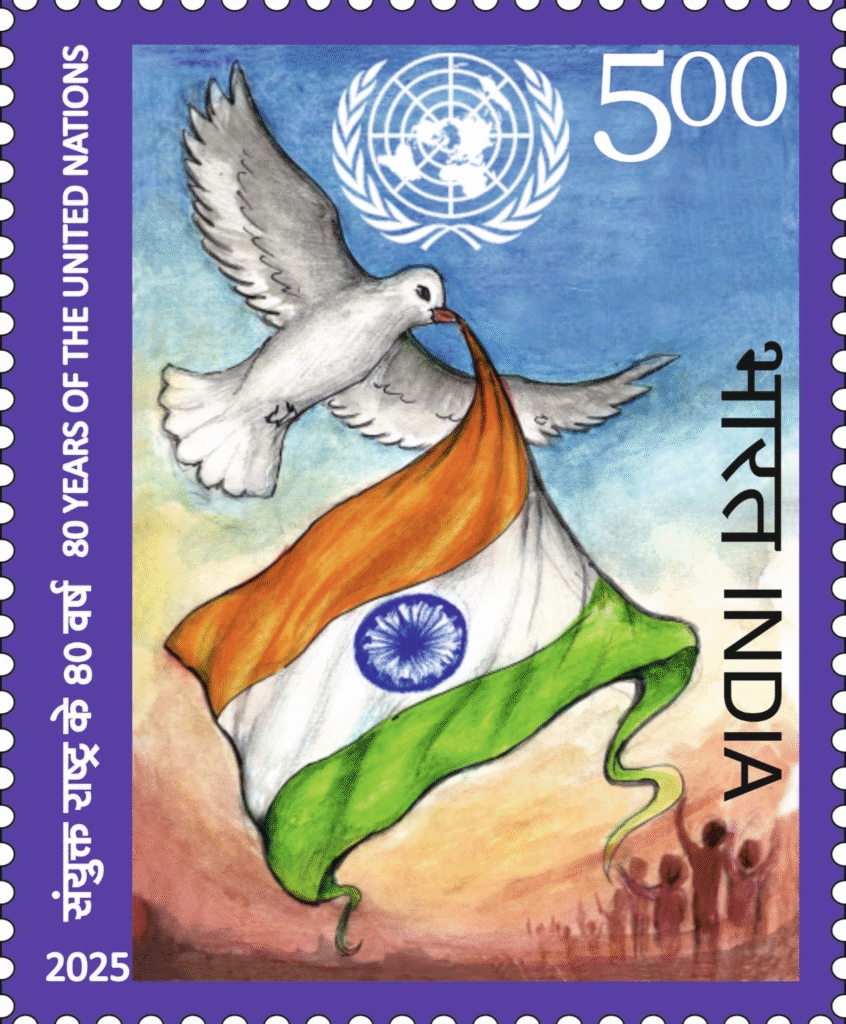
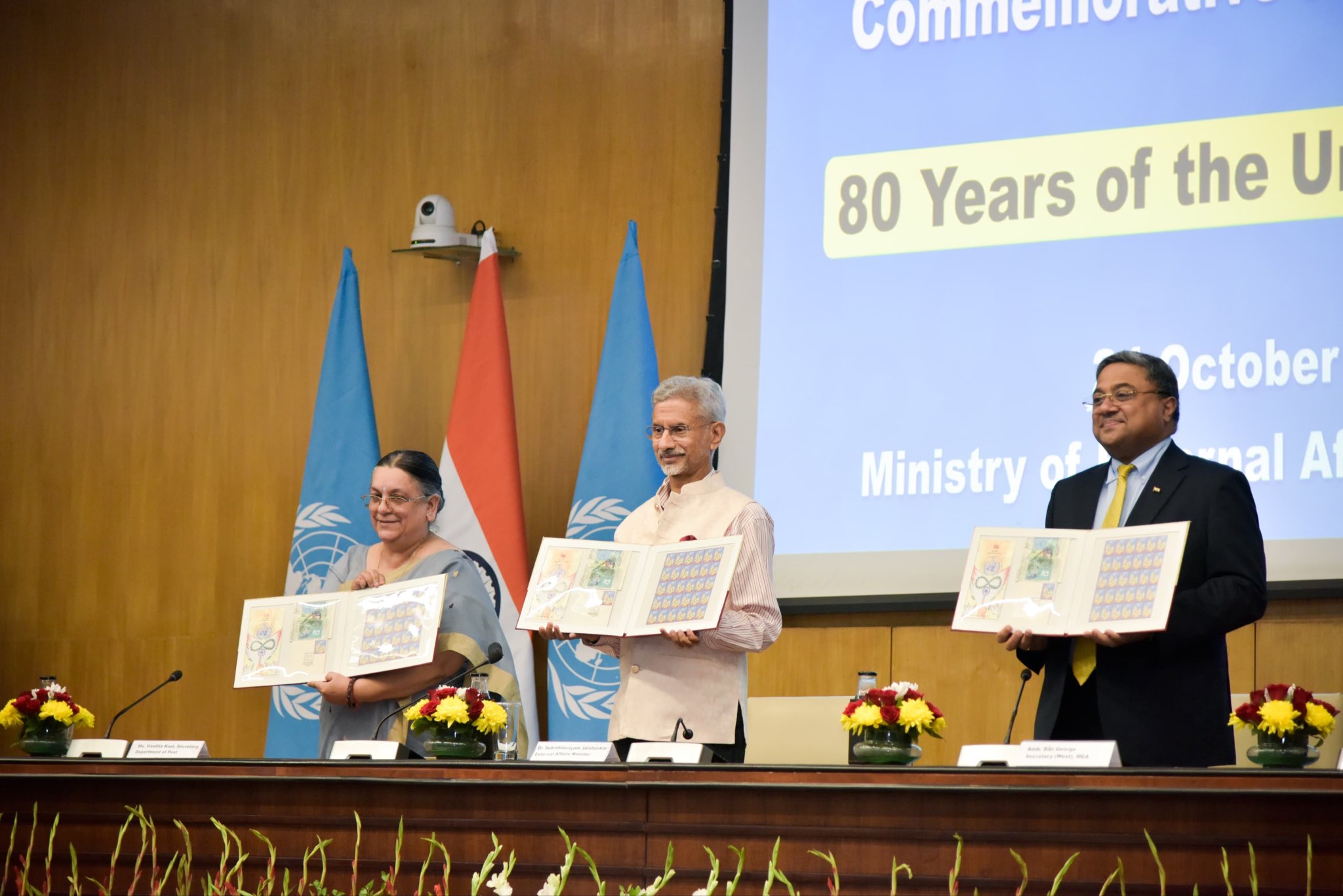
Speaking at an event in New Delhi on Friday to launch a postage stamp commemorating the 80th anniversary of the United Nations, Jaishankar reflected on India’s long-standing commitment to multilateralism and international peacekeeping. He paid tribute to the sacrifices of Indian UN peacekeepers and mentioned the Chiefs of Army Staff Conclave recently held in New Delhi, which brought together representatives from 30 troop-contributing countries.
However, Jaishankar also delivered a sharp critique of the world body’s functioning, noting that its “decision-making neither reflects its membership nor addresses global priorities.”
“That said, we must also recognise that all is not well with the United Nations,” he said. “Its debates have become increasingly polarised and its working visibly gridlocked.”
Pointing to the UN Security Council’s failure to act on terrorism, Jaishankar said: “Any meaningful reform is obstructed using the reform process itself. Now, financial constraints have emerged as an additional concern. How to sustain the UN even while seeking its reinvention is clearly a major challenge before all of us.”
He strongly condemned the selective approach of some nations toward terrorism, questioning the credibility of multilateral institutions that fail to act decisively. “Few examples are more telling about the challenges facing the UN than its response to terrorism,” he said. “When a sitting Security Council member openly protects the very organisation that claims responsibility for the barbaric terror attack, such as at Pahalgam, what does it do to the credibility of multilateralism?”
Jaishankar further criticised the hypocrisy of equating victims and perpetrators of terrorism under the guise of global strategy. “When self-proclaimed terrorists are shielded from the sanctioning process, what does that say about the sincerity of those involved?” he asked. “If the maintenance of international peace and security has become lip service, the predicament of development and socioeconomic progress is even more serious.”
He also highlighted the slowing pace of the Sustainable Development Goals (SDG) Agenda 2030, calling it “a significant metric of distress for the Global South.” According to Jaishankar, developing countries continue to face disproportionate challenges—from trade restrictions and supply chain dependencies to political domination by powerful nations—further widening the global divide.
Despite his criticism, the minister stressed that the world cannot give up on the idea of multilateral cooperation. “On such a notable anniversary, we cannot abandon hope. However difficult, the commitment to multilateralism must remain strong,” he said. “However flawed, the United Nations must be supported in this time of crisis. Our faith in international cooperation must be reiterated and indeed renewed.”
Jaishankar also underlined India’s unwavering commitment to the principles of peace, security, and development, even as global conflicts escalate. “We are witnessing multiple major conflicts that not only take a great toll on human lives but also impact the well-being of the entire international community,” he noted. “The Global South, in particular, has felt this pain, even as the more developed have insulated themselves from the consequences.”
Marking the 80th anniversary of the UN, the minister said the milestone was an opportunity for reflection and reform. “On UN Day, I would like to reiterate India’s commitment to the ideals of peace and security as well as development and progress,” he said.
“India has always been, and will continue to be, a strong votary of the United Nations and of multilateralism. Our commitment to global peace and security is reflected, among others, in our staunch support for peacekeeping. I am very glad that the first-day cover released today captures that particular facet as well,” he concluded.



Ukraine Inches Closer To European Union Membership.
Kyiv/Brussels; June 2026: Prime Minister of Ukraine, Yulia Svyrydenko, has posted on her ‘…
Ukraine Inches Closer To European Union Membership.
Kyiv/Brussels; June 2026: Prime Minister of Ukraine, Yulia Svyrydenko, has posted on her ‘X’ …