Chhattisgarh Silver Jubilee Celebration – “25 Glorious Years of Agricultural Progress”

Chhattisgarh Silver Jubilee: A Successful Confluence of Self-Reliant Agriculture, Farmers’ Hard Work, and Government Schemes
Korba, Oct 2025 :
“A Successful Confluence of Self-Reliant Agriculture, Farmers’ Hard Work, and Government Schemes”
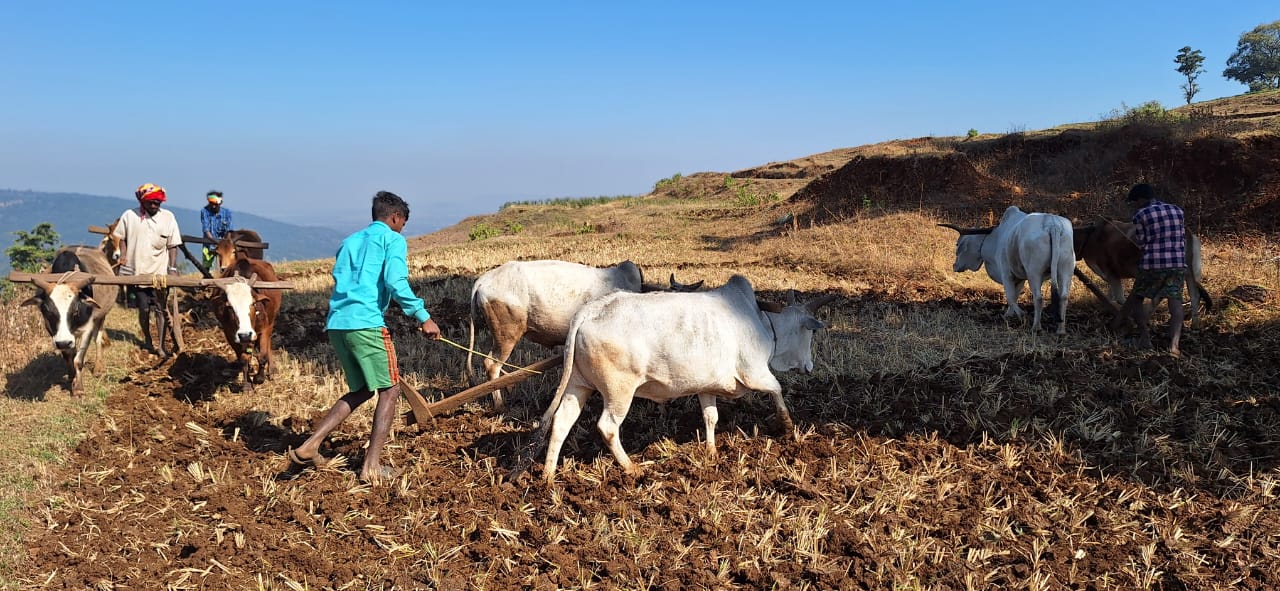
The state of Chhattisgarh is celebrating 25 glorious years of its formation as a Silver Jubilee Festival. On this occasion, new milestones of development are being written in every field. Along with education, health, industry, energy, and rural development, the agriculture sector too has achieved remarkable progress during these years. The 25-year journey of the Agriculture Department, Korba, is a living story of farmers’ hard work, the success of government policies, and integration of modern technologies.
When Chhattisgarh was carved out of Madhya Pradesh in 2000, agriculture was largely traditional in nature. But today, in 2025, it has transformed into a self-reliant and scientifically driven sector.
After the formation of the state, Korba district has continuously progressed in agricultural production, area expansion, seed and fertilizer distribution, and technical innovations. This 25-year journey stands as testimony that the farmers of Chhattisgarh are no longer just food providers but have become symbols of self-reliance.
In the year 2000, the total Kharif crop area in Korba district was 1,33,880 hectares, which increased to 1,37,066 hectares in 2025. Similarly, the Rabi crop area has also recorded significant growth—from 14,780 hectares in 2000 to 40,368 hectares in 2025. This growth is not just numerical; it reflects that farmers have moved beyond traditional farming toward crop diversification and scientific agriculture.
In 2000, under Kharif crops, the grain area was 2,096 hectares, which has now increased to 3,664 hectares. The pulse crop area has grown from 4,535 hectares to 7,581 hectares, and the oilseed crop area from 6,068 hectares to 9,608 hectares. The most remarkable expansion is seen in vegetables and other crops — from 2,081 hectares in 2000 to 19,515 hectares in 2025. These figures show that the district’s farmers are now actively adopting cash crops, vegetable cultivation, and diversified farming.
To enhance productivity, the availability of quality seeds was prioritized by the Korba Agriculture Department. In 2000, farmers were supplied with 2,501.25 quintals of seeds during the Kharif season, which rose to 39,404.34 quintals in 2025. Similarly, in the Rabi season, 482.5 quintals were distributed in 2000 compared to 1,994.27 quintals in 2025. Overall, the total seed distribution rose from 2,983.75 quintals in 2000 to 41,398.61 quintals in 2025. This remarkable increase shows growing awareness among farmers about quality seeds, supported by the department’s consistent efforts.
Fertilizers have also played a vital role in increasing productivity. Over the past 25 years, fertilizer distribution in Korba district has increased nearly fourfold. In 2000, farmers received 4,173 tonnes of fertilizers during the Kharif season, which rose to 16,778.73 tonnes in 2025. During the Rabi season, distribution increased from 479 tonnes in 2000 to 570.55 tonnes in 2025. Overall, fertilizer distribution rose from 4,652 tonnes in 2000 to 17,349.28 tonnes in 2025. These figures not only indicate increased efficiency in fertilizer use but also highlight that Korba’s farmers are now embracing scientific farming practices.
Over the last two decades, the agricultural landscape of Korba has undergone a complete transformation. Earlier, agriculture was merely a means of livelihood, but today it has become a profitable enterprise. Crop diversification, expansion of irrigation facilities, organic farming, and modern technology have strengthened the district’s agricultural foundation. Through Krishi Vigyan Kendras (KVKs) and the ATMA Project, farmers are continuously receiving training and guidance. Initiatives like soil testing, crop insurance, and the Pradhan Mantri Krishi Sinchai Yojana have played crucial roles in reducing risks and increasing productivity.
Women’s Self-Help Groups (SHGs) have also made their mark in agriculture. These groups have made significant contributions in organic manure production, vegetable cultivation, and seed processing, thereby boosting the rural economy and women’s economic independence. Youths are being inspired toward innovation and entrepreneurship in agriculture, with startups emerging in fields like drip irrigation, crop processing, and agri-marketing, opening new avenues for growth.
On this auspicious occasion of Chhattisgarh’s Silver Jubilee, the Agriculture Department of Korba takes pride in its achievements. This journey is not just a story of departmental schemes but a shared success of farmers’ dedication, technological awareness, and administrative commitment. Under the guidance of Chief Minister Vishnu Deo Sai, the state government’s decisive steps to make agriculture the backbone of Chhattisgarh’s economy have shown tangible results in Korba.
When determination and dedication come together, transformation becomes inevitable. This journey is not limited to the greenery of fields—it is reflected in the smiles on farmers’ faces, the spirit of self-reliance, and the strength of the rural economy.





Jaishankar, Rubio Push for Defence Pacts and Near-Final Trade Deal at Manila Meeting
Manila, July 2026 : India and the United States on Wednesday gave fresh momentum to their …

Jaishankar, Rubio Push for Defence Pacts and Near-Final Trade Deal at Manila Meeting
Manila, July 2026 : India and the United States on Wednesday gave fresh momentum …