Trump Revives Mediation Efforts to Ease Afghanistan-Pakistan Tensions

Washington, October 2025 : As regional mediators continue their efforts to bridge the rift between Afghanistan and Pakistan, U.S. President Donald Trump has unveiled new proposals aimed at fostering peace between the two South Asian neighbors.
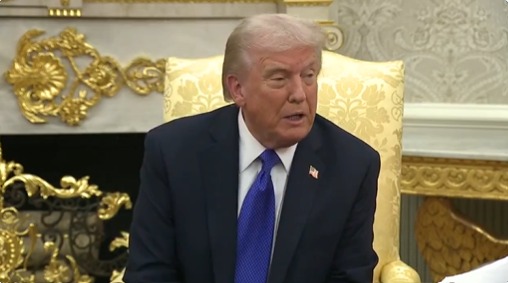
Speaking in Kuala Lumpur during a three-nation Asian tour, President Trump reaffirmed his commitment to mediating regional conflicts and promoting stability. His remarks came at a ceremony marking the anniversary of the ceasefire agreement between Thailand and Cambodia — an event he used to signal Washington’s renewed diplomatic engagement in Asia.
This is not the first time the U.S. president has cast himself as a global peacemaker. Over the years, Trump has repeatedly positioned himself as a negotiator capable of resolving international disputes, often linking such efforts to his longstanding interest in the Nobel Peace Prize, which he has yet to win.
In past statements, Trump has claimed that tensions between Afghanistan and Pakistan could be resolved “easily” with his intervention. Recent developments suggest that the two nations’ leaderships may be more receptive to U.S. involvement than in the past. Pakistan’s civilian government under Prime Minister Shahbaz Sharif and its powerful military establishment led by General Asim Munir have been working to reestablish close ties with Washington — a shift from previous years of strained relations.
According to Pakistani officials, Prime Minister Sharif has even re-nominated Trump for the Nobel Peace Prize, citing his potential role in advancing regional stability. During a recent visit to the White House, Sharif and General Munir reportedly discussed plans to seek U.S. investment in the development of Pasni, a small but strategically located deep-water port in Balochistan’s Gwadar district.
Images released by local media showed General Munir presenting President Trump with samples of rare minerals from Pakistan, part of an effort to position Pasni as a potential hub for critical mineral exports. The proposal reportedly appealed to Trump, who has frequently emphasized the need for the U.S. to diversify its access to strategic resources.
Behind these gestures lies Islamabad’s hope to quell a prolonged insurgency in Balochistan and Khyber Pakhtunkhwa, regions plagued by violence and unrest. Civilian casualties have mounted in recent months, with reports of deaths caused by both ground operations and aerial bombardments. Pakistan’s position received a significant boost in August, when the U.S. State Department designated the Baloch Liberation Army (BLA) a foreign terrorist organization, a move widely viewed as supportive of Islamabad’s counterinsurgency campaign.
U.S. troop deployments in advisory or limited operational roles could also help stabilize Pakistan’s volatile border regions, where cross-border clashes with Afghan forces have escalated in recent weeks.
Trump, known for his personal style of diplomacy, has reportedly described General Munir as “my favorite field marshal,” reflecting a growing rapport between Washington and Pakistan’s military establishment.
For the Taliban government in Kabul, a potential U.S.-brokered ceasefire presents both challenges and opportunities. While the group remains internationally isolated and its assets frozen, a temporary thaw with Washington could provide diplomatic visibility and limited engagement — even without formal recognition.
This would not be Trump’s first interaction with the Taliban. During his first term, his administration brokered the “Agreement for Peace in Afghanistan”, signed on February 29, 2020, in Doha, Qatar, where the Taliban’s political office was based. The agreement, concluded with the entity known as the “Islamic Emirate of Afghanistan,” included a clause explicitly clarifying that Washington did not recognize it as a state.
The accord also required that the Taliban ensure released prisoners would not pose a threat to U.S. security or its allies. However, the deal indirectly facilitated the rise of extremist offshoots such as the Tehrik-e-Taliban Pakistan (TTP), which splintered from the Afghan Taliban soon after.
Now, with tensions once again flaring along the Afghan-Pakistani frontier, President Trump’s renewed bid to mediate reflects his broader ambition to reassert U.S. influence in the region — and perhaps, to revive his long-cherished pursuit of global recognition as a peacemaker.
Team Maverick.


Assam’s 16th Assembly Session Begins Today; CM Unveils Key Agenda.
Guwahati; May 2026: Assam’s 16th Assembly session is set to begin today (May 21st 2026) wi…
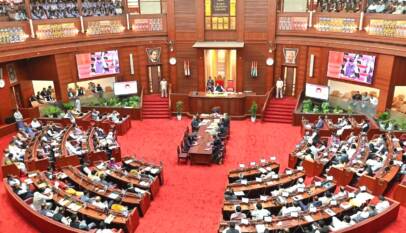
Assam’s 16th Assembly Session Begins Today; CM Unveils Key Agenda.
Guwahati; May 2026: Assam’s 16th Assembly session is set to begin today (May 21st …