Japanese Automotive Sector Defends $87 Billion in North America and Clings to the USMCA.

December 2025: Japanese automakers are not seeking privileges or adjustments in the 2026 review of the USMCA, rather they want to protect $87 billion invested in North America and preserve the most soughted economic integration between Mexico, United States, and Canada.
The 2026 review opens a debate between those who seek to protect investments and integration, those who fear for prices, and those who demand a new labour architecture.
Japan’s stance’s in the sector is relevant, as it is the third largest car manufacturer in the world, a power that moves global brands and operates one of the deepest production networks in the region. In its letter to the Office of the United States Trade Representative (USTR), the Japan Automobile Manufacturers Association (JAMA) stated that the agreement supports its regional expansion and that any alteration damages the bloc’s competitiveness.
The 14 manufacturer’s constituting the JAMA are: Toyota, Honda, Nissan, Mazda, Mitsubishi, Subaru, Suzuki, Isuzu, Hino, Daihatsu, Yamaha, Kawasaki, Mazda, and UD Truck Corporation.
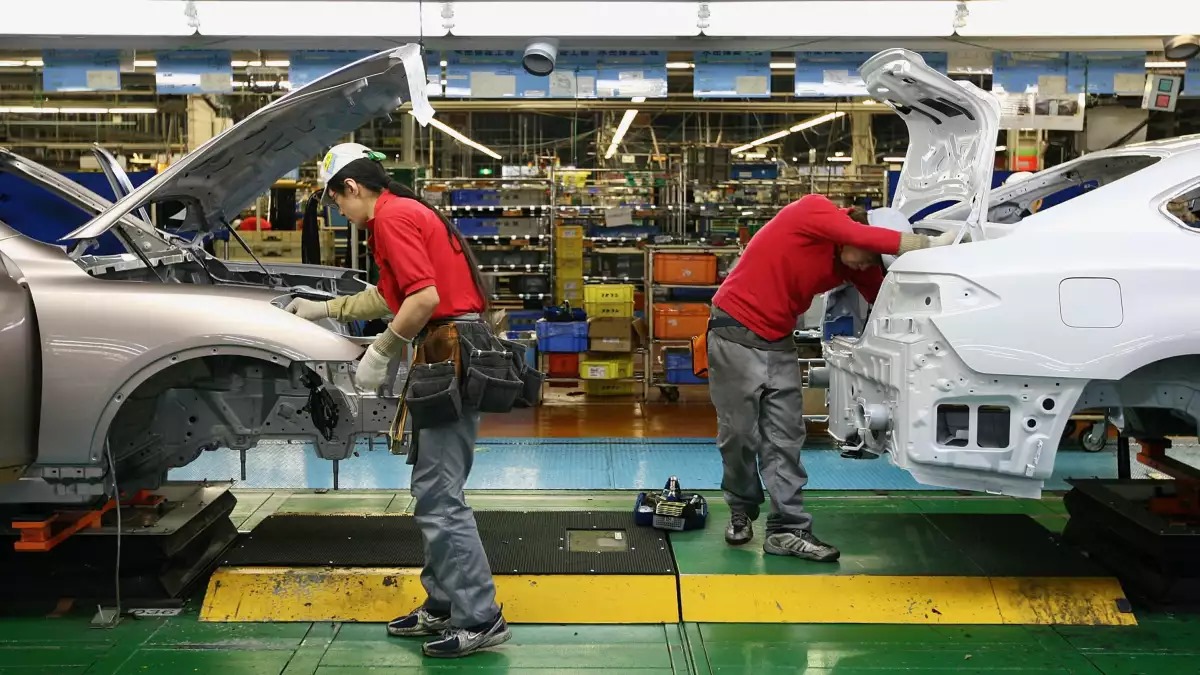
The industry’s stance avoids hierarchies, emphasizing that its trinational network does not diminish the role of the United States, but rather strengthens it. Twenty-five plants operate in the US, twelve in Mexico, and five in Canada. These facilities produce vehicles, engines, transmissions, parts, and batteries, supporting a supply chain that constantly crosses borders.
Mexican and Canadian operations reduce costs, increase efficiencies, and sustain the viability of new investments in the United States, where cumulative investment is around $66 billion. As a standard operating procedure (SOP), engines assembled in Ohio arrive at production lines in Guanajuato or Ontario, while transmissions and parts manufactured in Mexico and Canada support the U.S. assembly process. The USMCA created the tariff-free zone that allowed for long-term investment planning and maintained affordable prices for consumers pressured by inflation and the cost of credit.
JAMA states that its business model requires manufacturing near where they sell. Approximately 75% of the vehicles they sell in the United States are assembled within North America, and half of those come directly from U.S. plants. Units not sold there are shipped to Mexico and Canada.
The association also highlights new investments in electrification in the United States. Toyota inaugurated its battery plant in North Carolina, Honda is making progress on its joint venture with LG Energy Solution in Ohio, and Isuzu is building a truck factory in South Carolina, but these investments depend on clear regulations and regional coordination.
JAMA argues that the continuation of the USMCA protects the value of Japanese investment in the region and maintains North America as a global automotive benchmark platform. Furthermore, dealers of international brands, grouped in the American International Automobile Dealers Association (AIADA), also sent their comments to the USTR, in which they have emphasised that integration with Mexico and Canada is essential to keep vehicle prices under control and avoid an affordability crisis that is already putting pressure on millions of families.
By strengthening regional manufacturing, the USMCA helps reduce price spikes and sustains a more stable supply, a point the association considers crucial at a time when acquiring a new car is approaching a luxury. The warning comes with figures that illustrate the scale of the problem posed by the tariffs already in place in the sector. The average price of a new vehicle surpassed $50,000 for the first time in September 2025. The monthly payment is around $800.
According to the Center for Automotive Research, the tariffs will cost manufacturers an average of $4,600 per vehicle by 2027 and will put 3.9 million sales at risk over the next three years. AIADA emphasises that these impacts would not only affect assembly plants. They would also be felt at dealerships, where every drop in sales means fewer hires, reduced hours, and a decrease in community support.
The United Auto Workers (UAW) union accuses Mexico of maintaining depressed wages, failing to meet labour obligations under the agreement, and fostering a structure that it claims incentivises the closure of plants in the United States and displaces jobs to poverty-wage facilities south of the border. The union argues that the current dynamic perpetuates an unequal model. In its analysis, it cites the Independent Mexico Labour Expert Board, which concluded that “Mexico is not in compliance with its labour obligations under the USMCA” and that the agreement failed to reduce the wage gap.
It says that, while average wages in the United States and Canada grew steadily since 1991, those in Mexico remained stagnant for more than two decades. The union also argues that trade integration has benefited corporations, not workers. One of its proposals includes creating a “North American wage floor” through a sectoral wage floor, defining the minimum wage for any worker in that sector.
Unlike the business sector, for the union the 2026 review cannot be a minor update, but a complete rewrite.
While, attributing that Mexico is not in compliance with its labour obligations under the USMCA, the US steel industry points out that the largest increase in steel imported from outside the region comes from Mexico, while the Mexican sector notes that North America produces 106 million tons and consumes 130 million tons.
The U.S. steel industry has raised concerns about Mexico’s role in the North American market imbalance. The American Iron and Steel Institute states that Mexico has become the primary source of steel imports from outside North America, a trend that puts pressure on the USMCA and weakens the regional integration the treaty sought to establish.
The document sent to the Office of the United States Trade Representative details that external purchases by Mexico and Canada from non-EU countries increased from 12.3 million tons in 2014 to 21.5 million in 2024. “A 75% increase in just 10 years“, highlights the association that groups and represents the main steel producers in the United States, as well as companies that are part of its supply chain.
Most of this increase occurred in Mexico (around 16 million tons). The graph included in the report highlights that these imports now represent 45% of the Mexican market. Both, Mexico and Canada have not yet taken adequate measures to curb the sudden increase in global steel overcapacity, mainly from China, in their respective domestic markets.
It argues that this flow of foreign goods has direct effects on U.S. industry. It contends that steel imported by Mexico is used in intensive sectors such as automotive, which reduces export opportunity for U.S. manufacturers and weakens the incentives created by the USMCA to strengthen regional content.
The AISI points out that the treaty requires that 70% of the steel purchased by each assembler be of North American origin, but warns that this rule has not been fully implemented, especially the part related to the melt and pour standard.
It explains that the true origin of steel is determined at the point where it is first melted and poured into its solid form, a stage that concentrates most of the sector’s economic value, investment, and employment. Without this rule, steel melted and cast outside North America could undergo superficial processing in Mexico or Canada and receive preferential treatment under the USMCA, creating opportunities for trade diversion.
It also warns that some of that material arrives in Mexico, undergoes minimal processing, and then crosses the border as Mexican or Canadian merchandise to evade U.S. tariffs established under Section 232.
To correct these distortions, AISI proposes that Mexico adopt a trade policy identical to that of the United States under Section 232. The recommendation consists of establishing a 50% tariff on all steel imports from non-U.S. origin, without exceptions based on trade agreements. This measure would create a common “tariff wall” to curb trade diversion and prevent foreign steel from entering through the region’s most open link.
It also calls for internal changes in Mexico. It points out that programs like IMMEX, PROSEC, and Rule 8 facilitate the temporary or reduced-tariff entry of inputs that can then be shipped to the United States without facing the tariff burden designed to protect regional industry. AISI requests that these mechanisms be reviewed to prevent them from becoming routes for evasion.
Transparency is another key issue. The institute states that Mexico does not always publish complete data on steel imports and urges the country to release detailed information on all flows, including melt and pour origin , in order to detect trans shipments, undervaluation, and misclassification.
The United States and Canada already collect this information, so AISI believes Mexico should align its practices. With the USMCA renegotiation on the horizon, the US steel industry is pushing for the region to adopt a united front in the face of the global overcapacity crisis.
The National Steel Chamber (Canacero) in Mexico also sent its comments to the USTR. In 2024, North America produced 106 million tons of steel, well below the 130 million tons it consumed. The gap shows that the United States, Mexico, and Canada lack sufficient capacity to supply their own markets. The organisation states that, in an emergency, Mexico and Canada would be the only reliable suppliers for the United States. Therefore, it argues, applying tariffs under Section 232 to Mexican products weakens regional capacity rather than strengthening it.
In March of this year, Donald Trump imposed a 25% tariff on steel and months later raised it to 50%. Economy Secretary Marcelo Ebrard states that one of his priorities is to secure an advantage for the sector before the USMCA renegotiation in 2026.
Canacero indicates that, to close the deficit, North America needs massive investments and a transition that allows for the temporary import of semi-finished steel without affecting trade within the region. This flexibility, it states, should serve to guarantee inputs while production capacity is increased.
It proposes a concept that places it at the centre of the debate: Fortress North America. The idea seeks to have the three countries act as a bloc, align their industrial policies, and adopt a common defence against trade distortions from third countries. The principle includes equal treatment in measures against unfair practices, strict customs coordination, complete digitalization of trade, and the elimination of internal barriers that hinder regional exchange.
Team Maverick.







India Post Invites Citizens to Design Official Mascot, Announces Rs 2 Lakh Prize Pool
New Delhi, July 2026 : The Department of Posts has launched the ‘India Post Mascot D…

India Post Invites Citizens to Design Official Mascot, Announces Rs 2 Lakh Prize Pool
New Delhi, July 2026 : The Department of Posts has launched the ‘India Post …