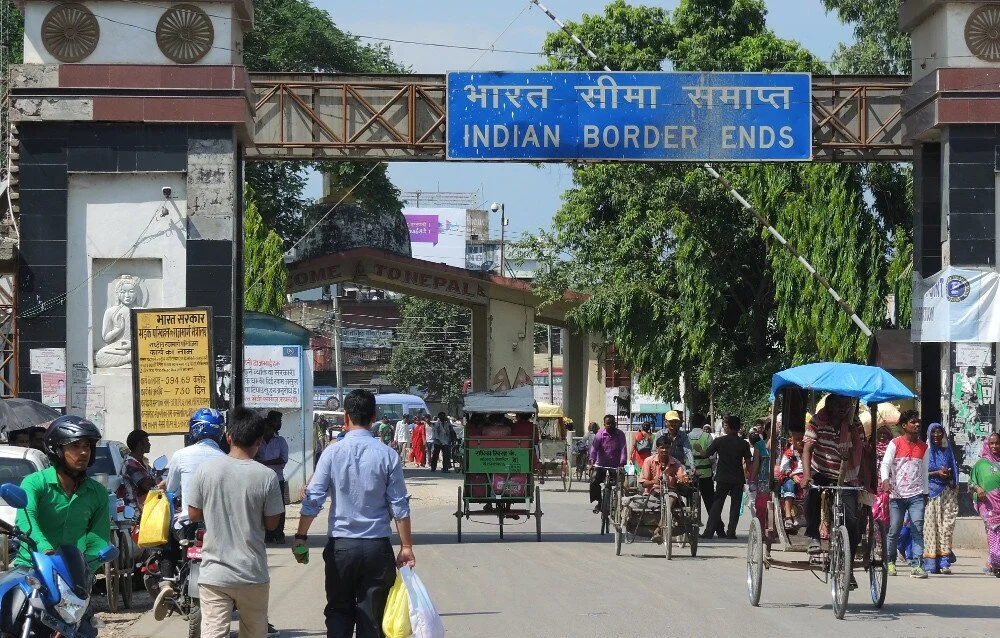
Nepal Allows Use of INR 200 and 500 Notes for Cross-Border Travel

Kathmandu, Dec 2025 : In a move aimed at easing cross-border travel and daily transactions, the Nepal government on Monday allowed Nepali and Indian citizens to carry Indian currency notes of denominations INR 200 and INR 500 while travelling between the two countries. The decision was taken at a Cabinet meeting and is expected to provide significant relief to travellers, tourists and border residents.
The Cabinet decision aligns with a notification issued by the Reserve Bank of India (RBI) on November 28, which permits individuals—except citizens of Bangladesh and Pakistan—to carry Indian currency notes of denominations above INR 100 while travelling from India to Nepal and Bhutan, or vice versa. Under the RBI guidelines, individuals can carry Indian currency up to a maximum limit of INR 25,000.
Addressing the media after the Cabinet meeting, Nepal’s Minister for Communication and Information Technology and government spokesperson Jagadish Kharel said the government had approved the use of INR 200 and INR 500 notes for both Nepali and Indian citizens travelling across the border. He said the decision was taken keeping in mind the practical difficulties faced by travellers due to restrictions on higher-denomination Indian currency notes.
Senior officials at Nepal Rastra Bank said the move would particularly benefit Nepali citizens who frequently travel to India for medical treatment, education and employment. Indian tourists and pilgrims visiting Nepal are also expected to gain from the decision, as they previously faced inconvenience and scrutiny for carrying Indian currency notes above INR 100, which were considered illegal in Nepal.
Restrictions on Indian currency in Nepal date back to India’s demonetisation drive announced on November 8, 2016, when the Indian government withdrew INR 500 and INR 1,000 notes to curb black money and corruption. Following the move, Nepal also banned the use of those denominations within its territory. India later introduced INR 2,000 notes as replacement currency.
According to Nepal Rastra Bank, unexchanged Indian banknotes from the demonetisation period, worth more than INR 50 million, are still lying within Nepal’s banking system. The issue has remained unresolved for years, affecting individuals and financial institutions.
Communities living along the India–Nepal border have long demanded relaxation of rules governing Indian currency, arguing that strict limits disrupted trade, travel and daily life in border regions where Indian rupees are commonly used.
Before demonetisation, Nepal had briefly lifted restrictions on INR 500 and INR 1,000 notes in 2015 in line with RBI relaxations. However, such notes had remained banned for long periods in the past, including from June 2000. The latest decision is being seen as a practical step toward restoring convenience and strengthening people-to-people ties between the two neighbouring countries.
(The content of this article is sourced from a news agency and has not been edited by the Mavericknews30 team.)







BJP Workers Are Full-Time Politicians, Rahul Gandhi Is Part-Time: Nitin Nabin in Telangana
Hyderabad, June 2026 : Bharatiya Janata Party (BJP) national president Nitin Nabin on Mond…
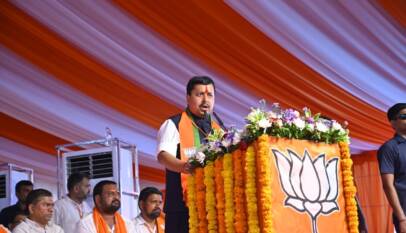
BJP Workers Are Full-Time Politicians, Rahul Gandhi Is Part-Time: Nitin Nabin in Telangana
Hyderabad, June 2026 : Bharatiya Janata Party (BJP) national president Nitin Nabin on Monday …