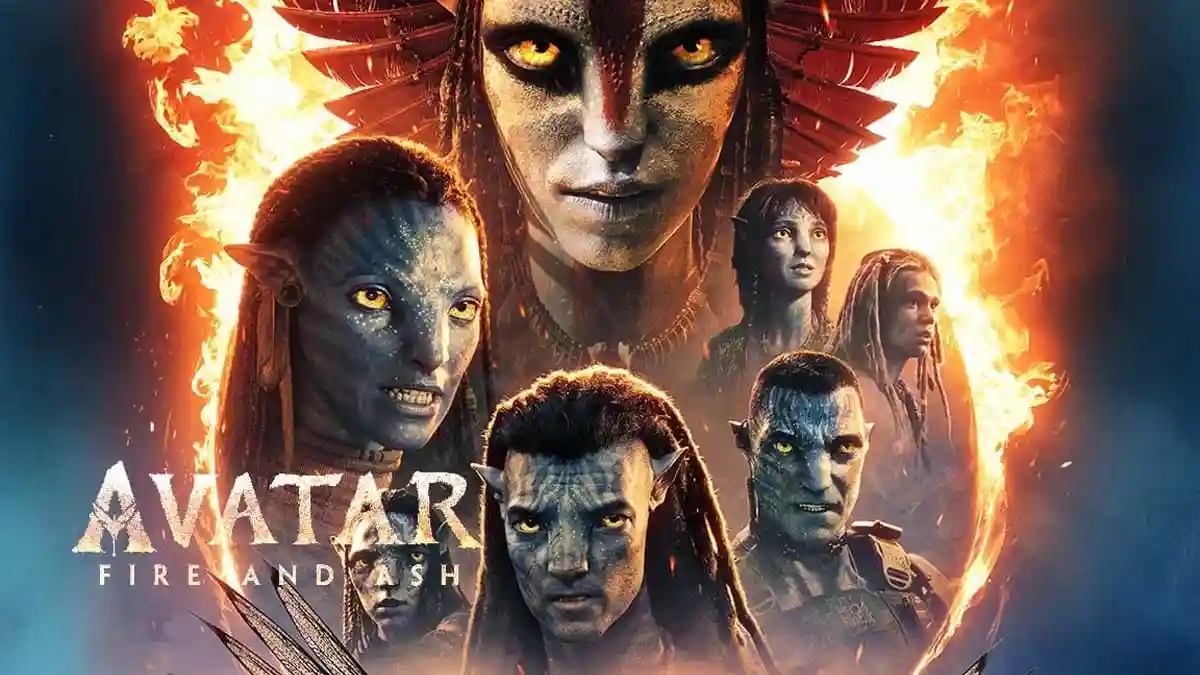
Avatar 3 Review: Old story, new look! Is the script’s weakness hidden behind Pandora’s ‘fire’ and ‘ash’?

Hyderabad, Dec 2025 : James Cameron’s much-awaited third film of the Avatar franchise, Avatar: Fire and Ash, has finally arrived in theatres. The world once again steps into the mystical, vibrant, and visually overwhelming land of Pandora, where the Na’vi continue their fight for survival. The film shifts from the lush green forests and deep oceans seen in previous chapters to a world engulfed in fire, lava, and ash, introducing a new visual palette—but also reviving the same old conflict.
If you are planning to watch this Hollywood spectacle over the weekend, this 1500-word review will guide you through the story, direction, performances, strengths, weaknesses, and whether the experience is worth your time and money.
A return to Pandora, but with a fiery twist
Cameron has always stunned audiences with revolutionary filmmaking. In 2009, the original Avatar shook the world and became a landmark in cinema history—not only because of its storytelling, but also due to its groundbreaking technology and visuals. With Avatar: The Way of Water in 2022, Cameron took audiences underwater, delivering jaw-dropping marine landscapes and emotional depth.
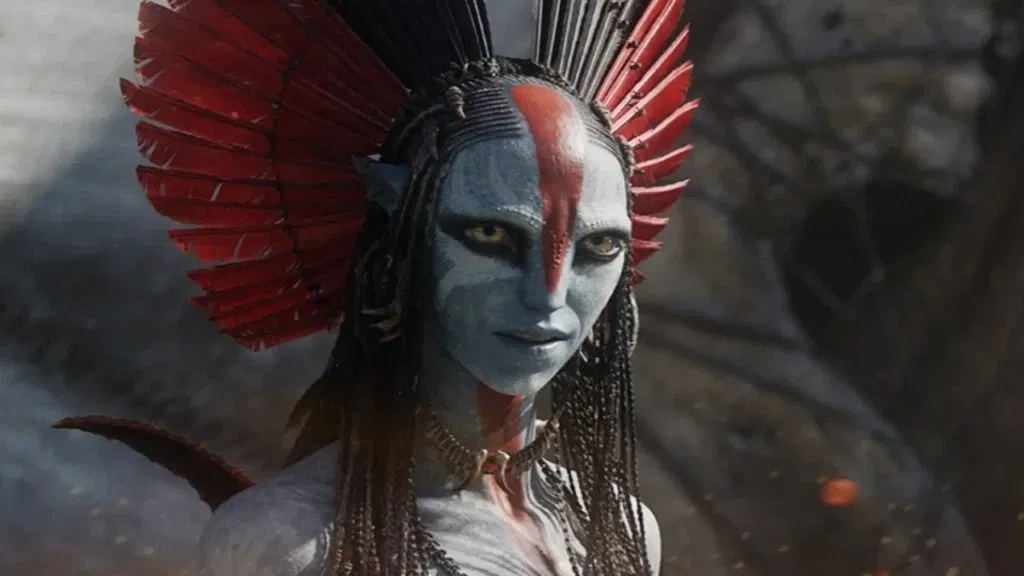
Now, Avatar: Fire and Ash takes us to an entirely new terrain—the volcanic, flame-filled world of the Makwan tribe, also called the Ash People. This territory is visually different, culturally complex, and narratively intriguing at first glance. But the real question is: does the story rise with the flames, or fall into ashes?
Story: Emotion, revenge, and familiar conflict
The film picks up immediately where The Way of Water ended. Pandora is still mourning, especially Jake Sully and Neytiri, who are grieving the loss of their eldest son, Netiam. The family remains deeply fractured. Lo’ak, the younger son, is haunted by guilt. He blames himself for Netiam’s death and carries emotional wounds that are slowly weakening family bonds.
But while the Sully family bleeds emotionally, enemies continue to circle like vultures. Colonel Miles Quaritch—Jake’s old nemesis—returns with deadly focus and a powerful new strategy. His goal remains unchanged: hunt Jake Sully, capture him, destroy Pandora’s balance, and secure human dominance.
This time he arrives with a lethal advantage—the fiery Makwan tribe, led by Varang, a fierce, unpredictable, and commanding warrior queen. With volcanic terrain, fire-based combat skills, and their own cultural ideology, the Makwan add a new dimension to the battle for Pandora.
The humans come equipped with new weapons, machines, and military systems, while the Na’vi defend themselves through unity and emotional resilience. The conflict between cold technology and living nature continues as the core theme.
The big question remains: Can Jake save his family, mend broken emotional ties, and protect Pandora? Or will flames consume everything the Na’vi hold dear?
Direction and writing: Stunning visuals, missing depth
James Cameron proves once again that nobody on the planet understands visual storytelling the way he does. Each scene is crafted like a painting—rich in colour, texture, scale, and movement. The action choreography is flawless. The environments feel real. The volcanoes, firestorms, and ember-filled air transport the audience into a whole new world.
But visually perfection alone does not build an unforgettable film.
The biggest issue with Avatar: Fire and Ash lies in its writing. The story feels repetitive, predictable, and heavily dependent on familiar emotional cues. The conflict—humans vs. Pandora—is something we’ve seen twice already. The emotional arc, although strong, lacks originality.
The screenplay suffers from uneven pacing and a runtime of nearly 200 minutes, which makes the narrative feel stretched. At points, the film drags, not because scenes lack energy, but because nothing new is being said.
While the visuals roar like fire, the storytelling burns at a much lower flame.
Acting performances: Powerful, honest, emotional
The cast delivers dedicated performances.
- Sam Worthington embodies Jake Sully with stoic strength and inner turmoil.
- Zoe Saldana is brilliant and fierce, giving Neytiri raw emotional weight.
- Kate Winslet is underused but impressive in limited screen time.
- Stephen Lang remains intense, aggressive, and intimidating as Quaritch.
- Oona Chaplin, as Varang, stands out—commanding, unpredictable, and charismatic.
Supporting characters like Lo’ak, Kiri, and Spider add emotional layers, especially in scenes of trauma, guilt, and reconciliation.
Visual and technical brilliance
Technically, the film is an achievement:
- CG and VFX are beyond extraordinary
- Production design is layered and imaginative
- Action staging is stunning
- 3D and IMAX effects elevate the experience
- Music and sound design amplify emotion and danger
- Cinematography captures beauty even in darkness and fire
These strengths make the film worth watching in theatres, even if the story falters.
Is it worth watching?
If you go to the cinema for visual grandeur, immersive 3D environments, emotional spectacle, and larger-than-life action—YES, this film is absolutely worth experiencing.
If you are expecting groundbreaking storytelling, narrative surprises, or a shift in direction—this may leave you disappointed.
Final verdict
Avatar 3 is a masterpiece of visual imagination but an echo of familiar storytelling. It shines, dazzles, and overwhelms the senses—but struggles to engage the intellect.
It is a golden frame holding a slightly faded picture—a technical marvel overshadowing a safe, repetitive script.
Still, it must be watched in theatres, because Pandora was never meant for small screens. It was meant to be lived, breathed, and felt.
And regardless of narrative flaws, Avatar: Fire and Ash gives you that experience.
Rating: ⭐⭐⭐ | MaverikNews30 Team







Parliament Paralysed for Second Day as Opposition Protests Over NEET Leak, Student Crackdown
New Delhi, July 2026 : Parliament remained deadlocked for the second consecutive day of th…

Parliament Paralysed for Second Day as Opposition Protests Over NEET Leak, Student Crackdown
New Delhi, July 2026 : Parliament remained deadlocked for the second consecutive day of …