BMC Elections Turn Crucial Test for Maharashtra’s Political Future

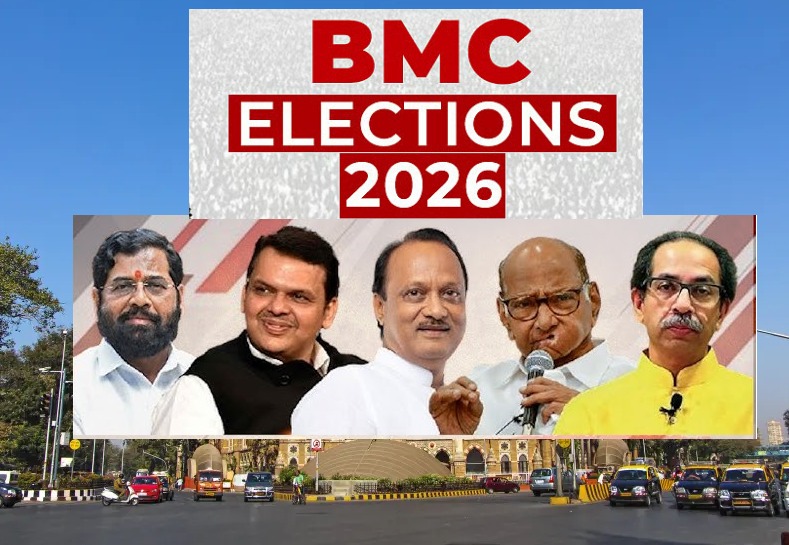
Mumbai, Jan 2026 : Maharashtra is set to witness one of its most significant civic electoral exercises as voting takes place for municipal corporations across the state, including the prestigious Brihanmumbai Municipal Corporation (BMC). Elections are being held in 29 municipal corporations, with results to be declared the following day. Among them, the BMC holds unparalleled political, financial, and symbolic importance, making this contest a high-stakes battle for all major political players in the state.
In Mumbai alone, polling is underway in 227 wards, where nearly 1,700 candidates are in the fray. According to official data, a total of 10,344,315 citizens are eligible to vote in the BMC elections. This includes 5,516,707 male voters, 4,826,509 female voters, and 1,099 voters registered under the ‘other’ category. The sheer scale of the electorate underscores the importance of the civic body, which controls one of the richest municipal budgets in Asia and plays a decisive role in shaping Mumbai’s infrastructure and governance.
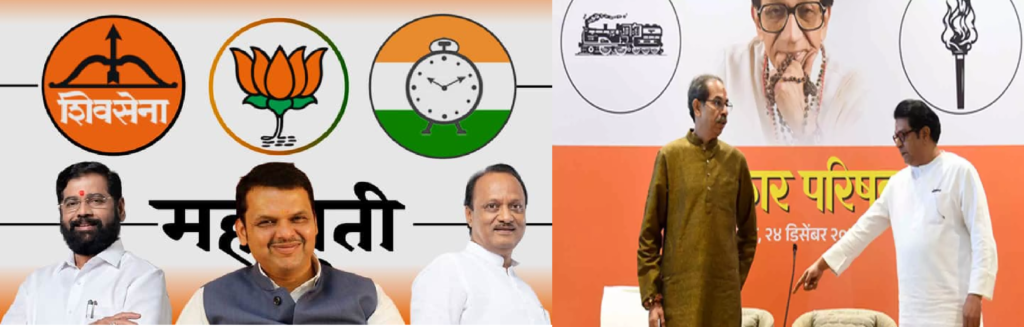
The elections are particularly crucial for the Thackeray family, as cousins Uddhav Thackeray and Raj Thackeray have joined forces in what is being described as a fight to reclaim lost political ground. The undivided Shiv Sena once dominated the BMC for over two decades, often in alliance with the Bharatiya Janata Party (BJP). In the last BMC elections, the Shiv Sena won 84 seats, while the BJP closely followed with 82 seats, together controlling the civic body. However, the political landscape has dramatically changed since the Shiv Sena split in 2022.
Uddhav Thackeray’s Shiv Sena (UBT) suffered a major setback in the 2024 Maharashtra Assembly elections, managing to win only 20 seats in the 288-member House. Raj Thackeray’s Maharashtra Navnirman Sena (MNS), which made a strong debut by winning 19 seats in the 2009 BMC elections, has since struggled to make a significant impact in state and national polls. For both cousins, the current civic elections are seen as a last opportunity to revive the Thackeray brand and reassert their influence, particularly in Mumbai, where the family once held unmatched sway.
The Thackeray cousins have framed the elections as a battle for the “Marathi Manoos,” positioning themselves against what they describe as the corporate-driven politics of the BJP-Shiv Sena alliance. Uddhav Thackeray has repeatedly warned voters against divisions within the Marathi community, recalling how linguistic unity once formed the backbone of Shiv Sena’s rise. Speaking at a rally marking his reunion with Raj Thackeray, Uddhav said that any further division among Marathi voters could prove disastrous for their political future, urging unity to safeguard identity and legacy.
Raj Thackeray, known for his fiery rhetoric, went a step further, calling the civic polls the “last election for the Marathi Manoos.” Addressing supporters, he appealed for vigilance and unity, asserting that Mumbai was built through immense sacrifices and that voters must protect its legacy. His remarks, including sharp instructions to party workers to prevent any irregularities at polling booths, were aimed at energising the cadre and conveying the seriousness of the contest.
Uddhav Thackeray also launched a direct attack on the BJP, accusing it of promoting “Adaniism” and attempting to alter Mumbai’s character. Invoking the legacy of Shiv Sena founder Balasaheb Thackeray, he urged voters to “bury the curse of Partition” caused by political splits and stand united. His speeches sought to blend emotional appeals with historical references, reminding voters of the Sena’s long-standing role in shaping Mumbai’s political and cultural identity.
On the other side, the BJP is contesting the BMC elections in alliance with the Eknath Shinde-led Shiv Sena, as part of the ruling Mahayuti coalition, which also includes the Ajit Pawar faction of the Nationalist Congress Party (NCP). Buoyed by a landslide victory in last year’s Assembly elections, the Mahayuti has projected confidence, focusing its campaign on development and governance rather than identity politics.
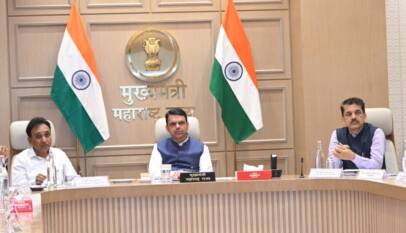
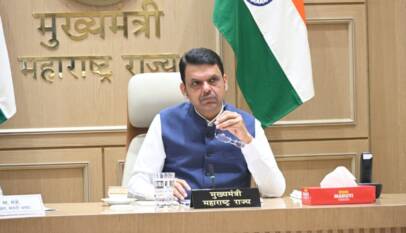
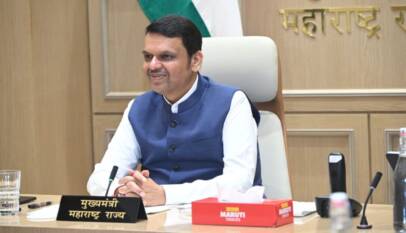
Chief Minister Devendra Fadnavis has consistently emphasised infrastructure development as the cornerstone of the alliance’s campaign. Flagship projects such as the Mumbai Metro expansion, the Coastal Road, and large-scale urban redevelopment initiatives have been highlighted as evidence of the government’s commitment to transforming Mumbai into a global city. Fadnavis has maintained that despite opposition attempts to divert the narrative, the Mahayuti remained focused on development throughout its campaign, claiming that nearly 80–90 per cent of its outreach revolved around governance and growth.
Addressing allegations of neglecting Marathi interests, Fadnavis asserted that promoting development was the best way to ensure the welfare of Marathi-speaking citizens. He argued that job creation, affordable housing, and infrastructure projects had enabled Marathi people to remain in Mumbai rather than being forced out due to rising costs. He also questioned whether the opposition’s definition of protecting Marathi interests involved exclusion or confrontation, positioning the Mahayuti as a more inclusive alternative.
Deputy Chief Minister and Shiv Sena (Shinde faction) leader Eknath Shinde echoed similar sentiments, dismissing claims that Marathi pride was under threat. He expressed confidence that the Mahayuti would secure control of the BMC, describing the alliance’s campaign as a “saffron line drawn on a black stone,” symbolising certainty and resolve. Shinde accused opponents of indulging in emotional rhetoric while the ruling alliance focused on tangible results.
The political dynamics are further complicated by the positioning of the Nationalist Congress Party and the Congress. The NCP (Sharad Pawar faction) has aligned with the Thackeray cousins in Mumbai, hoping to consolidate opposition votes against the Mahayuti. Interestingly, in Pune and Pimpri-Chinchwad, the Ajit Pawar-led NCP has joined hands with the Sharad Pawar faction for local body elections, a move that has raised eyebrows and added to speculation about future political realignments.
Chief Minister Fadnavis has publicly criticised Ajit Pawar for allegedly violating an understanding to keep the Pune and Pimpri-Chinchwad contests cordial and free of personal attacks. He reiterated that the BJP had honoured its commitment but accused Ajit Pawar of deviating from the agreement, highlighting underlying tensions within the broader alliance framework.
Beyond Mumbai, voting is taking place in several major urban centres, including Thane, Navi Mumbai, Kalyan-Dombivli, Mira-Bhayander, Vasai-Virar, Nashik, Pune, Pimpri-Chinchwad, Nagpur, Amravati, Solapur, Kolhapur, and Chhatrapati Sambhajinagar, among others. These elections will significantly influence urban governance across Maharashtra and may redefine political equations at the grassroots level.
Political observers believe the results will have far-reaching implications. A strong performance by the Thackeray cousins could revive their bargaining power and reshape opposition alliances, while a decisive Mahayuti victory would further consolidate the BJP’s dominance in Maharashtra politics. Questions also loom over the future of alliances—whether the Thackerays will continue with parties like the Congress, and whether the BJP-Shiv Sena-Ajit Pawar coalition will remain united after the civic results.
As Maharashtra votes, the civic elections have evolved into more than just a local governance exercise. They are a referendum on leadership, legacy, development, and identity—one that will shape the state’s political trajectory in the years to come.
Team Maverick.
From a Charity Photo to the World Cup Final: Messi and Yamal Set for Extraordinary Reunion
New York, July 2026 : Football has produced countless remarkable stories over the years, b…

From a Charity Photo to the World Cup Final: Messi and Yamal Set for Extraordinary Reunion
New York, July 2026 : Football has produced countless remarkable stories over the years, …