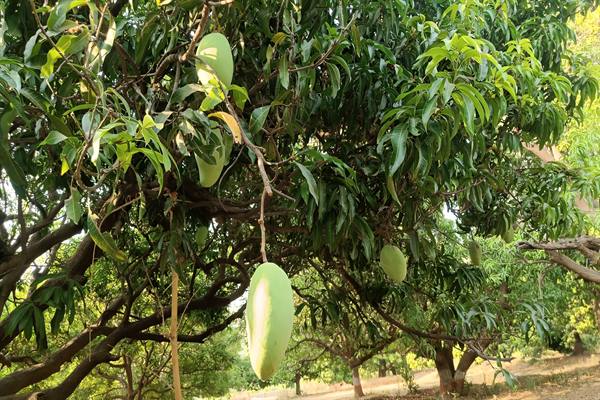
MP’s ‘Noorjahan’ Mango Gains Global Recognition for Its Aroma, Taste and Gigantic Size

India is known as the land of mangoes, and Madhya Pradesh has emerged as a leading state taking this legacy to new heights. The state’s favourable climate, fertile soil and diverse geographical conditions are considered highly suitable for mango cultivation. This is why, along with famous varieties such as Dussehri, Langra, Chausa, Kesar, Amrapali, Alphonso and Totapuri, an extraordinary variety is also cultivated here that has earned recognition not only across India but globally as well. This unique mango variety, the ‘Noorjahan, is popularly known as the ‘King of Mangoes’.
Cultivated in the tribal-dominated Katthiwada region of Alirajpur district in Madhya Pradesh, the Noorjahan mango is renowned for its enormous size, exceptional taste and attractive appearance. It is counted among the largest mangoes in the world. Generally, a single Noorjahan mango weighs between 2 and 5 kilograms. Its size is so large that one mango is often considered sufficient for an entire family. Its color, aroma and sweetness attract people instantly. The mango enjoys special demand in major cities and international markets. The price of a single fruit ranges between ₹1,500 and ₹3,000.
The Noorjahan mango is valued not only for its size but also for its rarity. The trees bear a limited number of fruits, making it far more expensive than ordinary mango varieties. At times, even a single fruit is sold for thousands of rupees. This has made the variety a highly profitable crop for farmers. The climate and environment of Katthiwada are considered especially suitable for this variety, resulting in fruits of exceptional quality.
It is believed that the Noorjahan mango variety reached India years ago from the Afghan region and was later developed during the 1950s and 1960s in the Malwa and tribal regions of Madhya Pradesh, particularly Jhabua. Shri Bharatrajsingh Jadav, a farmer from Shiv (Bawdi) Mango Farm in Juna Katthiwada village of Alirajpur district, says that his late father, Shri Ranveersingh Jadav, had brought a Noorjahan mango sapling around 55 to 60 years ago from the Banmah region of Gujarat. He planted the sapling in his farm and preserved it through years of dedicated effort. Over time, this plant became the identity of the entire region.
According to Shri Jadav, his father developed a special plant through grafting techniques, which is now around 20 to 25 years old. In addition, 11 grafted plants prepared by Shri Bharatrajsingh Jadav himself are currently growing and are between 3 and 5 years old.
Today, the Noorjahan mango has become a distinct identity of Madhya Pradesh. The fame of this mango in the Katthiwada region dates back many years. Recognizing its uniqueness, it received national-level awards in 1999 and 2010. These honours not only encouraged local farmers but also brought national recognition to Alirajpur district. Gradually, the Noorjahan mango emerged as an important symbol of Madhya Pradesh’s horticultural identity.
The history of the Noorjahan mango is also believed to be linked with the cultural heritage of Malwa and western India. It is said that during the Mughal era, mangoes with large size and exceptional taste were 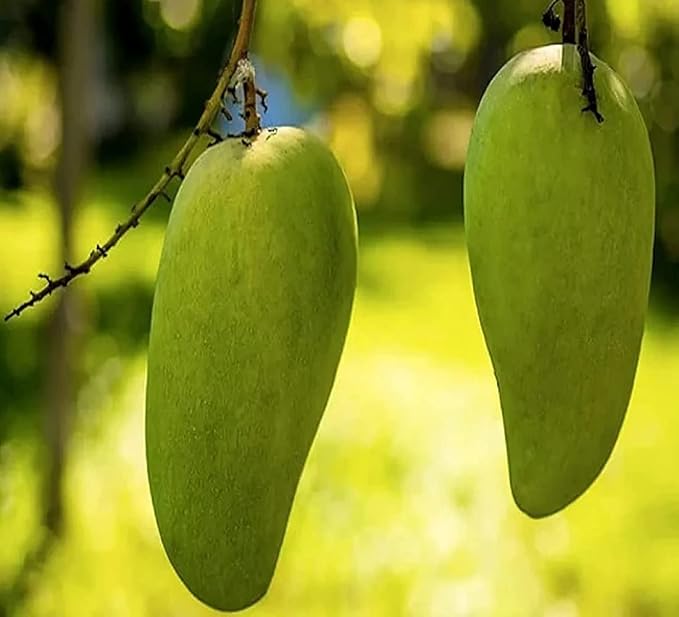 given special importance in royal orchards. Over time, this variety spread from Gujarat to the Jhabua-Alirajpur tribal belt. The climate, soil, and temperature of this tribal-dominated region proved highly suitable for the Noorjahan variety, enabling it to flourish. Farmers in the border regions of Jhabua and Alirajpur have preserved this variety for generations.
The Noorjahan mango is also witnessing growing demand in international markets. Premium Indian mangoes are especially popular in Gulf countries such as the United Arab Emirates, Saudi Arabia, Qatar, and Kuwait, where large-sized and visually appealing fruits are highly preferred. In addition, Indian communities living in the United States, Canada, and the United Kingdom also have a strong preference for Indian mangoes. The variety is also gaining recognition in Southeast Asian countries like Singapore and Malaysia.
Although the production of Noorjahan mangoes remains limited and large-scale exports are not yet possible, its uniqueness and rarity are earning it the status of a “luxury mango” in international markets. It is increasingly becoming a major attraction in foreign markets.
The Madhya Pradesh Government and the Horticulture Department are continuously encouraging farmers with modern technologies, improved saplings, drip irrigation, and fruit processing facilities. As a result, mango production in the state is increasing along with farmers’ income. Today, the mangoes of Madhya Pradesh are not only a symbol of taste but also represent farmers’ prosperity, agricultural innovation, and the state’s growing global identity.







From a Charity Photo to the World Cup Final: Messi and Yamal Set for Extraordinary Reunion
New York, July 2026 : Football has produced countless remarkable stories over the years, b…

From a Charity Photo to the World Cup Final: Messi and Yamal Set for Extraordinary Reunion
New York, July 2026 : Football has produced countless remarkable stories over the years, …