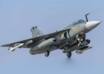
India Turns To Ecuador In Keeping Ageing Jaguar Strike Aircraft Fleet Operational Until 2035.

New Delhi; January 2026: the Indian Air Force initiated contacts with Ecuador to evaluate the acquisition of stored SEPECAT Jaguar airframes for the recovery of engines, structural assemblies, and systems. The effort aims to sustain India’s Jaguar fleet until approximately 2035, as production has long ended and original global supply chains no longer exist.
India is now the only air force still operating this attack aircraft in a frontline role, at a time when the aircraft continues to be assigned to low-level penetration and ground-attack missions despite its age. With Jaguar production having ended in the early 1980s and original supply chains no longer active, the availability of engines, structural assemblies, avionics components, and landing gear has become a limiting factor for the Indian Air Force. India’s approach, therefore, centres on acquiring retired or stored airframes for dismantling and parts recovery rather than flight reactivation, using recovered components to reduce support squadron availability while India awaits the gradual induction of replacements such as the Tejas Mk2 and the Advanced Medium Combat Aircraft (AMCA).
The Jaguar marked Ecuador’s first sustained use of a supersonic strike aircraft, when the country sought to field a modern Air Force comparable to regional peers during the 1970s and 1980s. Ecuador ordered 12 SEPECAT Jaguars in 1974, consisting of 10 single-seat Jaguar ES variants and 02 two-seat Jaguar EB trainers, with deliveries completed in 1977. The aircraft were assigned to Escuadrón de Combate 2111 “Águilas” and primarily employed for ground-attack and tactical strike roles, giving Ecuador a capability focused on low-level penetration and conventional strike rather than air superiority.
During the 1980s and 1990s, operational use gradually declined as maintenance demands increased and access to spares became more constrained, particularly as other operators began retiring this fighter jet. The Jaguars were withdrawn from frontline service in 2002 and placed in warm storage, a preservation state intended to maintain airframe integrity. Ecuador formally ended Jaguar operations in 2006, leaving four airframes in storage and one preserved as a static museum exhibit.
The SEPECAT Jaguar is a twin-engine, single-seat or two-seat supersonic attack aircraft developed through a joint British-French program to conduct low-altitude attack missions in high-threat environments. It is powered by two Rolls-Royce Turbomeca Adour afterburning turbofan engines, enabling a maximum speed of about Mach 1.6 at altitude and sustained high-subsonic performance at low level. The airframe features a swept wing, reinforced structure, and robust landing gear designed for operations from semi-prepared airstrips, with a maximum takeoff weight in the 15 ton class.
Typical combat radius varies by payload and mission profile but generally reaches several hundred kilometres, extendable through external fuel tanks. Armament capacity reaches about 4,500 kilograms and includes internal 30 mm cannons, unguided bombs, rocket pods, laser-guided munitions, anti-radiation missiles, and, on specific variants, anti-ship missiles and short-range air-to-air missiles for self-Defence.
While original avionics were based on 1970s navigation and attack systems, later operator-specific upgrades integrated inertial navigation improvements, GPS, modern attack computers, and compatibility with precision-guided weapons, allowing the Jaguar airframe to remain technically viable decades after production ended; the Indian Air Force remains the only operator worldwide still flying the Jaguar in a frontline role. With production having ceased in the early 1980s and original suppliers no longer supporting the platform, the availability of critical spares has steadily declined, driving costs upward and increasing maintenance complexity.
To mitigate this, India has focused on acquiring retired or stored Jaguar airframes globally, not for reactivation but for systematic dismantling and component recovery. Engines, structural assemblies, landing gear elements, hydraulic systems, and avionics-related hardware recovered in this way are used to stabilise maintenance cycles, reduce aircraft-on-ground rates, and avoid dependence on limited bespoke manufacturing.
Ecuador’s Jaguars are relevant because of their storage condition and the limited but potentially usable number of airframes still available. The Ecuadorian Air Force operated the Jaguar until its withdrawal from frontline service in 2002, after which the aircraft were placed in warm storage, a preservation state intended to maintain structural integrity for future reuse or controlled disassembly. These airframes reportedly remained in storage until 2006, when Ecuador formally ended Jaguar operations. Current figures indicate that 04 airframes remain in storage, with 01 additional aircraft preserved as a static exhibit in an air force museum. Although the quantity is small, each airframe is considered significant because even partial recovery of components such as wing sections, undercarriage assemblies, cockpit structures, and control systems can extend the usable life of multiple aircraft in India’s fleet.
The Ecuador track builds on earlier and larger acquisitions from former Jaguar operators that now form the core of India’s sustainment inventory. France previously transferred 31 Jaguar airframes along with Adour engines and a wide range of spares that are no longer in production, creating a substantial reserve of components for long-term use.
The United Kingdom contributed 02 Jaguar T-2 trainer aircraft and more than 600 spare items supporting both airframe and avionics requirements, and India has also sought the transfer of 09 additional Jaguars retired from Royal Air Force service, together, with spare parts. These arrangements were structured around logistics recovery rather than operational use, reinforcing a consistent model in which retired fleets are converted into a managed industrial stockpile.
India will also receive more than 20 Jaguars from Oman, which significantly reduce the number of complete aircraft available outside India. Oman originally operated 27 Jaguars, including 20 single-seat Jaguar SO1 aircraft and 05 two-seat Jaguar BO2 trainers, with 02 additional ex-Royal Air Force aircraft later introduced as attrition replacements, and deliveries to Oman began in March 1977.
The final four operational Omani Jaguars were formally retired on August 6, 2014. Over their service life, Oman lost 13 aircraft in accidents, with at least 06 confirmed destroyed, meaning that references to transfers involving more than 20 aircraft reflect cumulative spare-part potential rather than intact airframes. India plans to dismantle the retired Omani fleet to recover engines, structural elements, and systems for reuse across its own squadrons.
The Indian Air Force operates 06 Jaguar squadrons, each typically fielding 18 to 20 aircraft, distributed across three air commands. Western Air Command’s 7 Wing at Ambala Air Force Station operates 5 Squadron “Tuskers” and 14 Squadron “Bulls” with Jaguar IS and IT variants. Central Air Command’s 17 Wing at Gorakhpur Air Force Station hosts 16 Squadron “Black Cobras” and 27 Squadron “Flaming Arrows,” also flying IS and IT variants. South Western Air Command’s 33 Wing at Jamnagar Air Force Station fields 6 Squadron “Dragons” and 224 Squadron “Warlords,” operating Jaguar IM, IS, and IT variants. Maintaining synchronised parts availability across these locations is a central factor in sustaining sortie generation and training continuity.
[[Since induction in the late 1970s, India has lost more than 50 Jaguars in crashes over several decades, largely during training or routine missions, often linked to technical failures, engine issues, bird strikes, or the risks inherent in sustained low-altitude operations. In 2025 alone, 03 Jaguars were lost: 01 Jaguar IS that crashed on March 7 after takeoff from Ambala with the pilot ejecting safely after diverting the aircraft away from populated areas, a Jaguar IB that crashed near Jamnagar on April 2 during a night training sortie killing one pilot, and another Jaguar IB trainer that crashed in Rajasthan on July 9 killing both pilots]].
Against this background, acquiring Ecuador’s remaining airframes is framed as a bridging measure to preserve force structure and operational capacity while India awaits the induction of successor platforms such as the Tejas Mk-2 and the Advanced Medium Combat Aircraft (AMCA) in sufficient numbers.
Team Maverick.


Drones Revolutionising Modern Warfare, Reshaping Global Defence Strategies
New Delhi, July 2026 : Drones have emerged as one of the most transformative technologies …
Drones Revolutionising Modern Warfare, Reshaping Global Defence Strategies
New Delhi, July 2026 : Drones have emerged as one of the most transformative …