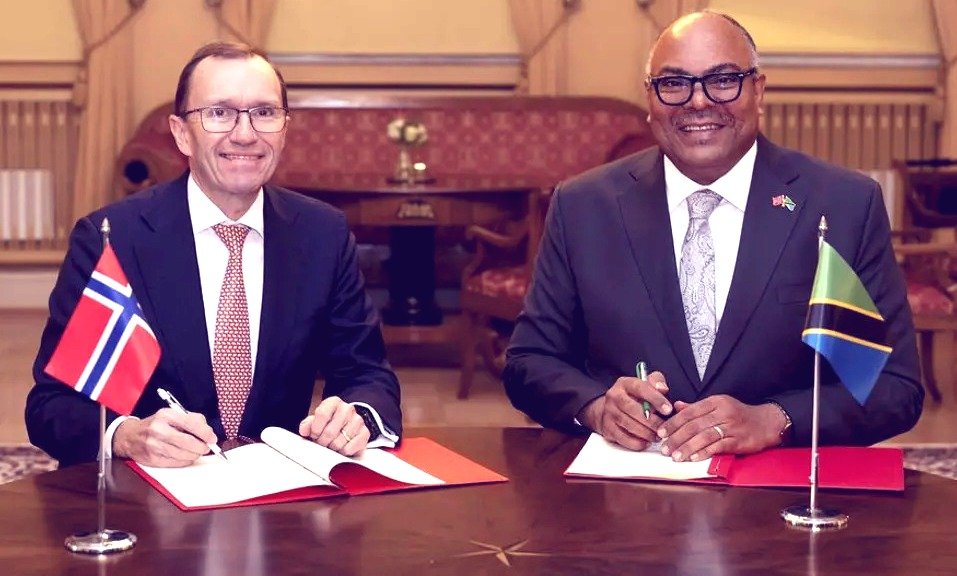
Oslo; November 2026: The two (02) days (Yesterday, 19th November & Today, 20th November 2026) Nordic-African Foreign Ministers’ Meeting (NAFM) - constituting foreign ministers and high-level representatives from African and Nordic countries concluded in Oslo today.
Under the theme Dialogue in an era of uncertainty. United for a prosperous future, participants discussed how African and Nordic countries can strengthen cooperation in a changing geopolitical and economic landscape. The Chair’s Summary captures the main themes of these discussions.
35 African and Nordic countries participated, as well as the African Union Commissioner for Political Affairs, Peace and Security. The meeting was hosted by Norwegian Minister of Foreign Affairs Espen Barth Eide and Minister of International Development Åsmund Aukrust. Participants have called for African and Nordic countries to focus increasingly on mutually beneficial trade, investment and knowledge partnerships that support growth and local value creation.
The countries those which have participated are: African Union (Commissioner for Political Affairs, Peace and Security); Algeria; Angola; Benin; Botswana; Côte d’Ivoire; Democratic Republic of Congo;
Denmark; Egypt; Eritrea; Ethiopia; Finland; Ghana; Iceland; Kenya; Liberia; Libya; Malawi; Morocco; Mozambique; Nigeria; Norway; Republic of Congo; Rwanda; Senegal; Sierra Leone; Somalia; South Africa; South Sudan; Sweden; Tanzania; Togo; Tunisia; Uganda; Zambia; Zimbabwe.
Discussions focused on the need for predictable rules, effective institutions and more affordable finance, as well as ways to connect available capital with viable projects. Development finance institutions can help attract private investment by sharing risk and working with local investors and businesses. Reducing the cost of capital and closing the gap between perceived and actual risk are also essential to getting more projects off the ground.
Future economic partnerships must advance the green transition. Climate change is driving more extreme weather worldwide, with increasingly severe consequences and several African countries among the hardest hit. Nordic-African partnerships on renewable energy, green business solutions, climate finance and adaptation offer significant potential to address these challenges while creating mutually beneficial opportunities. COP32 in Addis Ababa next year (2027) will provide a platform to advance these shared priorities.
Amid growing uncertainty and geopolitical fragmentation, a fair multilateral system grounded in the UN Charter is vital to African and Nordic countries alike. Double standards and selective adherence to these principles risk undermining confidence in the multilateral system and weakening the basis for cooperation across regions. There was also a clear emphasis on the need for reform. Participants stressed that global institutions must better reflect current political and economic realities, including through stronger African representation and more meaningful participation by all Member States.
AI is developing rapidly, bringing new opportunities for development and innovation, but also new risks. At the meeting, African and Nordic countries discussed how to make better use of the technology while managing these risks, and how new partnerships, can support closer cooperation and capacity-building. In this context, reference was made to the Finnish-Norwegian Call for Control of Frontier AI Models, which calls for stronger safety measures and international coordination to manage emerging AI-related risks related to frontier models.
At the conclusion of the meeting, Norway presented a Chair’s Summary reflecting the main themes and discussions during NAFM 2026.
CHAIR’S SUMMARY –
Participants reaffirmed the crucial importance of respect for international law and an effective multilateral system, with the United Nations at its core. They also highlighted opportunities to deepen cooperation in areas including trade and investment, sustainable job creation, the green transition and emerging technologies.
Participants have placed job creation at the heart of Nordic-African economic cooperation, recognising trade, investment and private sector development as drivers of sustainable growth, particularly for a rapidly growing young population. Amid geopolitical uncertainty, deeper economic ties can strengthen resilience, diversify markets and create mutually beneficial opportunities. Participants highlighted the importance of a strong multilateral trading system and WTO reform to support trade, development and
economic cooperation, as discussed during the ministerial conference in Yaoundé.
Stronger intra-African trade and regional integration, including through implementation of the African Continental Free Trade Area, can expand markets and opportunities for African and Nordic businesses.
Participants have also highlighted opportunities for closer cooperation in energy, sustainable critical-mineral value chains and digital transformation. Reliable and affordable energy, stronger grids and regional power trade can support industrialisation, energy security and the green transition.
Partnerships should ensure African countries capture more value through local processing and industrial development, while promoting technology transfer, skills development and circular economy solutions. Affordable connectivity, secure and resilient digital infrastructure, and stronger digital skills can support innovation, entrepreneurship and more inclusive economic participation. Furthermore, the participants have emphasised the importance of effective international climate cooperation and opportunities for closer Nordic–African partnerships on renewable energy, green business solutions, climate finance and adaptation.
Participants have also recognised the vital role the oceans play in regulating the climate and supporting food security, livelihoods and economic prosperity. Closer climate and ocean cooperation can help address the climate crisis while creating business opportunities and supporting sustainable growth.
Mobilising investment at the scale required will depend on predictable regulatory frameworks, effective institutions and access to affordable finance. Participants also emphasised the need to bridge the gap between available capital and investment-ready projects, including through risk-sharing instruments and partnerships with local investors and businesses. Participants also stressed that reducing the cost of capital and addressing the gap between perceived and actual risk are essential to unlock investment that supports local businesses and job creation.
Participants reaffirmed their shared interest in preserving a multilateral system that is fair and grounded in the Charter of the United Nations and the universal application of international law. At a time of increasing geopolitical fragmentation and rivalry, participants stressed the need to protect, respect and enable international law to remain an effective foundation for the sovereignty, security and prosperity of all states.
Double standards and selective adherence to these principles risk undermining confidence in the multilateral system and weakening the basis for cooperation across regions. Participants have underlined the need for substantial reform of the United Nations and other global governance institutions to better reflect 21st-century political and economic realities and respond to all regions priorities. Reforms of the international financial architecture must include more effective debt relief mechanisms.
A new Secretary-General for the UN offers an opportunity for bolder reforms beyond UN80, and there was broad agreement to support the new leadership. Security Council reforms, including African representation and the use of veto, and strengthening the UN’s unique mediation and peacebuilding efforts was emphasised by most delegations both days. Participants expressed strong support for the ICC which is being actively undermined. Participants also highlighted the important role of the African Union and regional organisations such as SADC, EAC and ECOWAS with continued Nordic partnershipsin advancing regional cooperation and addressing shared challenges.
International cooperation on taxation and economic inequality was highlighted as areas where the multilateral system can deliver concrete results. Participants welcomed negotiations on the UN Framework Convention on Tax as an opportunity to, when broadly adopted, improve the effectiveness and inclusivity of the international tax system, foster trade and investments, improve domestic resource mobilisation and combat tax evasion and avoidance. Participants also discussed efforts to establish an international scientific panel on economic inequality to strengthen the evidence base for policymaking. There are strong links between tax and economic inequality, and both issues require broad cross-regional engagement to develop solutions at the national and international level that ensure legitimacy and support across different regions.
Building on the 20th annual meeting of Internet Governance Forum in Oslo, the 21st annual meeting in Nairobi in December this year (2026) will provide a useful opportunity of further advancing these discussions.
Team Maverick.