Dehradun: The Uttarakhand government, led by Chief Minister Pushkar Singh Dhami, has taken several significant legislative steps aimed at strengthening the state's cultural identity, promoting social harmony and improving law and order. Among its key initiatives are legislation to prevent unlawful religious conversions and a law providing for the recovery of compensation for damage caused to public and private property during riots, violent protests and other incidents of public disorder.
The state government maintains that these laws are intended to prevent forced religious conversions, fraud and violent activities while ensuring accountability for those responsible. It has described the measures as important steps towards good governance and a stronger administrative framework.
However, the actual impact of these laws will need to be assessed through the number of cases registered, convictions secured, compensation recovered for property damage and the outcomes of judicial proceedings.
Stricter provisions to prevent unlawful religious conversions
The Uttarakhand government has introduced legal provisions aimed at protecting religious freedom and preventing conversions carried out through force, fraud, undue influence or inducement.
The Uttarakhand Freedom of Religion Act, 2018, was introduced to regulate unlawful religious conversions in the state. Subsequently, in 2022, the Pushkar Singh Dhami government amended the legislation and strengthened its penal provisions.
The objective of the law is to prevent religious conversions brought about through coercion, fraudulent means, undue influence or inducements. Under the 2022 amendment, imprisonment of up to 10 years was provided for serious offences.
According to the state government, the legislation provides the police and administration with a legal framework to initiate action against individuals found involved in unlawful conversion-related activities.
Move to further tighten the anti-conversion law in 2025
In August 2025, the Dhami government approved a proposal to make the anti-conversion law more stringent through another amendment.
The proposed amendment included provisions for imprisonment ranging from three to 10 years for general violations. In more serious cases, the proposed punishment ranged from 20 years to life imprisonment. Heavy fines were also proposed for certain offences.
However, in December 2025, the Governor returned the amendment Bill to the state government, citing technical and legislative errors.
The proposed changes therefore remained subject to the completion of the required legislative process. The development highlighted the importance of ensuring that amendments to existing laws meet the necessary technical and constitutional requirements.
Law to recover compensation for damage to public and private property
Another major legislative initiative of the Dhami government concerns the recovery of compensation for damage caused to public and private property during riots and violent demonstrations.
In 2024, the Uttarakhand government enacted the Public and Private Property Damage Recovery Act. The legislation provides for recovering compensation from individuals held responsible for damaging property during riots, violent protests, bandhs and other incidents of public disorder.
The government's stated objective is to ensure that the financial burden arising from such damage does not fall entirely on affected citizens or the public exchequer. Those responsible for damaging government assets or private property can be made liable for the resulting losses.
Provision for fines of up to Rs 8 lakh
Under the legislation, financial penalties can be imposed on those found responsible for damaging property during violent incidents.
At the time the law was approved, the government stated that, in addition to compensation for the damage caused, fines of up to Rs 8 lakh could be imposed.
The provisions also provide for recovering expenses incurred on government resources and personnel deployed during riot-control operations.
A special Claims Tribunal has been envisaged to oversee the process. The tribunal will play an important role in assessing the extent of damage, determining the responsibility of the parties concerned and issuing orders for compensation.
The mechanism is intended to establish accountability and provide a formal process for recovering losses arising from violence and public disorder.
Haldwani violence brought the issue into focus
The initiative to establish a mechanism for recovering compensation from those responsible for damaging public property gained momentum following the violence in Haldwani in 2024.
In February 2024, violent incidents were reported in the Banbhoolpura area of Haldwani, during which government and private property reportedly suffered damage.
Following the incidents, the state government decided to introduce legislation to recover compensation from those found responsible for the destruction of property.
In March 2024, the state Cabinet approved the relevant ordinance, after which the legislative process was completed.
The law was presented as a measure to ensure that individuals responsible for damage during riots and violent protests could be held financially accountable.
Government emphasises social harmony and law and order
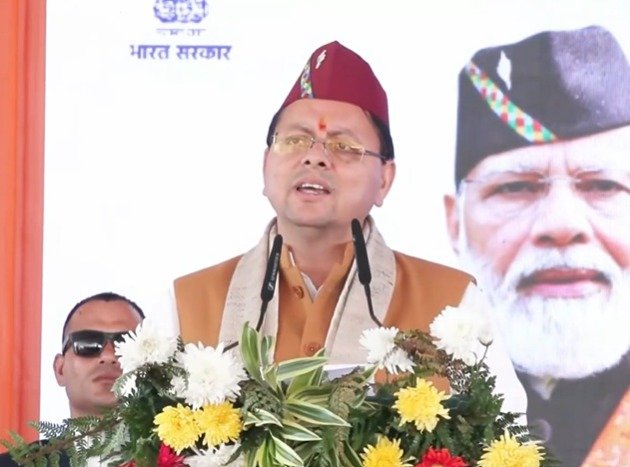
Chief Minister Pushkar Singh Dhami has repeatedly spoken at public events about preserving Uttarakhand's cultural heritage and maintaining social harmony.
The state government says that protecting religious freedom while preventing forced conversions and violent activities remains among its priorities. It views the anti-conversion legislation and the property damage recovery law as part of a broader effort to strengthen public safety and administrative accountability.
At the same time, the effective implementation of any legislation requires impartial investigation, respect for the legal rights of accused persons and appropriate judicial oversight.
This is particularly important in cases involving religious freedom, where enforcement must ensure that the law is not used to restrict an individual's legitimate constitutional rights. The distinction between unlawful coercion and constitutionally protected religious choice remains central to the fair application of such legislation.
Similarly, in cases involving damage to public or private property, responsibility must be established through the prescribed legal process before compensation or penalties are imposed.
Actual impact will depend on implementation and judicial outcomes
The Dhami government has highlighted the anti-conversion law and the Public and Private Property Damage Recovery Act among its major legal initiatives.
However, the existence of stricter laws alone does not establish that unlawful conversions or incidents of violence have been completely eliminated. Such conclusions would require supporting evidence and reliable data.
The government's challenge, therefore, extends beyond enacting stringent legislation. It must also ensure that the laws are implemented fairly, transparently and effectively.
The number of cases registered under these provisions, the progress of investigations, judicial decisions and the actual recovery of compensation for property damage will provide a clearer picture of their impact in the coming years.
Ultimately, the effectiveness of these measures will depend on whether they achieve their stated objectives while safeguarding constitutional freedoms, ensuring due process and maintaining public confidence in the state's legal and administrative institutions.