The Human Edge at Work | By Padmini Kashyap
Hyderabad, Oct 2026 : Last week, we looked at listening as a leadership decision. But listening is easy when a conversation is pleasant. The real test comes when it turns difficult. A director challenges your numbers in front of the board, your team pushes back on a restructuring plan, or a client questions your judgement in front of your own people. In those moments, what decides the outcome is not what you know, it is how well you manage yourself, and how well you read everyone else in the room. That is emotional intelligence.
Many leadership teams, quietly mistaken it for being soft, weak or indecisive. The opposite is true. Emotionally intelligent leaders are often good decision makers.
When pressure takes the decision away from you
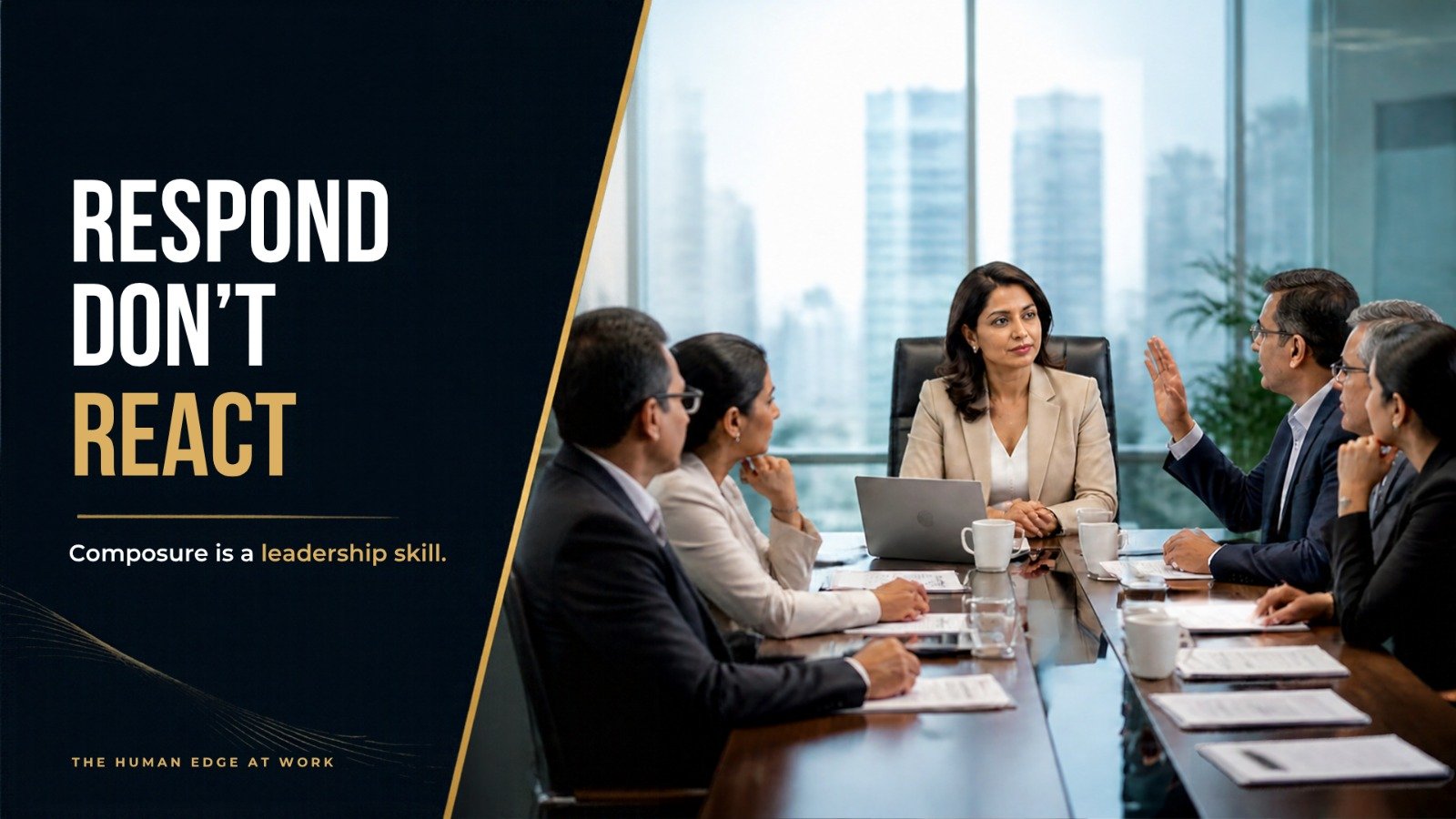
Consider a familiar scene. A business unit head presents a restructuring plan to the leadership team. Halfway through, a fellow director dismisses it as “half-baked.” The room goes quiet. The presenter has a few seconds to choose: defend aggressively, withdraw, or engage.
What do you think the presenter should do? Possible solution - he could seek permission, from the senior to explain his idea to the room. This demonstrates emotional intelligence.
But if he gets defensive and asks’ what’s wrong with the idea or in a sarcastic tone ask him if he has a better idea, then that would lead to a lot of strife and weak leadership in the wake of the team present in the room.
Self awareness
Know your triggers. Every human has them: being contradicted in public, having their credibility questioned, being bypassed on a decision. Experienced leaders know their triggers and are better prepared.
Buy time without losing authority. You do not have to resolve every challenge in the room. “That’s a fair concern. Let me take it up with you separately and come back to the group on Thursday” is not a retreat. It signals control.
Respond to the issue, not the tone. The director who called the plan half-baked may have a valid point, badly delivered. Separating the message from the delivery lets you address the substance.
Reading the room
Emotional intelligence is not only about managing self, but also about sensing what others feel, often when they are not saying it. This is where the listening we discussed last week becomes a more advanced skill.
For the senior leader chairing a meeting, reading the room means noticing that the CFO has stopped taking notes, that a key stakeholder agreed a little too quickly, or that nobody from the affected department has asked a single question during a restructuring announcement. Silence in such a meeting is rarely agreement. More often it signals fear or disengagement. A skilled chair names it gently: “We haven’t heard from the operations side yet. What concerns should we be addressing?”
While in one of my training programs, I was explaining about time management and the importance of work discipline. I was emphasizing about being on time to work. One of the participants, a young lady, got triggered and became emotional about how difficult it is to manage with two small children.
A.She was getting defensive, because she was a consistent late comer.
B.Her justification was small children, home and hearth as an excuse for her late attendance
C.She was also confident, that her job was secure because she was a top performer, achieving her sales target and thus being late was justified. – “It’s ok if I am late, I have achieved my targets”
Out of 285 participants, over a span of 4 days, she was the only one who reacted the way she did. And well within her right to raise an objection. The others who had queries, were looking for answers. This lady was not looking for solutions, she just wanted to draw attention and play the victim card.
The question here is – do you think such people are high on emotional intelligence, because of their knee jerk reactions? Will her attitude hold her in good stead, in the future?
Why this matters for organisations
Technical expertise often decides who gets promoted. Emotional intelligence often decides who succeeds after the promotion. During restructuring, mergers or leadership transitions, it is essential to train the new leaders on emotional intelligence and decision making. Leaders who cannot manage their reactions create teams that walk on eggshells. Leaders who can, keep their teams steady through uncertainty
A safe workplace
The real test of emotional intelligence in an organisation is whether people feel safe: safe to disagree with a senior, to admit a mistake, and to raise a concern before it becomes a crisis.
Your views or queries are welcome
Over the past four weeks, we have looked at the individual: why these skills matter more than ever, how to connect rather than simply communicate, how to listen, and how to manage ourselves and read others when the stakes are high. They all point to one idea: the human edge at work begins with self-awareness.
I would be happy to hear your views, or to help with real situations you are facing at work. Your email and its contents will remain confidential.
But no one works alone. Next month, we move from the individual to the team, starting with the conversation most people dread: feedback.
Padmini Kashyap is an internationally certified soft skills trainer and Organisation Development consultant who works with organisations on behavioural change, leadership development, communication, and culture change. She can be reached at padminikashyap@gmail.com.