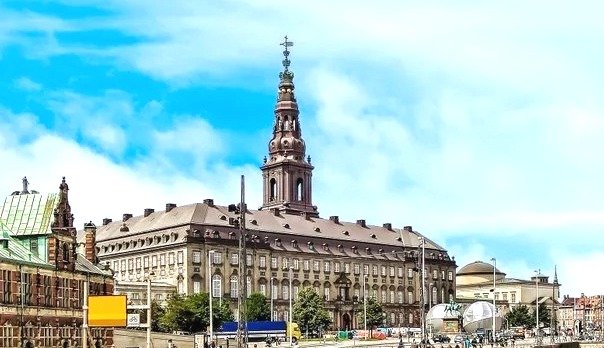
Copenhagen; August 2026: Over the past several months, Denmark has committed over €10.3 billion in military aid and more than €1.1 billion in civilian contributions to Ukraine. Known for pioneering the "Danish model" of directly funding Ukraine's domestic defence production, Denmark provides vital F-16 fighter jets, artillery, air defence, and regional reconstruction support focused heavily on Mykolaiv. But in midst of these military aids to the war torned Ukraine, Denmark has now proposed to implement stringent residency regulations for the Ukrainians those who considers Denmark to be a safe haven.
Yesterday (Saturday – 22nd August 2026; IST), Minister of Immigration and Integration Morten Boedskov have emphasised that 47,600 Ukrainian citizens currently live in Denmark. "Some municipalities are struggling to find housing for such a large number of Ukrainians and integrate them into Danish society", Boedskov explained, as quoted in the statement. The Danish minister has further asserted that 14 (fourteen) oblasts of western and central Ukraine, with the exception of Kyiv, are to be considered relatively safe for the civilian population.
Other proposals include introducing a work requirement for Ukrainians receiving benefits, as well as a revision of school regulations that would allow education in English or Ukrainian, including remotely.Boedskov recalled that Norway and Switzerland have recently tightened migration regulations for Ukrainians, which has reduced the number of applications for residence in these countries.
Following Russia's full-scale invasion of Ukraine in the spring of 2022, the Danish parliament (Folketing), overwhelmingly passed a special law granting Ukrainian citizens the right to temporary residence in Denmark under liberal conditions. Boedskov, who served as Minister of Defence in 2022, assured that Denmark continues to support Ukraine.
Earlier this year, in May 2026, The Ministry of Interior and Administration had announced a package of legislative changes that will require foreigners applying for Polish citizenship to meet more stringent requirements. These include extending the period of legal residence, requiring them to pass a state exam, submitting a loyalty certificate, and implementing a tax residency requirement.
Citing the reason for this action, the Ministry had emphasised that citizenship should not be treated as a formal document issued after meeting basic requirements, but as confirmation of a real connection to the state. According to the Ministry, a future citizen should know the language, understand history, accept constitutional values, and connect their life with Poland.
One of the main planned changes is to extend the required period of legal residence to 08 years. Applicants would first have to stay in Poland for 03 years under a temporary residence permit, followed by 05 years under a permanent residence permit. The Ministry explains that such a period will allow for a better assessment of the applicant's attitude.
Prior to the implementations of the citizenship regulations, in March this year (2026), significant changes have taken place in the healthcare segment for Ukrainians who settled in Poland after 2022. The changes are the result of the Act of January 26, 2026, on the Termination of Measures Under the Act on Assistance to Citizens of Ukraine in Connection with the Armed Conflict in the Territory of That Country and on Amending Certain Other Acts. The Act has entered into force on March 5 and will gradually phase out the special regulations for refugees from Ukraine in force under the Act of March 2022. At the same time, temporary protection for refugees from Ukraine will be maintained until March 4, 2027.
Until now, based on the aforementioned act of March 2022, refugees from Ukraine could use free healthcare in Poland without having to pay for health insurance. This broad access to healthcare services has recently been partially restricted. As of September 30, 2025, uninsured Ukrainian adults lost their rights to, among other things, free dental treatment and drug reimbursement. However, they continued to have access to hospital treatment and could also use primary healthcare and outpatient specialist care. Further changes in the scope of health protection for refugees from Ukraine will come into force on 5 March based on the aforementioned Act of 26 January 2026.
Team Maverick.