
Announcement made on the sidelines of the G20 Innovation Ministerial at Chapel Hill, North Carolina
India joins over 20 like-minded governments in a shared commitment to open, interoperable, secure and resilient next-generation networks
Under the leadership of Prime Minister Shri Narendra Modi, India aims to contribute 10 percent of 6G Global Standards and Patents
Initiative to advance Union Minister of Communications and DoNER Shri Jyotiraditya M. Scindia’s commitment to position India as a global leader in 6G
India has endorsed the Call to Action for 6G Leadership and Security, joining a group of like-minded governments that have committed to shaping the sixth generation of wireless communications on the principles of openness, interoperability, security, resilience, resource efficiency and innovation-led competition.
The initiative will advance the vision of Union Minister of Communications and DoNER Shri Jyotiraditya M. Scindia, who has always emphasised that India is committed to leading the world in 6G. This also highlights the significance laid by Minister of State for Communications Dr Chandra Sekhar Pemmasani on the country’s transformation from a technology adopter to a standard-setter.
Emphasising the significance of the announcement, the Union Minister for Communications took to social media to share his views on the development.
The Department of Telecommunications (DoT) will take forward India’s engagement under the Call to Action and coordinate the relevant follow-up activities with concerned government agencies, industry, academia and other stakeholders. India joins other governments that have affirmed the Call to Action, including Canada, Costa Rica, Czechia, Denmark, Estonia, France, Germany, Greece, Honduras, Italy, Japan, Latvia, Norway, Paraguay, the Republic of Korea, Romania, Sweden, the United Kingdom and the United States.
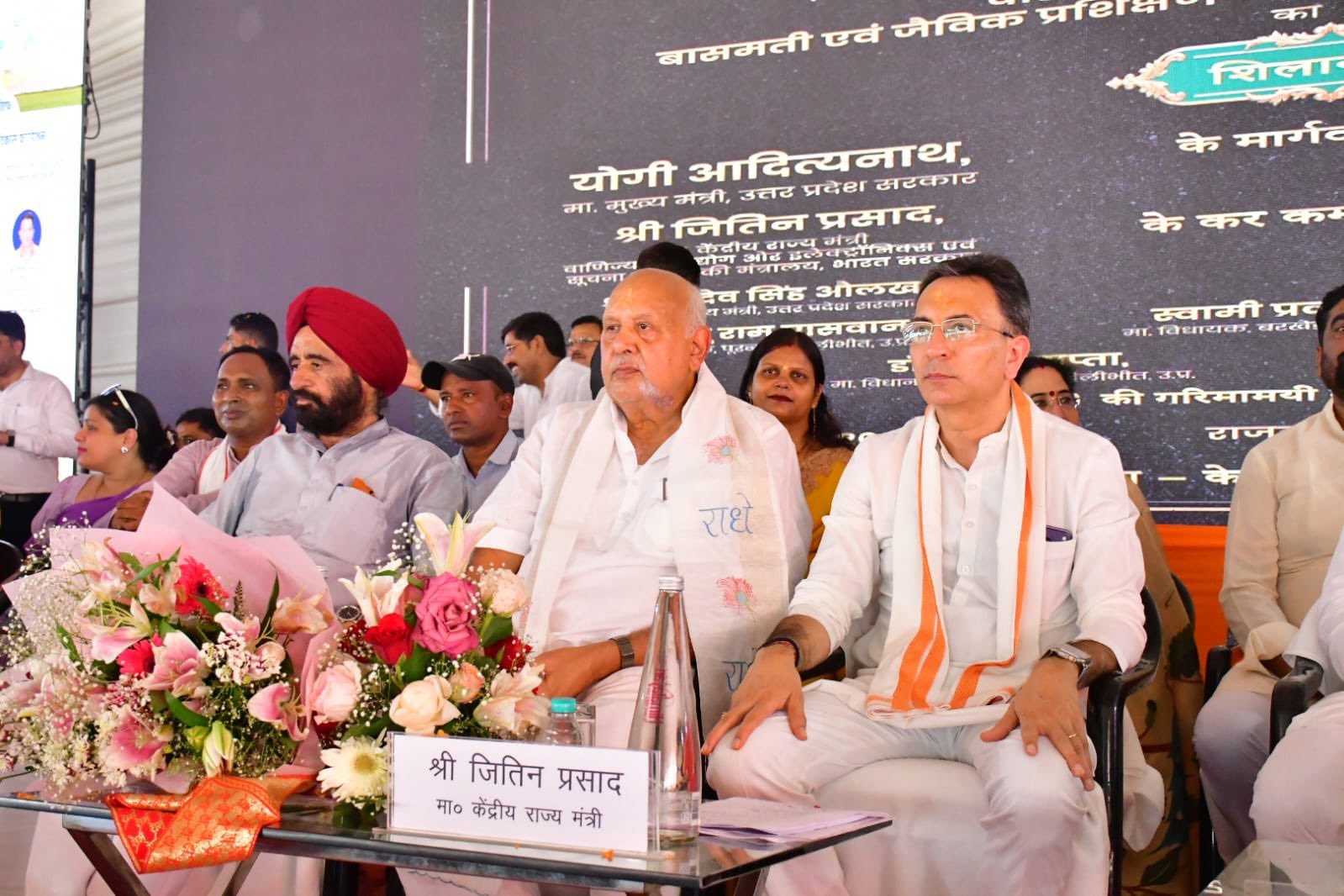
The endorsement was announced on the sidelines of the G20 Innovation Ministerial, held in North Carolina, United States, on 1-2 September 2026 under the United States’ G20 Presidency. The announcement was marked by a handshake between Shri Jitin Prasada, Union Minister of State for Commerce and Industry, and Electronics and Information Technology in the Government of India, and Mr. Howard Lutnick, United States Secretary of Commerce.
Under the Call to Action, participating governments affirm that secure digital infrastructure is essential to technological competitiveness, economic prosperity and national security, and that advanced telecommunications networks are both the gateway to and the heart of that infrastructure. The initiative recognises that next-generation networks will underpin major economic and societal activity and the delivery of critical services; that globally interconnected communications systems can introduce cyber, economic and national security risks, making strong baselines for network security and resilience a shared responsibility; and that shaping the future of 6G calls for concerted action in collaboration with industry, academia and other stakeholders.
The Call to Action sets out a graduated set of steps for participating governments. Within one month, each government is to identify and designate expert 6G points of contact, designate the agency responsible for managing communications with the contact group, and prepare a preliminary list of relevant industry and academic stakeholders. Within three months, governments are to engage the telecommunications sector to map the emerging landscape for secure and interoperable 6G, identify barriers to leadership, convene to examine their findings, and begin identifying the economic, political and financial resources that could support 6G competitiveness. Within six months, they are to strategise at expert level on supporting secure, resilient, sustainable and innovative 6G supply chains over the long term, and to consider how 6G leadership and security may be reflected in national and regional strategies. Within twelve months, participants are to convene in person in 2027 to review progress, exchange lessons learned and best practices, and set priorities for the following year alongside relevant industry stakeholders.
Further avenues identified for cooperation include coordination and information-sharing on 6G research and development; collaboration among trade and development finance agencies to support the deployment of secure and resilient 5G and 6G technologies in global markets; assessment of technical and strategic cybersecurity risks associated with telecommunications sector investments; greater transparency on supply chain developments and vulnerabilities; realising the full potential of 5G systems for industrial, commercial, security and defense applications; and working with industry to shape global 6G standards, including strong security standards, in standards development organisations.
The Call to Action expressly provides that participation does not bind or limit any government’s authority to pursue its own independent positioning or autonomy in relation to industry-driven standards bodies, and that each participant’s next steps will vary according to its own national priorities, resources and capabilities. It also cautions against duplicating the technical work already under way in industry-led standardisation fora.
India joins other governments that have affirmed the Call to Action, including Canada, Costa Rica, Czechia, Denmark, Estonia, France, Germany, Greece, Honduras, Italy, Japan, Latvia, Norway, Paraguay, the Republic of Korea, Romania, Sweden, the United Kingdom and the United States.
The Department of Telecommunications (DoT) will take forward India’s engagement under the Call to Action and coordinate the relevant follow-up activities with concerned government agencies, industry, academia and other stakeholders.
India’s participation builds on an established domestic foundation, including the Bharat 6G Vision, the Bharat 6G Alliance and the indigenous 4G and 5G technology stack. In line with the vision of Atmanirbhar Bharat and the goal of Viksit Bharat 2047, engagement under the Call to Action will complement India’s ongoing work in international standardisation and spectrum fora, and is without prejudice to India’s independent positions in those fora.