New Delhi, Aug 2026 : India on Monday categorically rejected the latest “award” issued by the so-called Court of Arbitration (CoA) concerning interim measures and the status of the Indus Waters Treaty (IWT), maintaining that the body was constituted in violation of the treaty and has no jurisdiction over India’s sovereign decisions.
The Ministry of External Affairs (MEA) said the arbitration mechanism was established by the World Bank in what New Delhi described as a clear breach of the provisions of the IWT. India has consistently refused to recognise the legitimacy of the arbitration process and has maintained that the court cannot issue binding pronouncements on matters concerning India.
“Today, the illegally constituted so-called Court of Arbitration (CoA) has issued what it termed as an award concerning Interim Measures and Status of the Indus Waters Treaty,” the MEA said in a statement.
The ministry asserted that India had rejected the latest ruling just as it had dismissed previous pronouncements by the body.
“This so-called Court was constituted by the World Bank in patent breach of the terms of the Treaty and India categorically rejects its so-called award,” the MEA said.
According to the ministry, India has never accepted the legal existence of the arbitration body and has consistently argued that its creation itself violates the framework established under the Indus Waters Treaty.
India has also declined to participate in proceedings before the body. The MEA said New Delhi had neither appeared before the court nor taken cognisance of its earlier pronouncements.
The ministry further maintained that the arbitration body has no authority to interfere with India’s sovereign decisions relating to water projects.
“This so-called Court of Arbitration has no jurisdiction whatsoever to pronounce on India’s sovereign decisions,” the MEA said, adding that its present or future pronouncements would have no impact on India’s actions concerning projects being undertaken by the country.
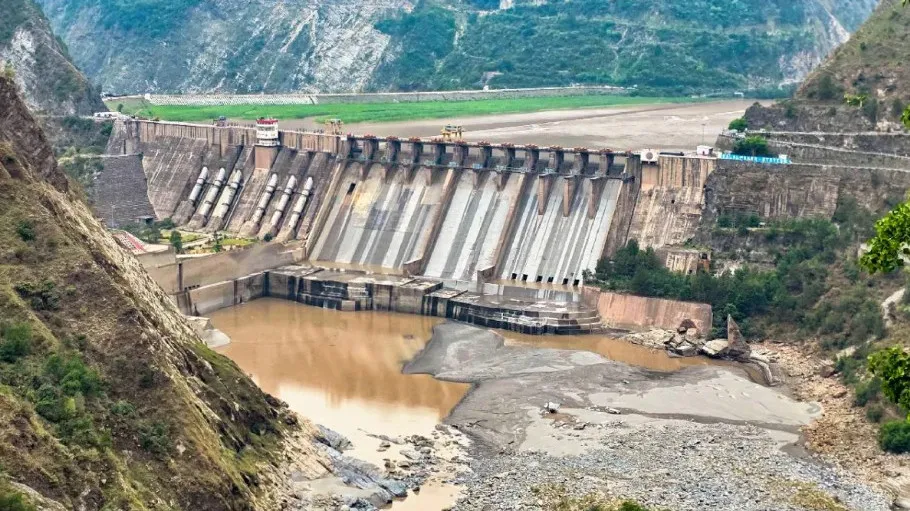
The latest dispute follows an award issued by the Court of Arbitration on the status of the Indus Waters Treaty, along with an order concerning interim measures related to the Ratle Hydroelectric Power Project (RHEP).
The arbitration body maintained that India remains bound by its obligations under the treaty, including provisions governing the design and operation of hydroelectric projects on the Western Rivers.
New Delhi, however, rejected that position and reiterated that its decision to place the IWT in abeyance remains in force.
The Indus Waters Treaty was signed by India and Pakistan on September 19, 1960, with the World Bank playing a role in facilitating the agreement. The treaty established a framework for the utilisation and management of the waters of the Indus river system.
India’s decision to suspend the treaty followed the Pahalgam terror attack, after which New Delhi said it was exercising its rights as a sovereign nation under international law. India announced that the treaty would remain in abeyance until Pakistan credibly and irrevocably ends its support for cross-border terrorism.
The position has been reiterated by the Indian government on several occasions. In June, MEA spokesperson Randhir Jaiswal again made clear that New Delhi had no intention of restoring the treaty while cross-border terrorism continued.
“We have suspended the Indus Waters Treaty and kept it in abeyance until Pakistan completely stops cross-border terrorism,” Jaiswal said during a regular media briefing in New Delhi.
The latest exchange highlights the widening dispute between India and Pakistan over the treaty and its implementation. While Pakistan continues to invoke the treaty framework and international mechanisms, India has questioned the validity of parallel arbitration proceedings and maintained that the treaty cannot be used to constrain its sovereign actions under the circumstances it has cited.
For New Delhi, the issue is closely linked to national security, cross-border terrorism and the development of hydroelectric projects on rivers allocated to India under the treaty. The government’s latest statement makes clear that it will continue to reject decisions by the arbitration body and proceed with its stated position on the IWT.