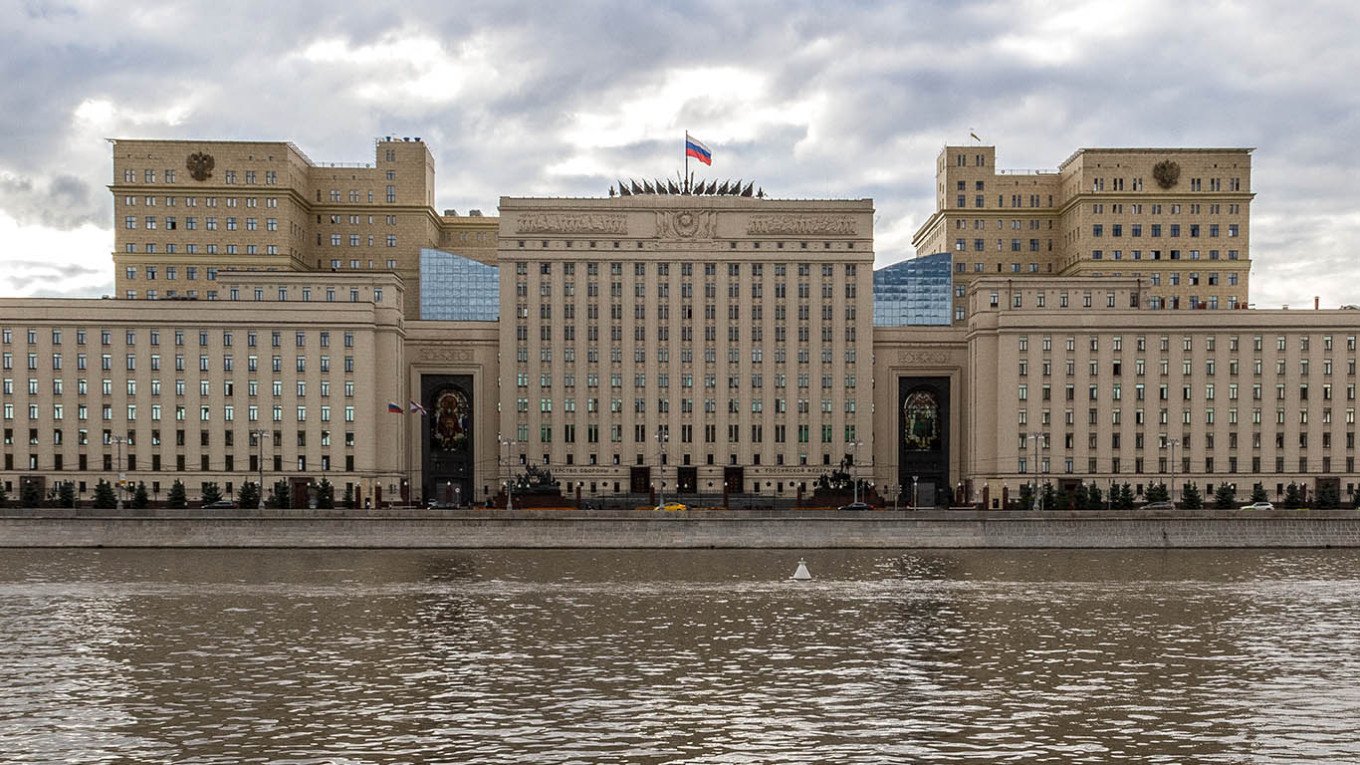
Moscow; September 2026: Today (Thursday – 24th September 2026), the Russian Ministry of Finance (MOF) has submitted to the government a draft federal budget for 2027 and the planning period for 2028 and 2029.
Priorities –
·The budget policy is designed to fulfill social obligations, finance defence and security, support military personnel and their families, and develop technological leadership.
·The federal budget deficit is projected to be around 2% of GDP in each of the three financial years (2027-2028; 2028-2029; 2029-2030).
·Starting in 2027, the base oil price for budget planning is proposed to be set at $50 per barrel.
Pensions and family support –
·Insurance pensions are planned to be increased twice in 2027: by 6.8% on February 1, adjusted for inflation, and by another 3.3% on April 1, adjusted for wage increases. The average old-age pension by the end of the year is expected to reach 29,904 rubles.
·Approximately 10 trillion rubles have been allocated for family and child support measures over three years. This amount includes a unified benefit, indexation of maternity capital, and a family payment in the form of a partial income tax refund for families with two or more children.
·About 1.9 trillion rubles have been allocated for programs to improve housing conditions for families with children.
Education and healthcare –
·Over 105 billion rubles are planned to be allocated for the construction of 150 schools by 2030. Over 47 billion rubles are allocated for the renovation of kindergartens, and another 25.7 billion rubles are for the construction of over 100 new institutions.
·About 80 billion rubles will be allocated for the renovation of university dormitories, and 65 billion rubles for technical schools.
·Nearly 278 billion rubles have been allocated for the modernisation of primary healthcare. Funding for medications will also continue, including assistance to children with severe and rare diseases through the Circle of Kindness foundation.
Defence and security -
·One of the budget's strategic priorities is funding defence and security needs, as well as social support for military personnel and their families.
·The funds will be used to equip the Russian Armed Forces with weapons and military equipment, modernise defence industry enterprises, provide military personnel with salaries, and support their families.
National projects -
·Almost 2 trillion rubles have been allocated for national technological leadership projects in 2027–2029.
·135.7 billion rubles have been allocated for the national project "Machine Tools", and 103.3 billion rubles for "Unmanned Aircraft Systems". The Industrial Development Fund will be additionally recapitalized by 205 billion rubles to provide preferential financing for new projects.
·Over 4.4 trillion rubles are allocated for road infrastructure. Another 65.3 billion rubles will be allocated for upgrading public transportation, including ground-based electric vehicles.
Regional support -
·Regions will continue to receive inter-budgetary transfers and treasury infrastructure loans.
·It is proposed to postpone the repayment of budget loans, which are due in 2027–2029, until 2030. This will allow regions to reallocate approximately 300 billion rubles to priority tasks.
·An additional 180 billion rubles over three years has been allocated for the federal project "Creating a Comfortable Urban Environment".
Taxes -
·The Ministry of Finance proposes including dividends, interest on deposits, income from securities and digital rights, property sales, insurance contracts, and gifts in the main tax base of personal income tax at rates of 13–22%.
·Currently, some of this "passive" income is taxed separately at rates of 13-15%. Under the new system, the rate will depend primarily on the total amount of income, not its source.
·The changes will not affect tax-free income on deposits of up to 1 million rubles or the income of SVO participants. According to the Ministry of Finance, the new system will affect approximately 4 million people, which is not more than 6% of the population.
·For goods purchased through cross-border e-commerce, it is proposed to establish a standard VAT rate of 22%. Electronic trading platforms will pay the tax as agents.
·The Ministry of Finance proposes introducing a customs duty of 100 rubles per foreign parcel containing goods for personal consumption worth up to €200.
·It is proposed to establish a 15% income tax on passive income received by mutual investment funds. The tax paid by the mutual investment fund will then be taken into account when assessing the taxation of its shareholders.
·It is proposed to increase the income tax rate on dividends paid to non-residents into type "C" accounts to 35%.
·For certain organisations in the mining and metallurgical complex, a tax of 30% of additional income generated due to rising global prices for solid minerals relative to 2024 levels is proposed. For gold, the rate will be 20%.
The Ministry of Finance explains the measure by the rise in global prices for certain types of raw materials and the need to redistribute additional rental income in favour of the budget system.
Team Maverick.