Asheville, Sep 2026 : US Treasury Secretary Scott Bessent has described Iran as being caught in an economic “death spiral”, arguing that mounting financial pressure, combined with US military operations, will eventually compel Tehran to return to negotiations with Washington.
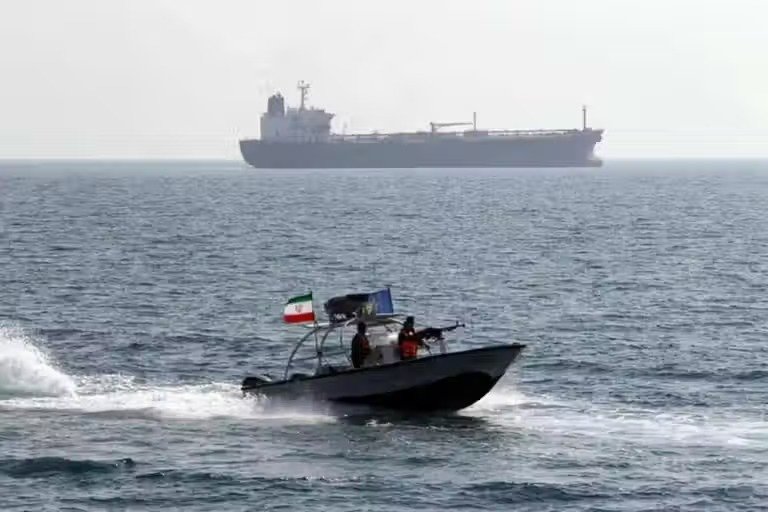
Speaking to reporters after the G20 finance ministers’ meeting in Asheville, Bessent also rejected claims that Iran had succeeded in closing or taking control of the strategically important Strait of Hormuz. He said the United States maintained control over the crucial waterway and that commercial oil shipments continued to pass through it despite the escalating confrontation.
“Iran does not have control of the Strait, and they are in a death spiral. We have control of the Strait,” Bessent said.
The Treasury secretary said recent limited US military strikes had targeted radar equipment that Iran was attempting to rebuild along the Strait of Hormuz. He claimed that around 17 million barrels of crude oil had passed through the waterway during the previous day, which he cited as evidence that Iran had not succeeded in shutting the route.
“That is not Iranian control of the strait,” Bessent said.
According to Bessent, Tehran's decision to rely increasingly on military action reflects growing economic difficulties caused by US sanctions and financial restrictions. He said the Iranian government was under severe pressure and was resorting to military operations because its economic options were narrowing.
“They are panicked. They are resorting to kinetic because they are getting squeezed economically,” Bessent said.
He pointed to fuel shortages and long queues inside Iran, arguing that the situation demonstrated the severity of the country's economic problems despite its enormous energy resources. Iran possesses some of the world's largest oil and gas reserves but has faced years of sanctions, restricted investment and limited access to international financial markets.
Bessent said increasing pressure on Iran's leadership could eventually produce one of three outcomes: internal divisions within the Islamic Revolutionary Guard Corps (IRGC), growing public opposition or a decision by Tehran to return to negotiations with Washington.
“At a point, either the IRGC are going to turn on each other, the people are going to turn on them, or they’re going to come to the table and want to do a deal that they can stick with,” he said.
The Treasury secretary also said President Donald Trump believed an earlier memorandum of understanding had failed because Iran had not been prepared to reach a lasting agreement. Washington, he said, would continue applying pressure until Tehran demonstrated that it was ready to negotiate seriously.
“We will see when they are ready for a deal,” Bessent said.
A major part of the US strategy involves restricting Iran's access to foreign currency and disrupting financial channels that allow Tehran to convert payments received in Chinese renminbi into US dollars. Bessent said Iranian oil payments from China were often made in renminbi before being routed through financial centres in the Gulf.
“The Chinese pay the Iranians in RMB. The RMB comes back to the Gulf region,” he said.
He said the US Treasury was targeting banks, cash houses and supply networks involved in converting or transferring those funds. Bessent referred to US action against a bank in Dubai the previous Friday, although he did not identify the institution during the news conference.
“So when that money cannot be converted to dollars, then the regime will starve,” he said, outlining Washington's objective of cutting Iran off from the international financial system.
Bessent also cited the sharp depreciation of Iran's currency as evidence of worsening economic conditions. He said the currency had fallen from around 800,000 to the US dollar 16 months earlier to approximately 2.1 million to the dollar.
“That just means that they have no access to dollars and that they are in the death throes,” he said.
The Treasury secretary acknowledged that Iran could respond with additional military attacks as economic pressure intensifies. However, he argued that worsening financial conditions would ultimately force Tehran to reconsider its strategy and seek an agreement.
“Will they lash out more kinetically? Maybe, but they will be ready for a deal,” Bessent said.
The United States has imposed multiple rounds of sanctions targeting Iran's oil sector, banking system and government institutions over its nuclear programme, ballistic missile activities and support for armed groups in the Middle East. The measures are designed to restrict Tehran's access to international markets, foreign currency and financial resources.
The Strait of Hormuz remains central to the confrontation. Connecting the Persian Gulf with the Gulf of Oman and the Arabian Sea, it is one of the world's most important energy corridors. Large volumes of crude oil and liquefied natural gas from Gulf producers pass through the waterway to markets in Asia and other regions.
Any sustained disruption to shipping through the Strait could therefore have significant consequences for global energy prices and supplies, making the latest US-Iran confrontation a major concern for international markets.
(Disclaimer :The content of this article is sourced from a news agency and has not been edited by the Mavericknews30 team.)