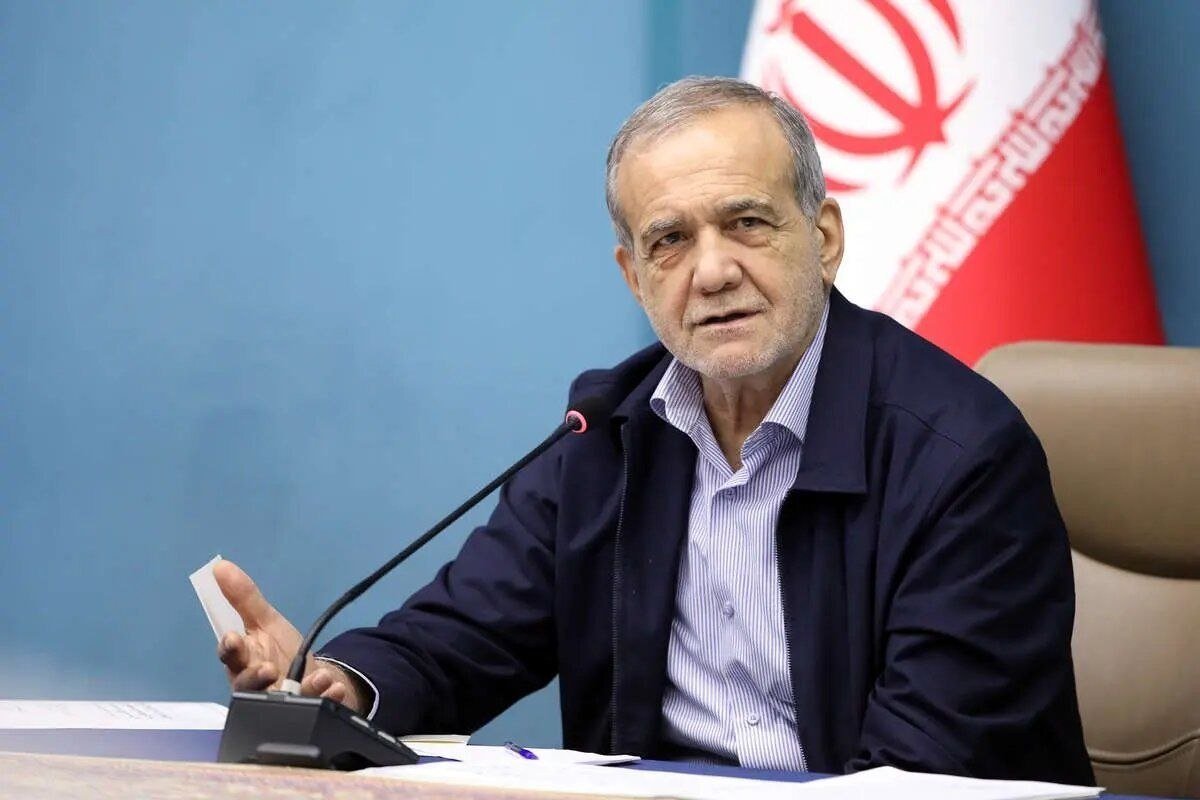
Tehran, Nov 2026 : Iran is preparing for a challenging winter as concerns grow over energy supplies following reported damage to the country's natural gas production infrastructure. President Masoud Pezeshkian has appealed to citizens to reduce their consumption of fuel and natural gas, warning that excessive usage could leave industries and factories struggling to secure adequate energy supplies.
With temperatures expected to fall and demand for heating set to rise, the government is seeking public cooperation to manage available resources. Pezeshkian has stressed that energy conservation is no longer merely a matter of government policy but a collective national responsibility. He has urged households, religious institutions, government departments and social organisations to play an active role in reducing consumption.
The President made the appeal during a visit to the Imam Zain al-Abidin Mosque in the North Khalij-e-Fars area of southern Tehran on the night of November 7. During his interaction with local administrators, religious representatives and community organisations, he said the country's energy challenges could not be addressed through government action alone. Active participation from citizens and civil society institutions would also be essential.
Pezeshkian particularly highlighted the potential role of mosques in spreading awareness about energy conservation. He called on religious institutions to encourage people in their neighbourhoods to avoid unnecessary fuel and gas consumption, especially during the winter months when household demand traditionally increases.
US-Israeli attacks blamed for damage to energy infrastructure
Pezeshkian has identified military attacks by the United States and Israel as a major factor behind Iran's current energy difficulties. According to the President, the attacks have affected power plants and infrastructure associated with natural gas production, placing additional pressure on the country's energy supply system.
In an address to the nation in August, he had claimed that US and Israeli attacks had disrupted approximately 230 million cubic metres of gas production per day. Despite the scale of the reported damage, he said, the government had made efforts to prevent widespread electricity outages.
The reported impact on production has complicated preparations for winter, when natural gas consumption rises sharply. Iran must now manage the competing requirements of residential consumers, power generation facilities and industrial establishments while ensuring that available supplies are distributed efficiently.
The President's latest appeal reflects concerns that any further strain on the energy system could affect both households and the country's economic activities.
Mosques asked to lead public awareness campaign
During his visit, Pezeshkian said Iran's approximately 80,000 mosques could make a significant contribution to addressing social and economic challenges, including the need to conserve energy.
He urged mosque administrations and religious representatives to use their community networks to encourage responsible consumption. According to him, religious institutions should not restrict their activities to worship alone but should also participate in resolving local problems and supporting wider national initiatives.
The President called for closer coordination among citizens, local authorities, voluntary organisations and community institutions. He also sought the cooperation of the Basij volunteer force and other social organisations in mobilising people for the conservation campaign.
The government believes that public awareness and voluntary restraint could help reduce unnecessary consumption and make more energy available for essential services and productive sectors.
Government departments told to cut energy use by 20%
Alongside the appeal to households, the Iranian government has begun tightening energy-use practices within public institutions.
On November 5, Pezeshkian directed government departments to reduce their energy consumption by 20 per cent. He said public institutions should lead by example and demonstrate responsible use of available resources.
The proposed reduction is intended to ease pressure on the national energy system and help maintain supplies for industries and commercial establishments. The government is also considering measures to improve the distribution of fuel in the transport sector.
Pezeshkian has suggested that fuel allocations for vehicles should be linked more closely to the actual distances they travel. Such a system, he indicated, could help prevent the misuse of subsidised fuel and ensure that allocations are distributed more effectively.
These measures form part of a broader effort to control consumption as the country approaches the period of peak winter demand.
Rising winter demand raises concerns over industrial supplies
Iran is among the world's major natural gas-producing countries. However, its substantial reserves and production capacity have not insulated it from supply challenges.
Natural gas is central to Iran's energy system. It is used extensively for household heating, electricity generation, petrochemical production and a wide range of industrial activities. As winter approaches, residential demand rises, increasing the pressure on the government to maintain a balance between household requirements and the needs of factories and businesses.
If production remains constrained while consumption increases, authorities may face difficult decisions over how to distribute available supplies. Industrial establishments could be particularly vulnerable if household demand is prioritised during periods of shortage.
Pezeshkian has warned that failure to reduce consumption could disrupt gas supplies to factories and industrial units. Any significant interruption could affect production schedules, manufacturing activity and the wider economy.
The government is therefore asking households to avoid unnecessary heating and fuel use so that industrial facilities can continue operating and essential economic activities are not disrupted.
Sanctions and investment constraints add to the pressure
Iran's energy difficulties extend beyond the reported damage caused by military attacks. The country has faced years of international sanctions, economic isolation and restrictions on access to modern technology and equipment.
These constraints have affected investment in energy infrastructure, as well as the development, maintenance and modernisation of production facilities. Limited access to advanced technology and essential equipment has made it more difficult to upgrade existing infrastructure and expand capacity.
Excessive domestic energy consumption has also added to the pressure on the system. Relatively high household demand, particularly during winter, places a significant burden on natural gas supplies that are also required by power plants and industries.
Pezeshkian has acknowledged that the combination of sanctions, economic difficulties and military attacks has created serious challenges for the country. He has maintained that the government cannot resolve every problem independently and that cooperation from the public is necessary.
The President also raised energy security concerns at a meeting of the Gas Exporting Countries Forum in October, where he reportedly highlighted the impact of US and Israeli military actions on Iran's energy production and supply infrastructure.
Energy security becomes a shared national responsibility
The latest appeal comes as Iran prepares for the seasonal increase in demand for natural gas. The government's immediate priority is to ensure that households have sufficient energy for heating while keeping electricity generation and industrial operations running.
To achieve this, authorities are seeking cooperation from several sections of society. Government departments have been asked to reduce consumption, religious institutions have been encouraged to lead awareness campaigns, and citizens have been urged to use fuel and natural gas more carefully.
Pezeshkian has emphasised that conserving energy is directly linked to protecting national resources and safeguarding the economy. Reducing unnecessary consumption, he believes, can help the country manage its limited supplies more effectively during a difficult period.
Iran now faces the challenge of restoring energy infrastructure reportedly affected by military attacks while managing rising household demand and ensuring uninterrupted supplies to industries. The effectiveness of the government's conservation measures, together with public participation, will be crucial in determining how the country navigates the coming winter.
(Disclaimer :The content of this article is sourced from a news agency and has not been edited by the Mavericknews30 team.)