New Delhi, November 2026 : The Philippines is considering purchasing additional BrahMos supersonic cruise missile systems from India and has submitted a list of proposed modifications to make the weapon better suited to its geographical conditions and military infrastructure, according to a report.
Philippine Defence Secretary Gilberto Teodoro disclosed the country's plans on November 4 while addressing the Third Delhi Defence Dialogue, The EurAsian Times reported.
“We hope to increase the number of BrahMos units we have, and we have also shared a wish list on the BrahMos with the Indian authorities in order to make it more tailor-fitted for the Philippine environment,” Teodoro said.
According to the report, Manila could acquire up to five additional BrahMos systems, involving nearly 60 missiles, under a proposed contract estimated to be worth between $700 million and $800 million. The proposed purchase would expand the Philippines' existing missile capabilities and strengthen its coastal defence network.
In 2022, the Philippines signed a $375 million agreement with India for three batteries of the shore-based, anti-ship variant of the BrahMos missile. The acquisition was aimed at enhancing the country's maritime defence capabilities amid tensions with China over competing territorial claims in the South China Sea, which Manila refers to as the West Philippine Sea.
The report noted that the Philippines was integrating BrahMos into a wider coastal-defence and long-range strike framework rather than treating the missile as a standalone military acquisition.
“Rather than treating BrahMos as an isolated national asset, Manila appears to be embedding it in a broader coastal-defence and long-range strike architecture,” The EurAsian Times said.
The Philippines has also been strengthening military coordination with the United States. Earlier this year, American and Philippine Marines conducted maritime-strike exercises that simulated the deployment of BrahMos anti-ship missiles. The training involved using drones and ground-based anti-ship missile systems to establish a simulated targeting chain against maritime threats, the report said.
As part of its deployment plans, Manila has established a BrahMos missile facility at Philippine Naval Station Leovigildo Gantioqui in Zambales, along the coast of western Luzon. The location is significant for the country's coastal defence arrangements.
Despite China's larger military capabilities, the Philippines is seeking to strengthen its deterrence through systems designed to complicate the movement of potential adversary naval forces.
The report described BrahMos as an important component of the Philippines' anti-access/area denial (A2/AD) strategy, which seeks to restrict an adversary's ability to operate freely in strategically important maritime areas.
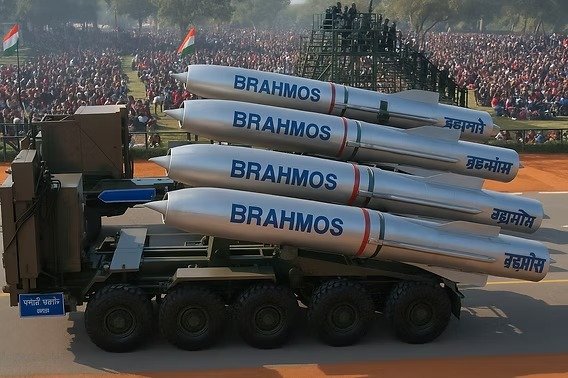
The BrahMos is a precision, stand-off supersonic cruise missile developed jointly by India and Russia. It can be launched from land, naval platforms and aircraft, providing armed forces with multiple deployment options.
Powered by a liquid-fuelled ramjet engine, the missile can travel at speeds approaching Mach 3, or nearly three times the speed of sound. Its high velocity, low-altitude flight profile and precision-strike capability are among the features that make it difficult to intercept, according to the report.
Former Philippine Defence Secretary Delfin Lorenzana had earlier said that the acquisition would strengthen the country's ability to protect its maritime interests.
The missiles, he said, “will provide deterrence against any attempt to undermine our sovereignty and sovereign rights” in the West Philippine Sea.
Teodoro has also described BrahMos as a “game-changer” for the Philippines' maritime security.
The proposed additional purchase, along with the modifications sought by Manila, signals the country's interest in expanding its existing cooperation with India in defence technology and strengthening its maritime strike capabilities. However, the reported figures and proposed acquisition remain subject to further decisions by the two governments.