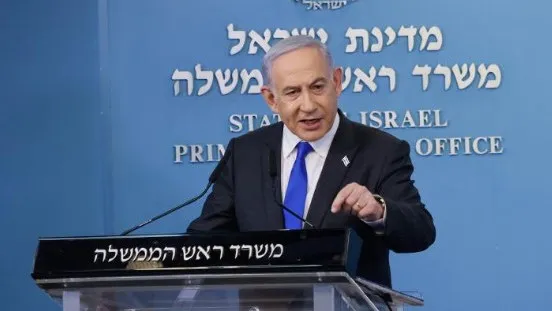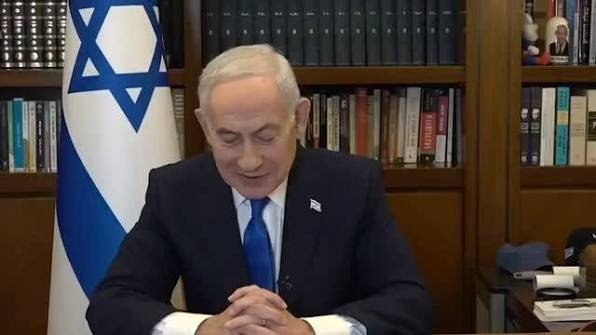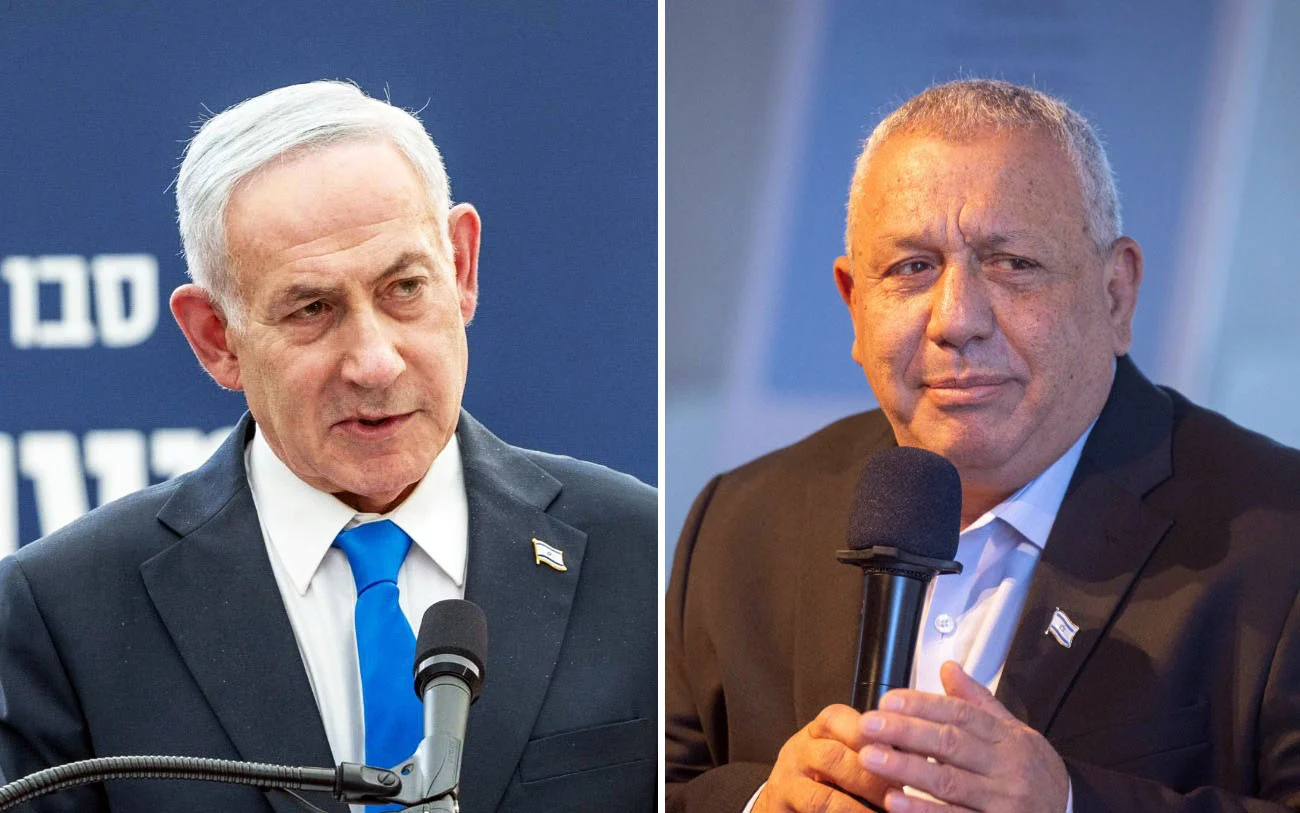
Jerusalem, October 2026 : Political uncertainty has intensified in Israel following the parliamentary elections held on October 27, 2026, with discussions reportedly underway about forming a national unity government involving Prime Minister Benjamin Netanyahu and opposition leader Gadi Eisenkot.
According to media reports, leaders close to Netanyahu are exploring ways to bring Eisenkot into a coalition government. One proposal reportedly under consideration involves a rotational arrangement under which both leaders would serve as prime minister at different times. However, neither Netanyahu nor Eisenkot has officially confirmed any coalition agreement or power-sharing deal.
The Israel election results 2026 have left no political bloc with a clear majority, creating a challenging situation for government formation. According to figures attributed to Reuters as of October 29, Netanyahu’s coalition is projected to win 53 seats, Eisenkot’s opposition alliance 48 seats, and Arab parties 19 seats in the 120-member Knesset, Israel’s parliament.
A minimum of 61 lawmakers’ support is generally required to form a government. The absence of a clear majority has prompted political leaders to explore alternative coalition arrangements, including the possibility of a broad-based national unity government.
A report published by The Jerusalem Post on October 29 said Netanyahu’s associates were discussing a plan to include Eisenkot in a unity government. The proposal reportedly includes the possibility of a rotating premiership, although the negotiations have not resulted in a confirmed agreement.
Eisenkot’s Opposition to Serving Under Netanyahu
Eisenkot’s position could prove a major obstacle to the proposed Israel national unity government. Before the election, he had reportedly ruled out joining a government led by Netanyahu. He had also indicated that he was unwilling to serve under the prime minister even if the two leaders agreed to rotate the position.
His willingness to reconsider that position remains unclear. Without his consent, the proposed power-sharing arrangement may struggle to progress beyond preliminary discussions.
Meanwhile, Arab parties have emerged as an important factor in the post-election political calculations. With a combined 19 seats, their support could potentially help Eisenkot’s opposition alliance reach the 61-seat threshold required to form a government.
However, cooperation with Arab parties remains contentious within parts of the opposition camp. Some leaders have expressed reservations about entering into a political arrangement with them, complicating efforts to assemble a parliamentary majority.
Netanyahu Camp Explores Alternative Coalition Options
Netanyahu’s allies are also reportedly considering a broader coalition involving centrist and right-wing parties from across the political spectrum. Such an arrangement could require excluding some of his existing far-right and ultra-Orthodox partners.
The proposed realignment would represent a significant shift in Israel’s coalition politics. However, bringing together parties with differing ideological positions and policy priorities could prove difficult, particularly when negotiations involve the distribution of political power and ministerial responsibilities.
The outcome will depend on whether political leaders can find common ground and secure sufficient parliamentary support.
President Herzog to Oversee Government Formation Process
Israeli President Isaac Herzog is expected to consult political parties after the final election results are established. He will then nominate the leader considered most likely to secure the support needed to form a government.
Until a new administration takes office, Netanyahu continues as caretaker prime minister. If no candidate succeeds in securing a majority, coalition negotiations could be prolonged, potentially raising the possibility of another election.
For now, the reported discussions between Netanyahu and Eisenkot have introduced a new possibility into Israel’s post-election political landscape. However, Israel coalition talks remain at an exploratory stage, and there is no official confirmation that the two leaders have agreed to share power.
The coming days are expected to be crucial in determining whether Israel can form a national unity government or whether the political deadlock will continue.