Key Points
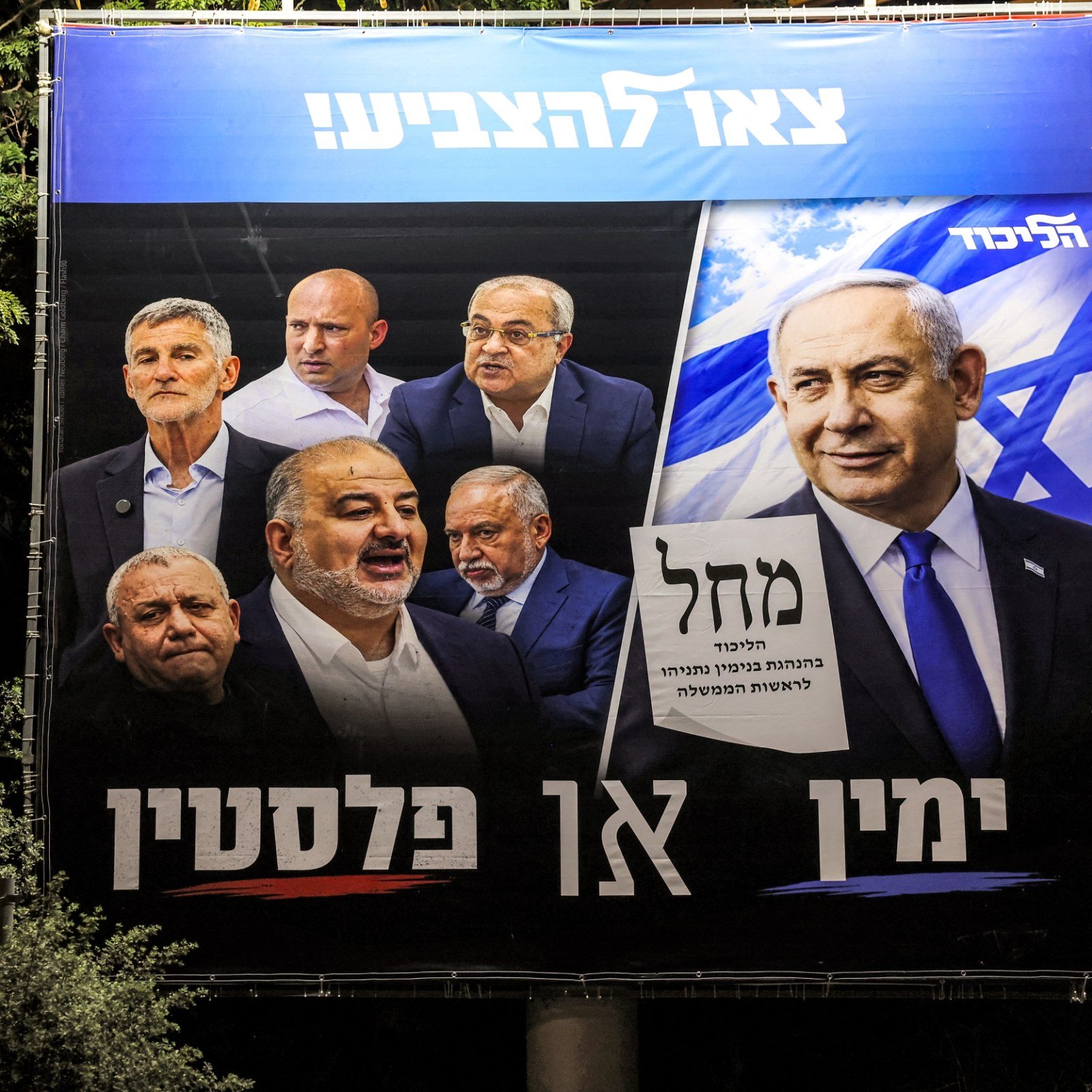
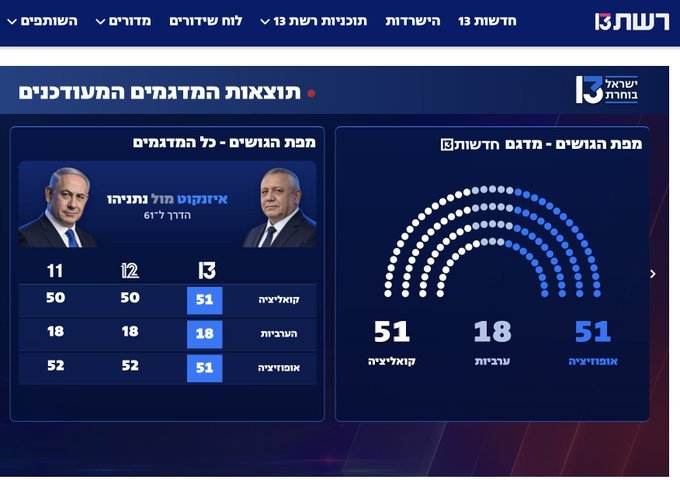
Exit polls indicate a close contest between Benjamin Netanyahu’s coalition and Gadi Eisenkot’s opposition bloc.
Neither camp appears to have secured the 61 seats required for a majority in Israel’s 120-member Knesset.
Projections point to a setback for Netanyahu’s right-wing coalition, but no clear winner has emerged.
Far-right religious parties are projected to win around 13 seats within Netanyahu’s bloc.
Arab parties could emerge as kingmakers, although Eisenkot has largely ruled out forming a government with them.
Voter turnout reached 77.7%, the highest in more than two decades, according to Israel’s Central Elections Committee.
The election is the first since the October 7, 2023, Hamas-led attack and the subsequent wars involving Gaza, Lebanon and Iran.
Jerusalem. Oct 2026 : Israel’s wartime election appeared deadlocked on Tuesday, with exit polls showing Prime Minister Benjamin Netanyahu’s ruling coalition and opposition leader Gadi Eisenkot’s bloc running neck and neck. The projections suggested a setback for Netanyahu but offered neither side a clear route to securing a governing majority, raising the prospect of prolonged coalition negotiations.
Polls released by Kan 11 and Channel 13 showed the two camps level, while Channel 12 projected a narrow advantage for Netanyahu’s Likud-led bloc as the night progressed. None of the projections gave either side the 61 seats needed for a majority in the 120-member Knesset, Israel’s parliament.
The projections are preliminary, and the final outcome could change as votes are counted. Israel’s fragmented political system means smaller parties could play a decisive role in determining the next government. If coalition negotiations fail, the country could face another election.
Netanyahu Calls for Strong Right-Wing Government
Addressing Likud supporters in Jerusalem after 3 a.m., Netanyahu called for the formation of a strong right-wing government and highlighted what he described as Israel’s military achievements.
He also pointed to what he called a historic opportunity to remove the Iranian threat, seeking to reinforce his credentials on national security amid continuing regional tensions.
Despite the projected setback, Netanyahu could remain in office in a caretaker capacity while political parties negotiate coalition arrangements, depending on the constitutional process and the eventual outcome.
Israel’s longest-serving prime minister has repeatedly survived political crises. He has served for nearly 19 of the past 30 years and returned to power in 2022 after a period out of office.
However, he entered the election facing long-standing corruption charges, which he denies, and criticism over intelligence and security failures that preceded the October 7, 2023, Hamas-led attack.
Eisenkot Challenges Netanyahu’s Leadership
Eisenkot, 66, emerged as Netanyahu’s principal challenger by combining a strong national security profile with a centrist domestic position. A former military chief, he entered politics around four years ago and joined Netanyahu’s wartime cabinet after the Hamas attack before resigning eight months later over disagreements with the prime minister’s leadership.
Speaking to supporters in Tel Aviv, Eisenkot argued that voters had rejected Netanyahu’s continued leadership.
“A worthy leader would have accepted the people's non-confidence and announced today his retirement from politics,” he said.
Opposition leader Yair Lapid also described the projections as a major defeat for Netanyahu’s coalition, arguing that voters had delivered a strong message against the government.
Eisenkot has criticised Netanyahu’s handling of the war, arguing that Israel’s military campaign has failed to achieve its stated objectives while Hamas remains in control in Gaza. He continues to support a hard-line security approach, opposes Palestinian statehood and says Hamas’ military wing must be destroyed or dismantled.
According to Gaza health authorities, more than 74,000 Palestinians have been killed in the war. The toll has intensified international scrutiny of Israel’s military operations.
Far-Right and Arab Parties Could Hold the Balance
Far-right religious parties led by Itamar Ben-Gvir and Bezalel Smotrich were projected to secure a combined 13 seats within Netanyahu’s bloc.
Meanwhile, Arab parties outside the two principal camps could become influential in coalition negotiations. Eisenkot, however, has largely ruled out forming a government with them, complicating his efforts to assemble a parliamentary majority.
The Joint List, an alliance of several Arab parties, welcomed the election projections amid hopes that increased participation by Palestinian citizens of Israel would help prevent Netanyahu’s coalition from returning to power.
“We refuse the occupation and racism, and we will remain here,” said Faten Gattas, a Joint List candidate, at the alliance’s headquarters in Nazareth.
Record Turnout Reflects High-Stakes Wartime Election
Israel recorded voter turnout of 77.7%, the Central Elections Committee said, the highest level in more than two decades and approximately seven percentage points above the 2022 election.
The vote was the first since Hamas-led militants killed around 1,200 people and took 251 hostages on October 7, 2023, according to Israeli figures. The attack triggered the Gaza war and was followed by further conflict involving Hezbollah in Lebanon and Iran.
Yohanan Plesner, president of the Israel Democracy Institute, described the exit polls as a major defeat for Netanyahu’s coalition but cautioned that Eisenkot had not emerged as an outright winner.
Final results could take days, and coalition negotiations may extend for weeks or months. Eisenkot has opposed holding another election, arguing that the high turnout makes a fresh vote undesirable.
With neither bloc projected to command a majority, Israel faces an uncertain political future, with coalition arithmetic, smaller parties and the legacy of the country’s wars likely to shape the next government.
(Disclaimer :The content of this article is sourced from a news agency and has not been edited by the Mavericknews30 team.)