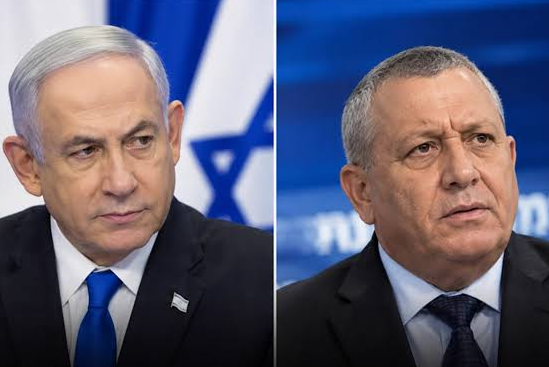
Jerusalem, Oct 2026 : Political uncertainty continues in Israel following the parliamentary election, with Prime Minister Benjamin Netanyahu’s coalition falling short of a majority and opposition parties yet to agree on a clear path towards forming an alternative government.
Although opposition leaders are urging rival parties to overcome their differences and unite to replace Netanyahu, disagreements over cooperation with Arab parties and the policies of a possible new administration have complicated negotiations. The election results have therefore left the country’s political balance unresolved.
According to the final results, Netanyahu’s bloc secured 53 seats in the 120-member Knesset, while the opposition camp led by Gadi Eisenkot won 48 seats. Arab parties collectively secured 19 seats, placing them in a potentially decisive position. A majority in the Israeli parliament requires 61 seats.
Netanyahu’s coalition is eight seats short of a majority, while opposition parties would need support beyond their current partners to form a government.
Opposition Seeks Alternative Coalition
Yair Golan, leader of the opposition Democrats party, has called for a government based on cooperation between Jewish-led opposition parties and parties representing Arab citizens. He argues that representatives elected on an anti-Netanyahu platform should work together to create a path towards political change.
However, there is no consensus within the opposition over the proposal or the form such cooperation should take.
Leaders of the Joint List have indicated their willingness to help remove Netanyahu from office. Knesset member Ahmad Tibi has suggested that Arab parties could support a government from outside the coalition rather than formally joining it.
Such support, however, would come with policy expectations. These include commitments to address crime in Arab communities and the demolition of homes belonging to Bedouin citizens. The negotiations are therefore not simply about securing the required number of parliamentary seats but also about reaching agreement on policy priorities.
Lieberman and Bennett Complicate the Numbers
The opposition’s efforts face significant hurdles because of differences among its leaders.
Avigdor Lieberman, a prominent opposition figure, has ruled out joining a government led by Netanyahu. At the same time, he has opposed supporting a minority government dependent on Arab parties.
Former prime minister Naftali Bennett’s position on relying on Arab party support has also emerged as a challenge to opposition strategy.
These differences have created a difficult political equation: although the parties share the objective of replacing Netanyahu, they remain divided over how an alternative government should be formed and sustained.
Eisenkot Sets Out Principles for a New Government
Yashar party leader Gadi Eisenkot said on Saturday that he would seek to form a broad-based government. Following a meeting with Yair Lapid, Eisenkot outlined four core principles for a potential coalition.
These include preserving Israel’s Jewish, democratic, liberal and egalitarian character, and upholding the values of the country’s Declaration of Independence.
He also called for mandatory military, national or civilian service for all citizens, and a commitment to dismantling Hamas’s military and governing capabilities.
Eisenkot indicated that elected representatives who accepted these principles would be welcome in the proposed government. He also called for closer coordination among political partners and stressed the need to avoid another election.
His priorities include establishing a state commission of inquiry, introducing a mandatory service framework and improving benefits for those who serve. He has also called for reversing government legislation related to changes in the judicial system.
However, the proposals have yet to secure the parliamentary support needed to form a government.
President Herzog to Begin Coalition Consultations
Israeli President Isaac Herzog will play a central role in the government formation process. Following the formal publication of the election results, he is expected to consult political parties and nominate the lawmaker he believes has the best chance of forming a government.
The designated candidate generally receives 28 days to complete coalition negotiations, with the possibility of an additional 14 days if required.
If the first candidate fails to form a government, the president can give another lawmaker an opportunity. Further constitutional procedures are available if subsequent efforts also prove unsuccessful.
Netanyahu, too, faces difficulties in securing support from opposition parties, several of whose leaders have rejected serving under his leadership. Options being discussed include a broad unity government, a minority administration supported by parties from outside the coalition, or an arrangement that brings additional partners into the governing bloc.
Political Talks to Determine Israel’s Next Government
President Herzog has urged political leaders to engage in negotiations with an open mind and make efforts to avoid another election.
For now, no final coalition agreement has been reached. The coming days of political consultations will determine whether Israel can form a new government or whether the parliamentary deadlock will continue.
With Arab parties potentially holding the balance of power and opposition leaders divided over the terms of cooperation, the government formation process is expected to remain complex.
(Disclaimer :The content of this article is sourced from a news agency and has not been edited by the Mavericknews30 team.)