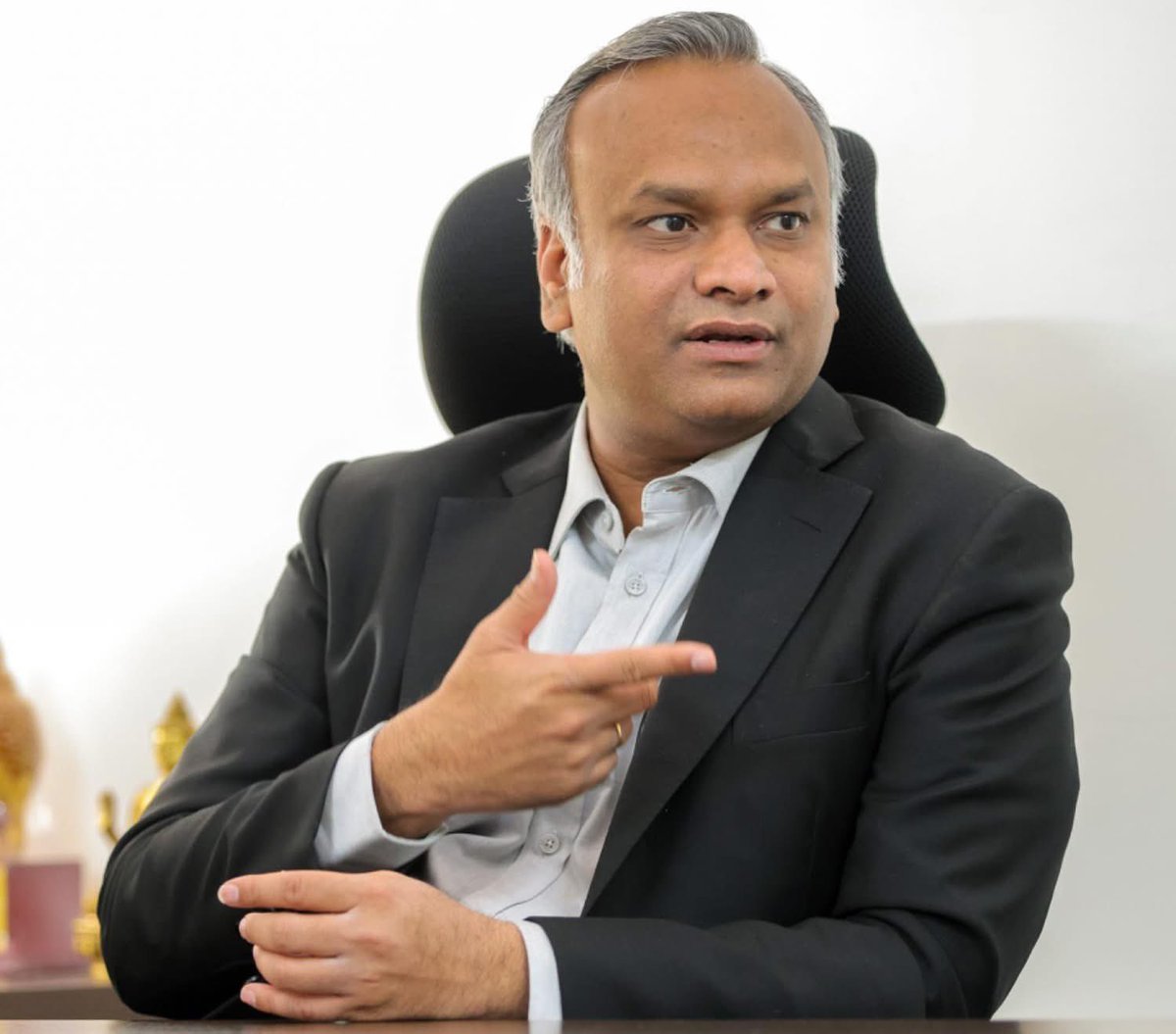
Bengaluru, Aug 2026 : Karnataka Home Minister Priyank Kharge on Tuesday questioned the economic rationale behind the Centre’s policy of supplying rice procured with taxpayers’ money to ethanol producers at prices reportedly around 40 per cent below the government’s acquisition cost.
In a statement, Kharge said the country’s ethanol policy raised several questions about the use of foodgrains and the financial burden ultimately borne by taxpayers and consumers. Describing the situation as one in which “India’s ethanol arithmetic simply does not add up”, he sought greater transparency from the Centre over the economics of the policy.
Kharge pointed out that the government purchases paddy from farmers using public funds and subsequently incurs additional expenditure on storage and transportation. According to him, despite these costs, the rice is then supplied through the Food Corporation of India (FCI) to ethanol manufacturers at a price significantly lower than its acquisition cost.
“What kind of economic policy is this?” Kharge asked, questioning who ultimately benefits from the arrangement.
He argued that the system effectively involves multiple layers of public expenditure. “Grain is subsidised with taxpayers’ money; the government bears the cost of procurement, storage and transportation; and then the same grain is sold to ethanol producers at a discounted price,” he said.
Kharge questioned whether large quantities of foodgrains were being diverted to ethanol production primarily because of the rapid expansion of ethanol manufacturing capacity in the country.
He also raised questions about the subsequent pricing of ethanol. According to the minister, if the government supplies grain to ethanol producers at subsidised rates and later purchases ethanol from the same industry at higher prices for blending with petrol, the overall economic benefit to consumers needs to be examined.
“If grain is supplied at a lower price and ethanol is subsequently purchased from the same industry at a higher price, what is the actual benefit to the ordinary consumer?” he asked.
Kharge further questioned whether the increased blending of ethanol with petrol had resulted in a meaningful reduction in fuel prices for consumers. He also sought clarity on whether the government had adequately assessed the impact of higher ethanol blends on vehicle mileage, maintenance costs and overall consumer expenses.
The Karnataka minister said the Centre should explain the complete financial chain involved in the policy, including procurement costs, subsidies, storage and transportation expenses, ethanol purchase prices and the benefits ultimately reaching ordinary citizens.
“Who is subsidising whom? Who are the real beneficiaries of this system?” Kharge asked.
He demanded that the Centre make public a comprehensive assessment of the economic, social and public-interest implications of diverting foodgrains intended for food security towards ethanol production.
Kharge reiterated that the apparent contradictions in the Centre’s ethanol policy warranted closer public scrutiny. He maintained that while ethanol blending may have strategic objectives related to energy security and reducing dependence on imported fuel, the government must ensure that such policies do not impose hidden costs on taxpayers, farmers or consumers.
He concluded by calling for greater transparency and accountability, arguing that the Centre must clearly explain how the policy benefits the broader economy and the common consumer.