US aerospace major proposes C-130J Super Hercules for IAF’s 60-aircraft requirement, with 48 platforms to be manufactured in India
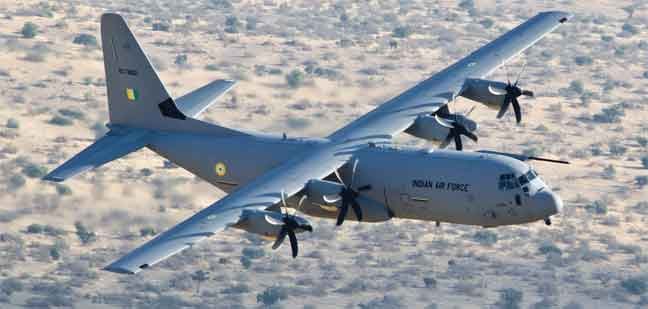
New Delhi, September 2026: US defence and aerospace major Lockheed Martin has offered to transfer technology for certain components of its C-130J Super Hercules transport aircraft to India if it secures the Indian Air Force’s contract for 60 Medium Transport Aircraft (MTA).
Robert Toth, Lockheed Martin’s Vice-President for Strategy and Business Development, Air Mobility and Maritime Missions, said the company was ready for complete technology transfer of some C-130J components and that an Indian contract would also provide access to advanced technologies developed across the company’s wider defence and aerospace portfolio. His remarks were reported by The Times of India.
The proposal comes after the Ministry of Defence issued a Request for Proposal (RFP) in August for 60 medium transport aircraft for the IAF. The programme is estimated at around ₹1 lakh crore, or roughly $10 billion, and is structured around substantial domestic manufacturing. The RFP requires Indian industry to partner with foreign original equipment manufacturers and establish production and maintenance capabilities in the country.
Five Indian companies have been associated with the tender process: Tata Advanced Systems, Mahindra Defence, Adani Defence and Aerospace, Hindustan Aeronautics Limited and Reliance Defence. Tata Advanced Systems has partnered with Lockheed Martin to offer the C-130J, while Mahindra has partnered with Brazil’s Embraer to offer the C-390 Millennium.
C-130J-C-390 Contest
The two aircraft represent different approaches to medium tactical airlift. The C-130J is a four-engine turboprop aircraft designed for tactical transport, including operations from relatively short and austere runways. The C-390 Millennium is a twin-engine jet transport aircraft with a higher maximum payload and substantially higher cruise speed.
| Specification | Lockheed Martin C-130J Super Hercules | Embraer C-390 Millennium |
|---|---|---|
| Country of origin | United States | Brazil |
| Propulsion | 4 × Rolls-Royce AE 2100D3 turboprops | 2 × IAE V2500-E5 turbofans |
| Maximum payload | About 21.8 tonnes | About 26 tonnes |
| Maximum speed | About 675 km/h | About 988 km/h |
| Cruise speed | About 644 km/h | About 870 km/h |
| Maximum take-off weight | About 70.3 tonnes | About 87 tonnes |
| Service ceiling | About 28,000 ft | About 36,000 ft |
| Tactical capability | Designed for short and austere runway operations | Designed for high-speed tactical and strategic airlift |
| Indian partner | Tata Advanced Systems | Mahindra Defence |
The final selection will depend on the technical and operational requirements laid down by the IAF, followed by evaluation and trials. The tender is part of a wider effort to modernise India’s military transport fleet, including the replacement of ageing An-32 aircraft.
Lockheed Martin’s India Pitch
Toth, speaking alongside William L. Blair, Lockheed Martin’s Regional Chief Executive for Asia and India, highlighted the C-130J’s existing operational relationship with the IAF. India currently operates 12 C-130J aircraft, which have been used for tactical airlift, special operations, humanitarian assistance and evacuation missions.
Lockheed Martin says the Indian fleet has accumulated more than 53,000 flight hours. The company is pitching a structure under which 12 aircraft would be delivered in flyaway condition while 48 would be manufactured in India, creating a domestic production line for the programme.
The company has also proposed upgrading India’s existing 12 C-130Js to the same configuration as the new aircraft. If implemented, the approach would create a common fleet of 72 aircraft, comprising the existing and newly acquired platforms.
Lockheed Martin has previously announced its intention to expand C-130J production and assembly capabilities in India in partnership with Tata Advanced Systems, subject to government approvals and selection under the MTA programme.
Manufacturing and MRO Push
A major element of Lockheed Martin’s proposal is the establishment of an additional assembly capability in India. Toth said the company was examining options for a second C-130J production line outside the United States.
The company has already developed a substantial industrial relationship with Tata. Tata Lockheed Martin Aerostructures Limited (TLMAL) in Hyderabad is the global source for C-130J empennage assemblies, supplying the tail sections used on Super Hercules aircraft.
According to Lockheed Martin, TLMAL has delivered nearly 260 empennages since beginning operations. The company says its wider Indian supply chain includes hundreds of domestic suppliers and more than 140 MSMEs.
Lockheed Martin and Tata have also been working on establishing a C-130J Maintenance, Repair and Overhaul facility in Bengaluru. Lockheed Martin says construction of the facility followed a foundation-stone ceremony in December 2025 and that the MRO capability is intended to support the Indian fleet as well as regional Super Hercules operators.
The company has argued that an order for 60 aircraft would provide sufficient scale to establish an Indian assembly line and expand the existing aerospace manufacturing ecosystem.
Existing Industrial Footprint
Lockheed Martin’s C-130J relationship with India extends beyond the aircraft operated by the IAF. Its partnership with Tata has resulted in Indian-made aerostructures becoming part of the global Super Hercules supply chain.
The company says TLMAL is the single global source for C-130J empennages and that Indian industry has already gained experience in producing major aircraft structures for international programmes. This existing capability is being positioned as a foundation for greater localisation under the MTA contract.
Lockheed Martin has also partnered with Tata through Tata Sikorsky Aerospace Limited for aerostructure production for Sikorsky platforms. The company says these programmes have helped create an established Indian aerospace manufacturing base involving private industry and MSMEs.
Operational Experience
Lockheed Martin is also emphasising the IAF’s existing experience with the C-130J. The aircraft has been used in demanding operational environments, including high-altitude locations and humanitarian missions.
The company points to the platform’s ability to operate from short and austere airfields as an important feature for India, particularly given the country’s diverse geography and the requirement for tactical airlift in remote areas.
The IAF’s existing C-130J fleet has also been employed for disaster-relief operations and overseas evacuation missions. This operational familiarity could form an important part of Lockheed Martin’s pitch as the company seeks to expand the platform’s presence in India.
Globally, Lockheed Martin says more than 560 C-130J aircraft have been delivered to customers across multiple countries and have accumulated millions of flight hours. The company is using this global operational record, together with the IAF’s existing fleet experience, to make its case for the MTA programme.
Technology Transfer at the Centre
Technology transfer is expected to be one of the key industrial considerations in the MTA programme. India’s procurement policy places emphasis on domestic manufacturing, technology absorption and the development of indigenous aerospace capabilities.
Lockheed Martin’s latest offer seeks to build on that requirement by promising technology transfer for selected C-130J components if the company wins the competition. Toth also indicated that the wider partnership could provide access to technologies developed by Lockheed Martin in other areas of defence and aerospace.
The proposal comes at a time when India is seeking to expand its domestic defence production and integrate private companies and MSMEs more deeply into global supply chains.
A Major Test for India’s Transport Aviation Plans
The ₹1 lakh crore MTA programme represents one of the largest military transport aircraft procurement initiatives currently under consideration in India. The tender requires not only the supply of aircraft but also the creation of domestic manufacturing and maintenance infrastructure.
For Lockheed Martin, the competition offers an opportunity to expand an aircraft already operated by the IAF while deepening its industrial partnership with Indian companies. For India, the programme is also expected to test how effectively a major foreign aerospace platform can be integrated with domestic production, technology transfer and long-term maintenance requirements.
The C-130J and C-390 therefore face a competition that extends beyond aircraft specifications. The final decision will involve operational requirements, technology transfer, manufacturing plans, lifecycle support and the ability to establish a sustainable Indian aerospace ecosystem.
With Lockheed Martin now formally highlighting technology transfer and expanded local production, the C-130J proposal is set to remain a significant part of the competition as India moves towards selecting its next generation of medium transport aircraft for the IAF.
(Disclaimer :The content of this article is sourced from a news agency and has not been edited by the Mavericknews30 team.)